
Walkable trails & equipment lanes.
Owning two, five, or twenty wooded acres means little if fallen logs, salmonberry, and steep side-slopes block you from walking or driving onto your own land. Clear Grade cuts and shapes durable trails and equipment access corridors throughout Snohomish and King counties.
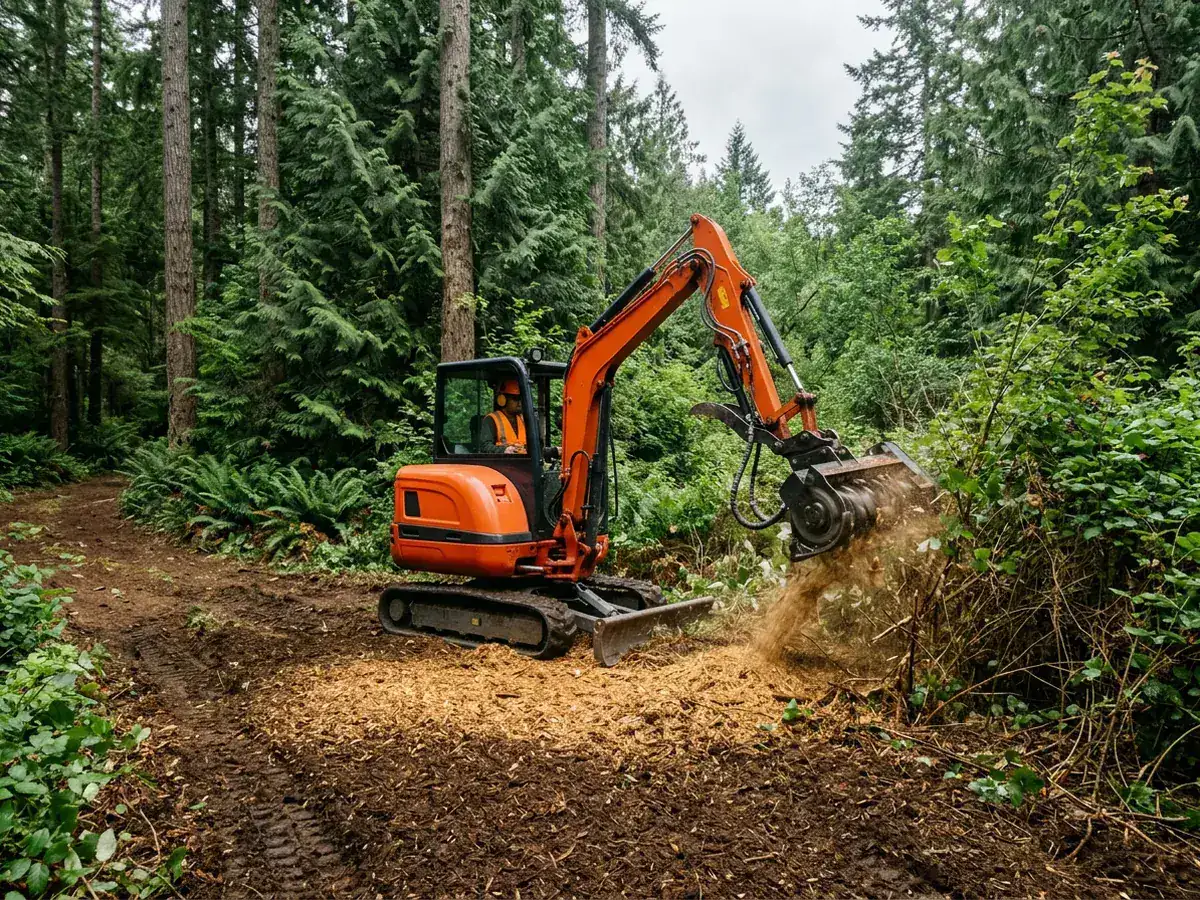
Cutting brush down at ankle height leaves punji-stick stubs and side-sloped mud that is miserable to walk or drive on. Proper trail cutting combines brush mulching with stump removal, flat bench grading, and drainage shaping.
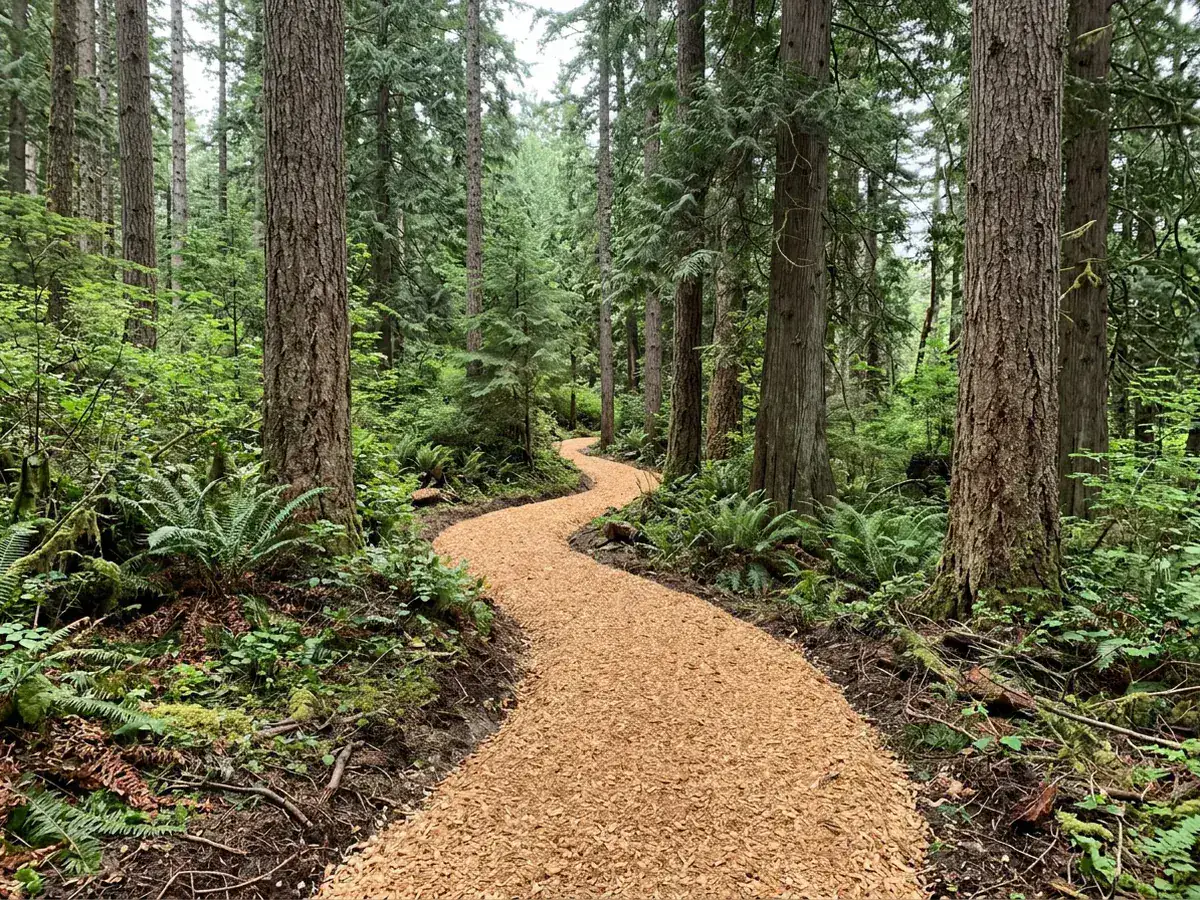
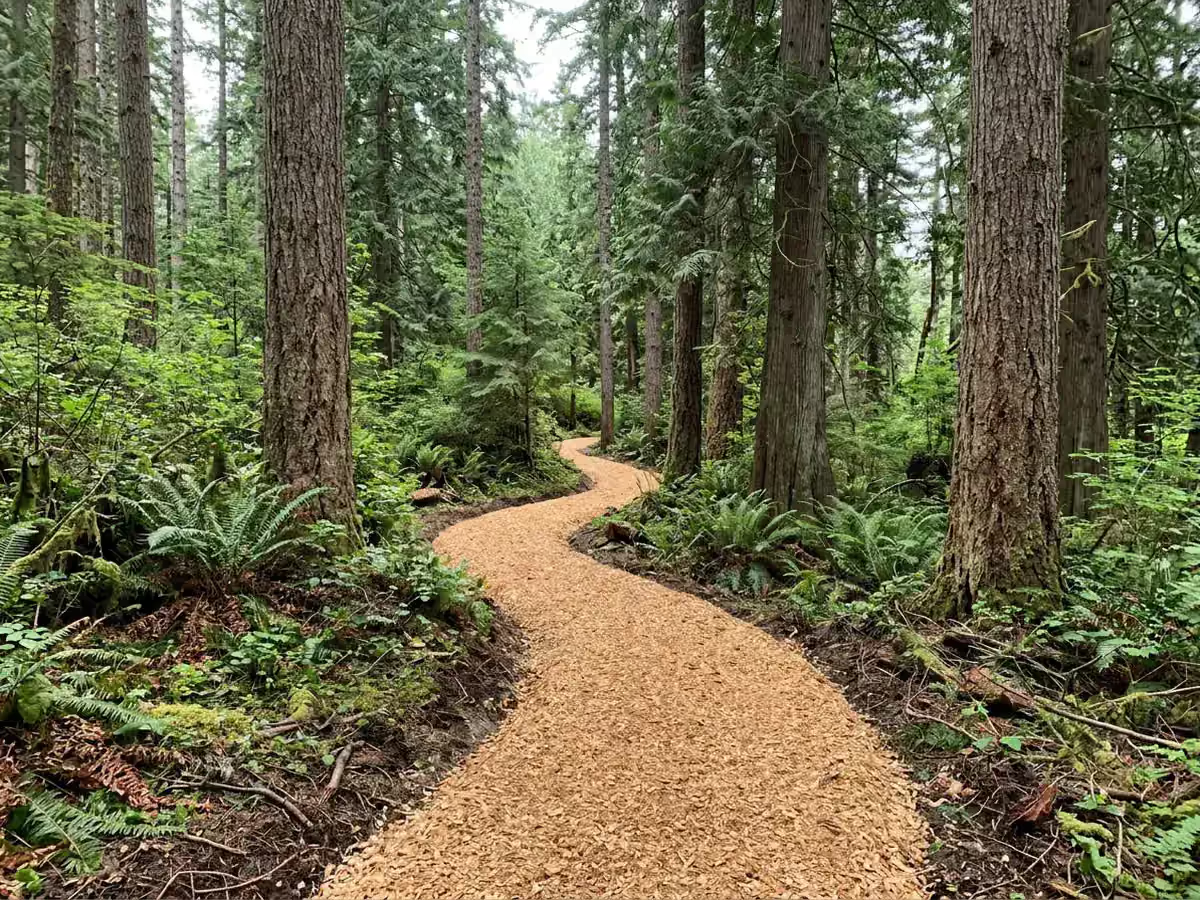
Walkable, dry trail tread
A good Northwest trail sheds winter rain instead of turning into a muddy trench. We mulch the corridor, pull tripping stumps, bench across side-slopes with the excavator blade and tilt/grading bucket, and finish with woodchip mulch or compacted crushed rock.
- Woodland walking trails, bridle paths, and backyard ravine access
- UTV, tractor, and maintenance-vehicle lanes across acreage
- Temporary or permanent access paths to reach rear building or drainage sites
- Perimeter firebreak and defensible-space brush clearing
Right Rock & Material Guide
See how crushed basalt fines, structural base rock, recycled asphalt millings, clean drain stone, and bulk soils perform in wet Western Washington conditions.
Request Written Options for Trail & Access Clearing.
Upload or text 2 to 4 photos of your work area and access width for a free written estimate, or schedule an on-site operator walkthrough.
Crossings, low spots, and drainage swales
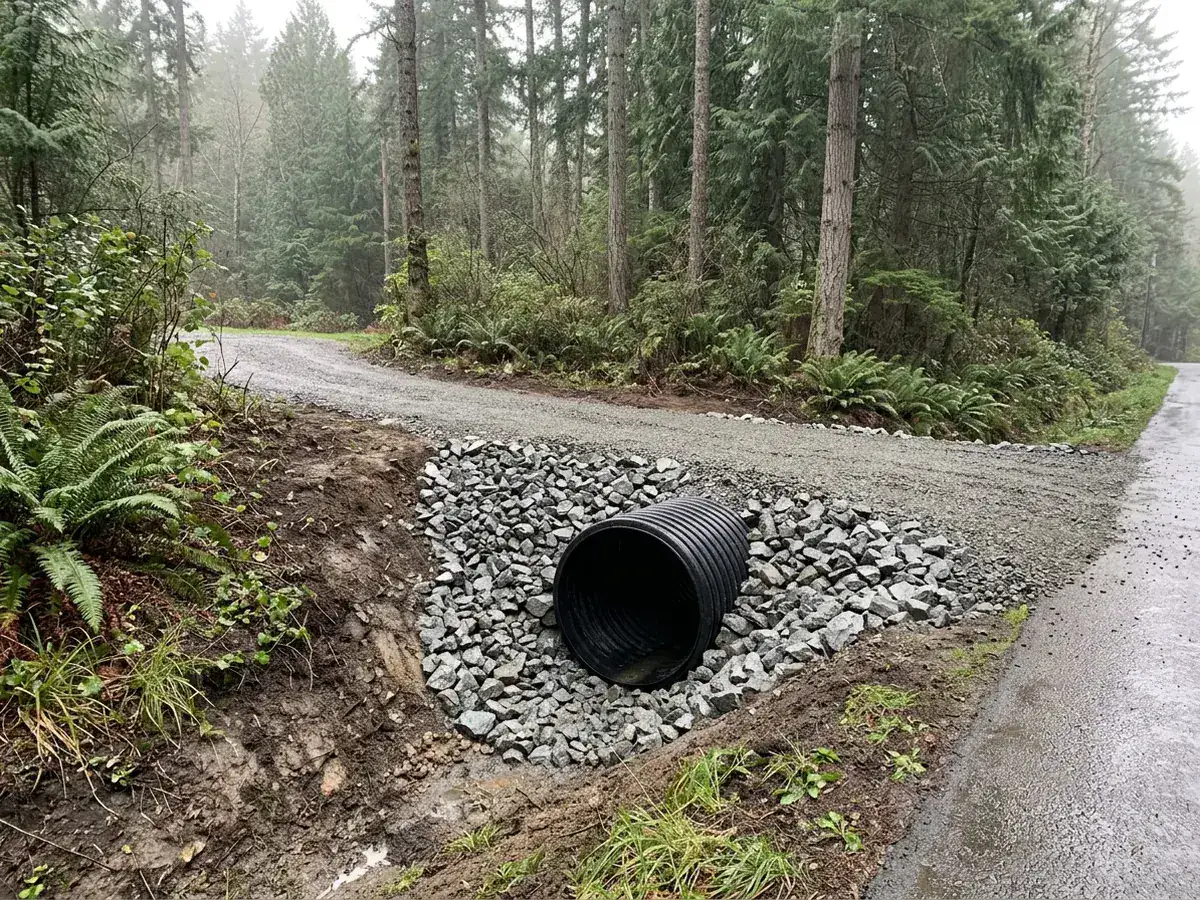
Where seasonal runoff crosses your path, we cut drainage dips, install small cross-culverts, or raise the tread over geotextile fabric and crushed rock so the trail stays passable year-round.
Agreed site finish
A smooth, stump-free trail or access lane benched comfortably into slopes with positive water runoff.
Flag or walk your route
Tie ribbon along the trees or landmarks you want to connect, or send an aerial pin map with your property ZIP code for a clear estimate.
- Walk the approximate corridor and tie bright flagging tape at turns or destination points.
- Choose desired trail width: 4 to 5 feet for walking paths, 6 to 8 feet for UTVs/tractors, or 10 to 12 feet for trucks.
- Decide on surface finish: native dirt, on-site shredded wood mulch, or imported crushed gravel.
A closer look at the work
Representative Pacific Northwest equipment, aggregate, and finish examples showing typical site conditions and Clear Grade work standards.
Frequently asked questions
Can you cut trails across steep wooded ravines or hillsides?
Yes. Using a compact excavator with a grading blade and thumb, we cut level side-hill benches ("outsloped" slightly to shed rain) with switchbacks at comfortable walking or UTV grades.
What keeps a Northwest woodland trail from turning to mud in winter?
Crowning or outsloping the tread so water never runs down the middle of the path, installing small culverts or rock fords at seasonal trickles, and topping clay sections with coarse woodchips or 5/8"-minus crushed rock.
Can you cut firebreaks and defensible space around rural homes?
Yes. Thinning ladder fuels, deadfall, and dry Scotch broom/blackberry around rural Snohomish and Eastside homes creates clean fire-defensible buffers and emergency vehicle access.