
How Topsoil, Fill & Wood Mulch Performs
Property owners frequently order "fill dirt" or "topsoil" as if they were interchangeable - yet burying compost-rich topsoil under a patio or driveway guarantees rotting and sinkholes, while trying to seed grass onto rocky structural fill produces thin weeds. Matching bulk soils and wood mulches to their exact role saves tearing out the yard twice.
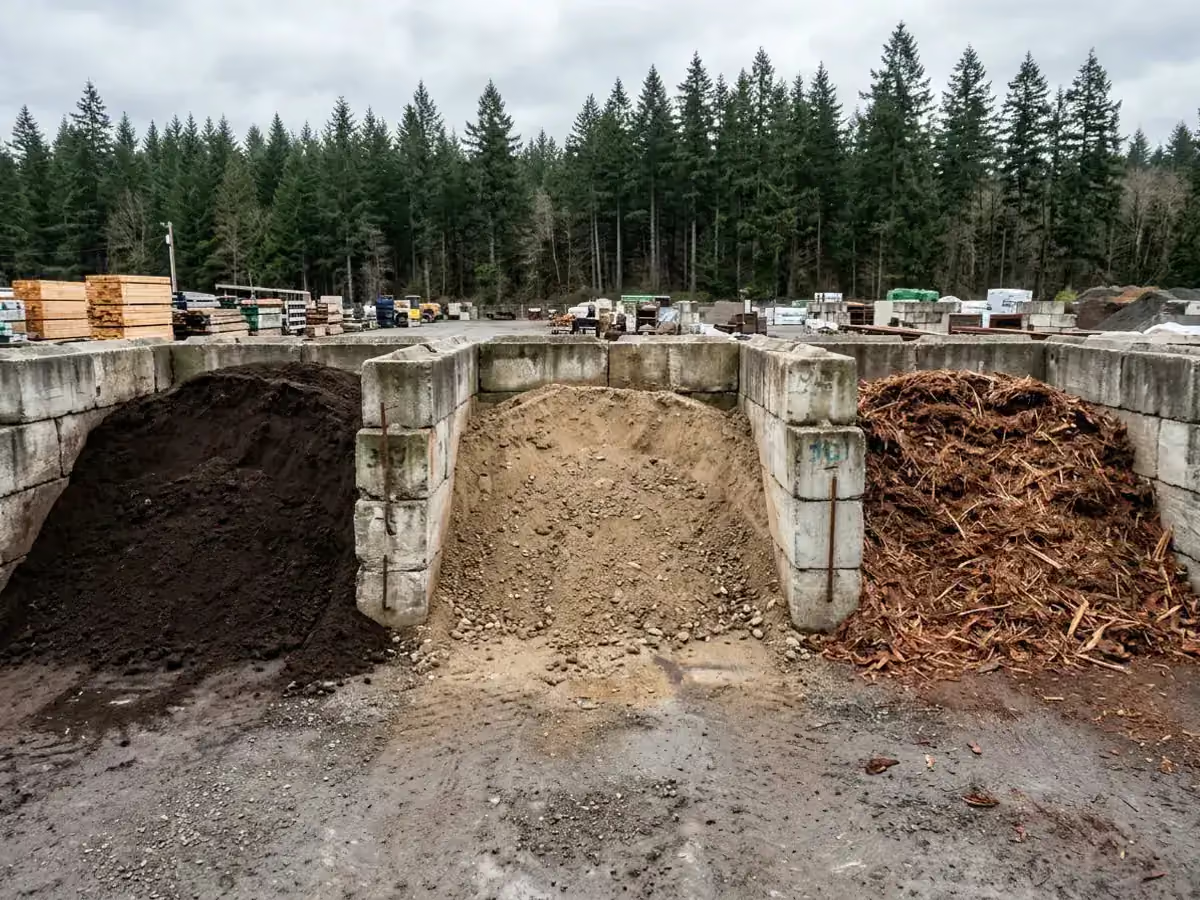
On Puget Sound grading jobs we separate earth and organic products into four strict tiers: (1) zero-organic mineral structural fill for raising elevation below grade, (2) high-sand 2-way screened topsoil for firm winter-draining lawns, (3) nutrient-rich 3-way garden blend for raised beds and shrubs, and (4) coarse interlocking shredded wood ("hog fuel" / forestry mulch) for muddy trails, paddocks, and cleared slopes.
Common WA Gradations & Blends
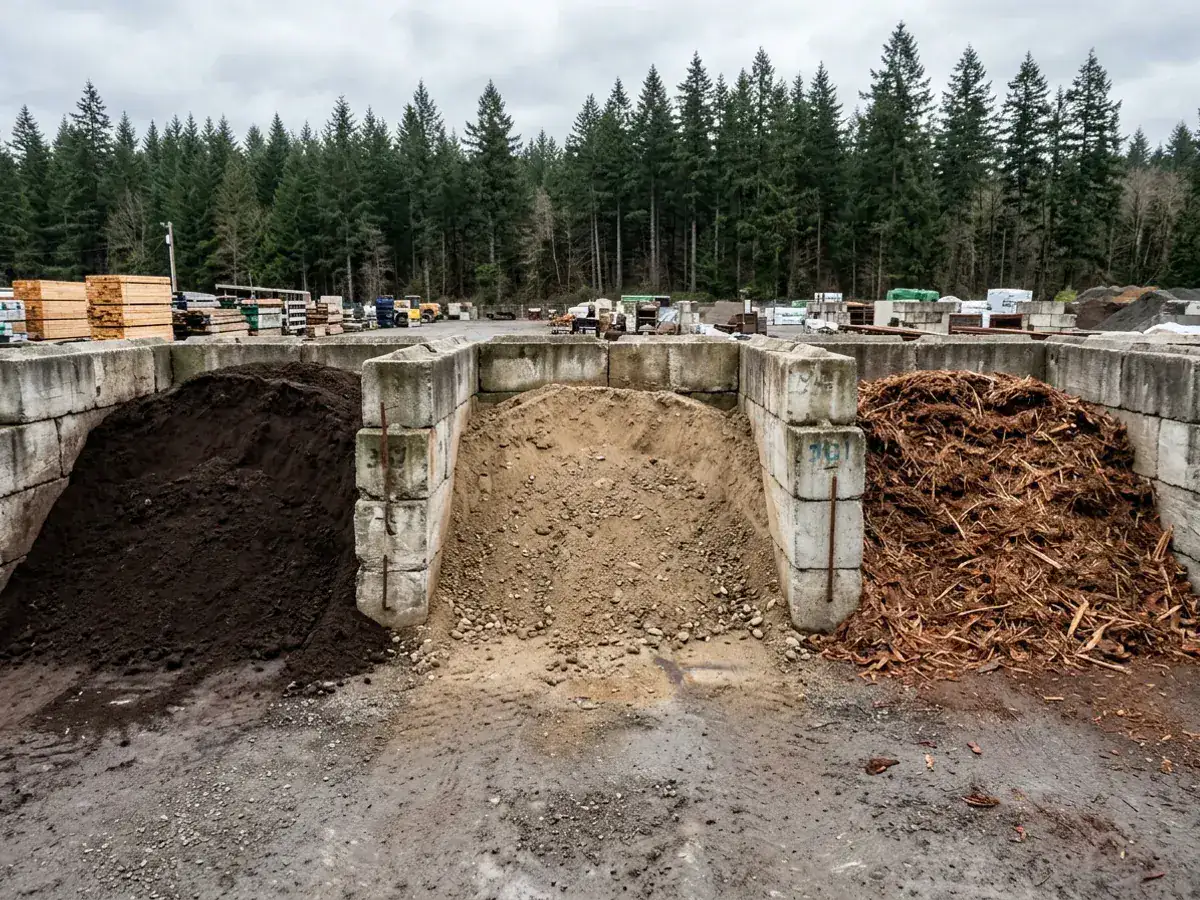
Local pits and landscape yards stock a few closely related sizes within this family - here is how each option behaves on site.
2-Way Screened Sandy-Loam Lawn Mix (~70% Sand / 30% Compost)
Best lawn top-dressing in rainy Western WA - drains fast in January so grass roots breathe instead of turning to moss.
3-Way Planting & Garden Mix (Loam + Compost + Sand/Bark)
Ideal for raised vegetable boxes, shrub berms, and ornamental beds; too fluffy/spongy for flat turf lawns.
Clean Mineral Structural Fill Dirt
Compacts solid in lifts to fill stump craters and raise yard grade underneath the final 4-inch topsoil cap.
Coarse Hog Fuel / Arborist & Forestry Mulch
Knits into a springy, mud-proof walking and UTV surface on forest trails, dog runs, gates, and cleared brush slopes.
Where to Use & Where to Avoid
Matching topsoil, fill & wood mulch to the right layer prevents ruts, plugged French drains, and wasted quarry deliveries.
Best Applications
- 2-Way sandy loam: finish lawn grading (3"-4" depth) prior to sod rolls, hydroseeding, or overseeding
- 3-Way garden soil: shrub borders, privacy-hedge berms, and raised landscape beds (6"-12" depth)
- Clean mineral fill: backfilling excavated stump holes and raising low yard spots below the topsoil zone
- Hog fuel / coarse woodchips: woodland walking & UTV trails, muddy pasture gates, dog runs, and slope erosion armor
- Backing and feathering newly raised gravel driveway edges neatly into adjacent lawn turf
Not Ideal For / Avoid
- Placing topsoil, compost, or stump grindings underneath future driveways, concrete slabs, sheds, or retaining walls (organics decompose and settle inches!)
- Spreading cheap unscreened clay "fill dirt" as a top lawn layer (bakes like brick in August, turns to slick mud all winter)
- Using fine decorative beauty bark on steep trails or mud holes (floats away in heavy rain; use coarse fibrous hog fuel instead)
- Grading and tracking heavy machines across screened topsoil during pouring November-February rainstorms (puddles soil structure)
Sample Coverage & Tonnage
Use these typical Western Washington footprints (including standard roller compaction allowance) to gauge rough volume before your exact quote.
| Sample Project Size | Target Depth | Estimated Volume & Weight |
|---|---|---|
| 2,000 sq ft Backyard Lawn Top-Dress (4" deep) | 4" lightly firmed | ~25 cu yds 2-way sandy loam (2 solo loads) |
| 8 ft x 150 ft Woodland Trail Surface (5" deep) | 5" matted mulch | ~19 cu yds coarse hog fuel / woodchips |
| Raising Low 1,000 sq ft Yard Corner by 12" | 8" mineral fill + 4" lawn mix | ~25 yds structural fill + ~13 yds 2-way topsoil |
Need Topsoil, Fill & Wood Mulch Installed?
Send 2 to 4 photos of your driveway, pad, or yard along with rough measurements. We calculate exact tonnage, coordinate delivery, grade to spec, and compact in lifts.
Western WA Field Rules
Glacial clay, 9 months of drizzle, and county critical-area buffers change how aggregates perform here compared to dry climates.
Why Sand Content Wins in Puget Sound Lawns
Midwest-style heavy black dirt holds too much water during 9 months of Seattle/Everett drizzle, causing soggy footprints and moss takeover. A 65%-70% washed-sand 2-way lawn mix stays firm under mowers and kids year-round.
Scarify Smooth Clay Before Spreading Topsoil
If you spread 4 inches of sandy topsoil onto a slick, glazed clay cut without roughing the interface, winter rain slides right along the clay boundary. We lightly tooth/blend the transition before finish raking.
Reusing On-Site Forestry Mulch (Zero Haul-Off)
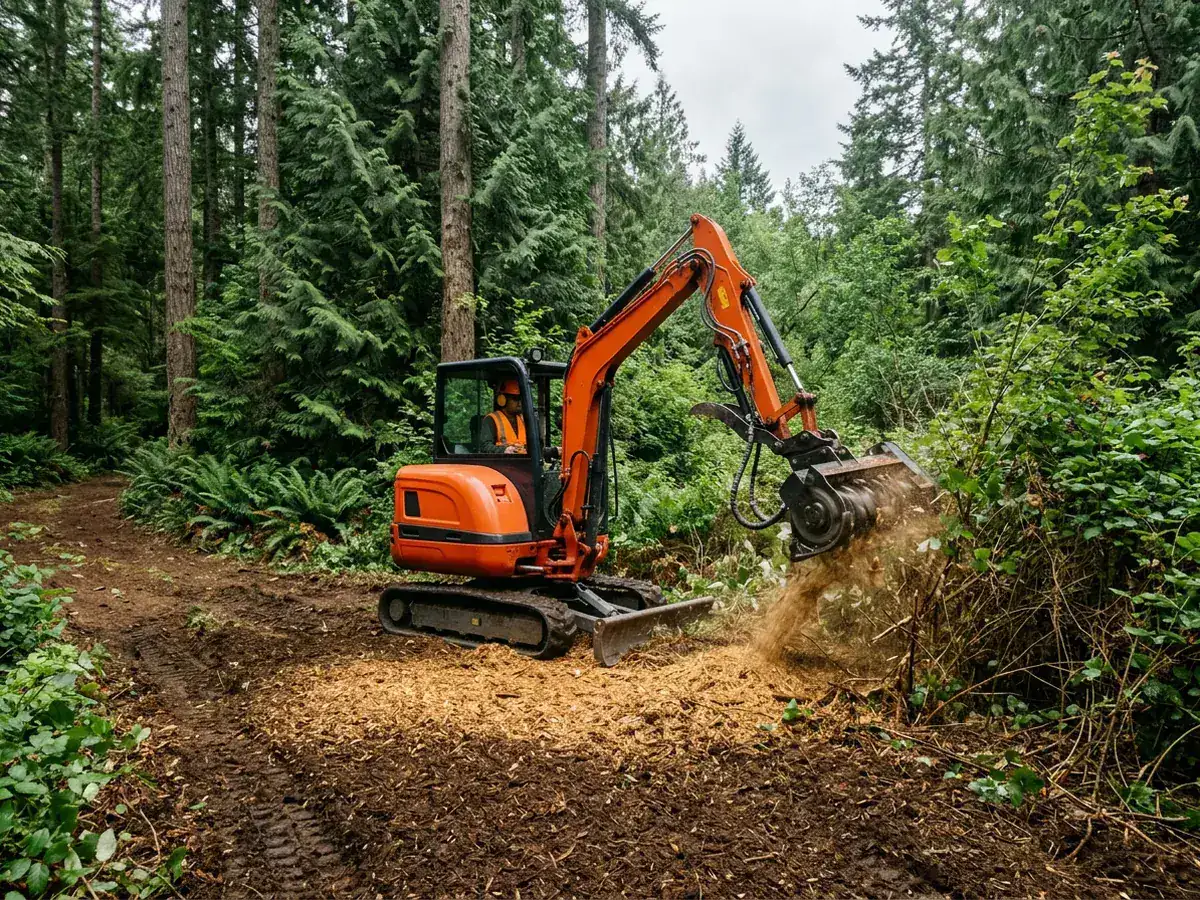
When Clear Grade clears overgrown brush or blackberry lots with a forestry mulcher, the shredded wood stays right on site as an instant erosion-control blanket that blocks weed seeds and builds forest soil.
How We Grade & Compact It
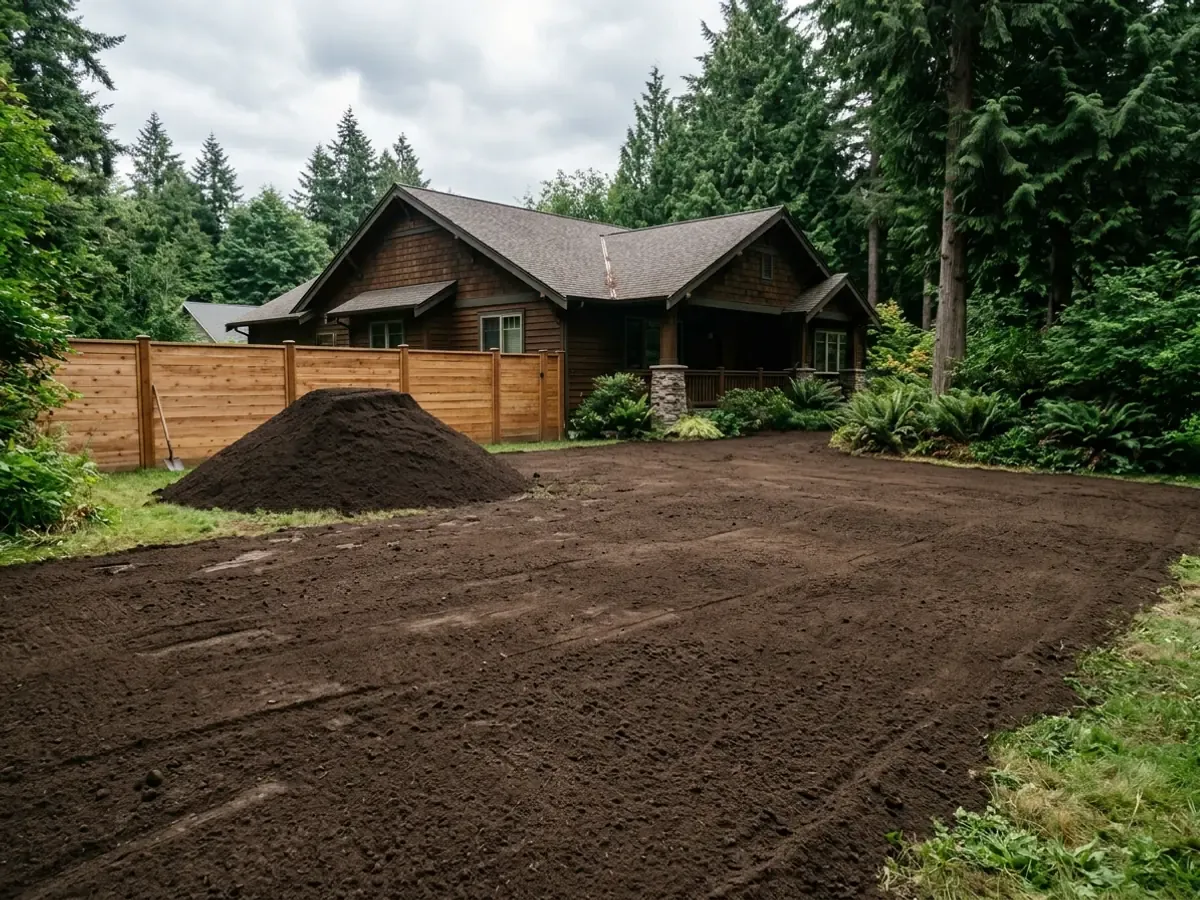
Even top-grade quarry material fails if dumped directly onto sod or spread too thick without lift compaction. Here is how Clear Grade installs topsoil, fill & wood mulch:
- Establish rough mineral subgrade first with a consistent 1.5% to 2% positive drainage slope away from home foundations.
- For deep lows or stump craters, compact clean mineral fill or pit run in 6-inch lifts stopping 4 inches below finished turf height.
- Spread 3 to 4 inches of screened 2-way sandy-loam topsoil during dry weather and firm lightly with a water roller or grading bar (firm enough that boots sink <1/2 inch, never drum-compacted rock-hard).
- On woodland trails, slopes, or muddy gates, spread 4 to 6 inches of coarse shredded hog fuel / arborist mulch so long wood fibers mat together.
Field & Material Reference Photos
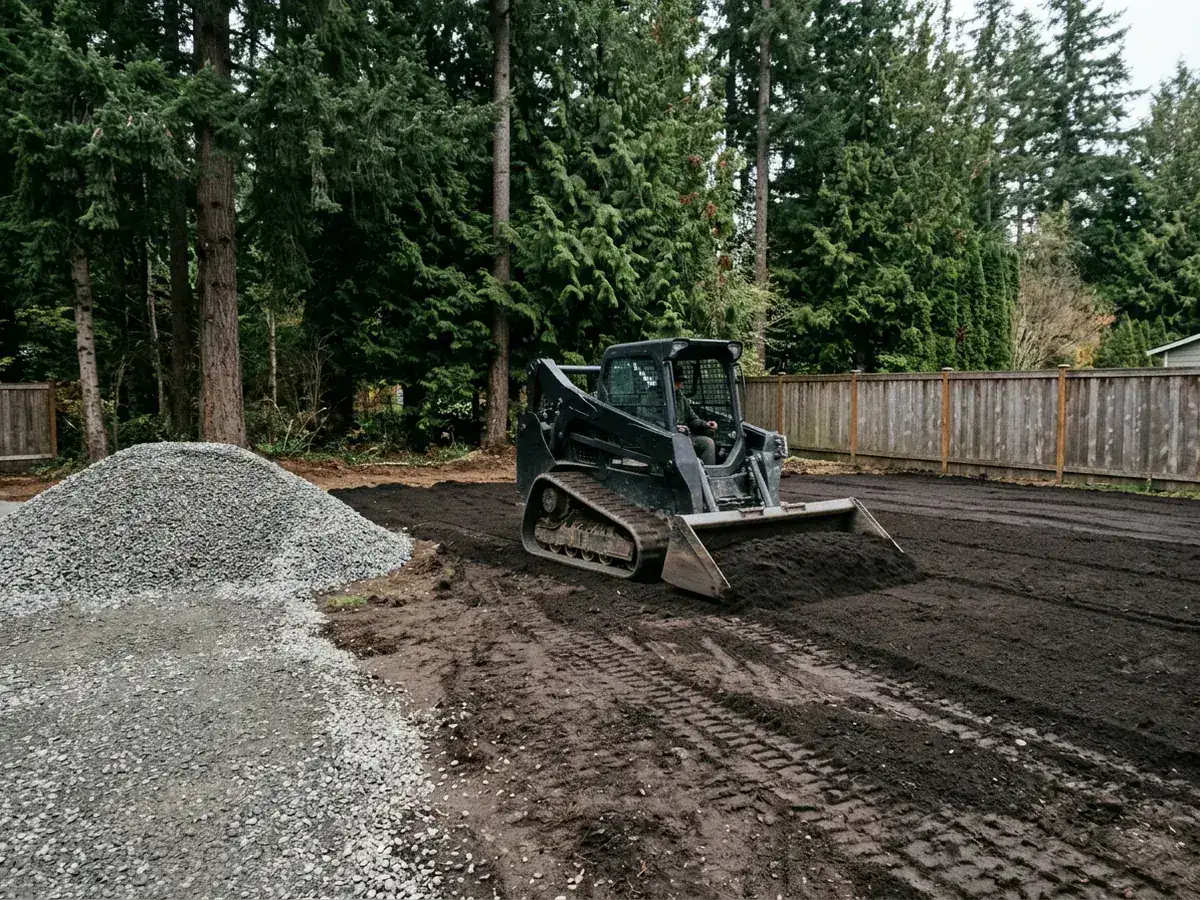
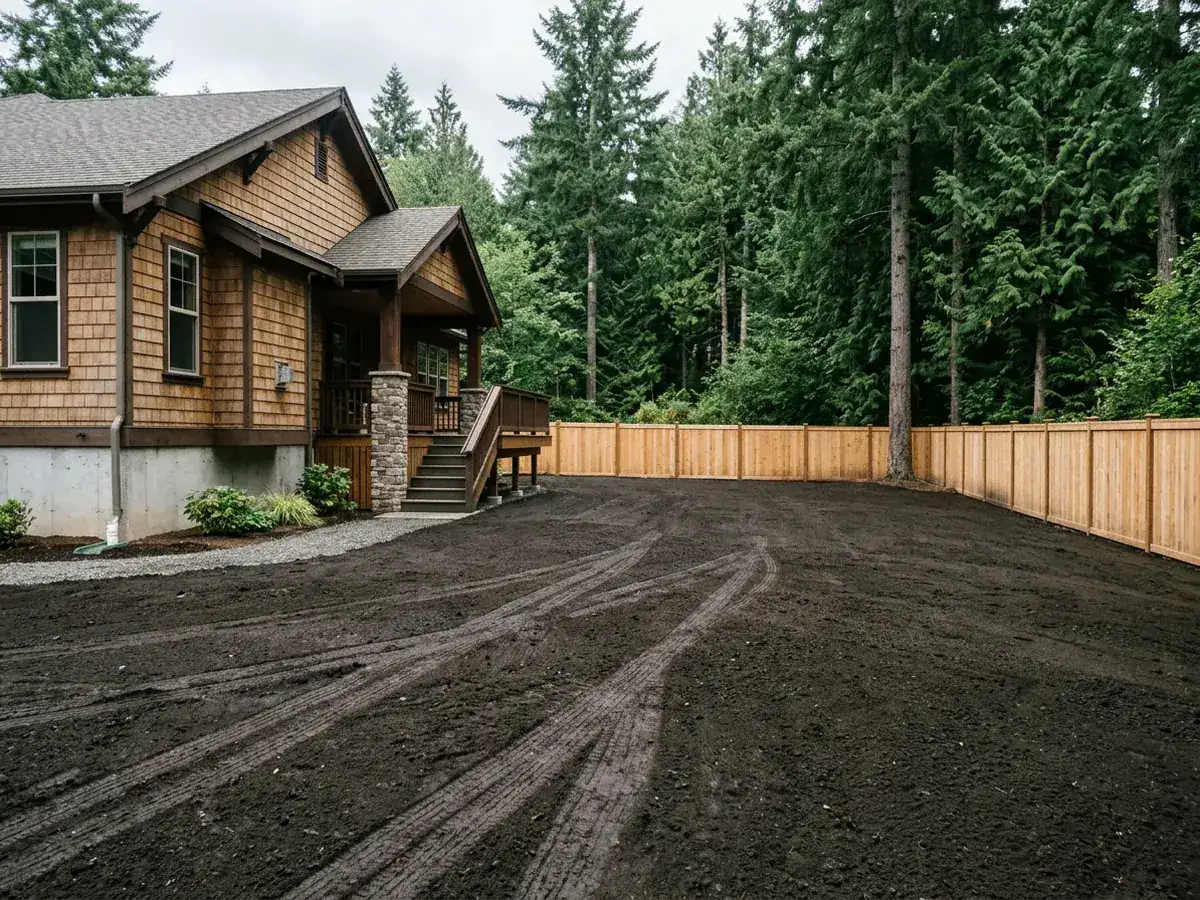
Representative Pacific Northwest equipment, aggregate, and finish examples showing typical site conditions and Clear Grade work standards.
Topsoil, Fill & Wood Mulch FAQs
What topsoil blend grows the healthiest lawn in Western Washington rain?
A screened 2-way sandy-loam turf mix (~65%-70% washed coarse sand blended with ~30%-35% screened organic compost/loam). High sand content keeps winter lawns firm and aerobic rather than waterlogged moss beds.
What is "hog fuel" vs regular beauty bark?
Beauty bark is finely ground decorative bark nuggets that float away in heavy rain and turn slick. Hog fuel consists of long, splintered, fibrous wood and bark strands (2 to 6 inches long) that weave together like a natural doormat over mud.
How many square feet does 1 cubic yard of topsoil or mulch cover?
1 cubic yard covers ~108 sq ft at 3 inches deep, ~81 sq ft at 4 inches deep, or ~54 sq ft at 6 inches deep. Add 10%-15% allowance for light settling when ordering screened topsoil or mulch.
Can I fill a deep stump hole with stump grindings and plant grass on top?
Woody stump grindings decompose over 2 to 5 years, sinking into a bowl in your lawn and robbing nitrogen from grass roots (turning turf yellow). For lawn areas, we haul excess chips out, backfill with compactable mineral soil, and top with 4 inches of 2-way sandy loam.
When is the best season to spread topsoil in Snohomish and King counties?
April through early October offers the best soil structure and seed/sod rooting windows. During wet November-March months, we prioritize gravel, rock, drainage, brush mulching, and hog-fuel trail work so wet lawn soil is never compacted into mud.