
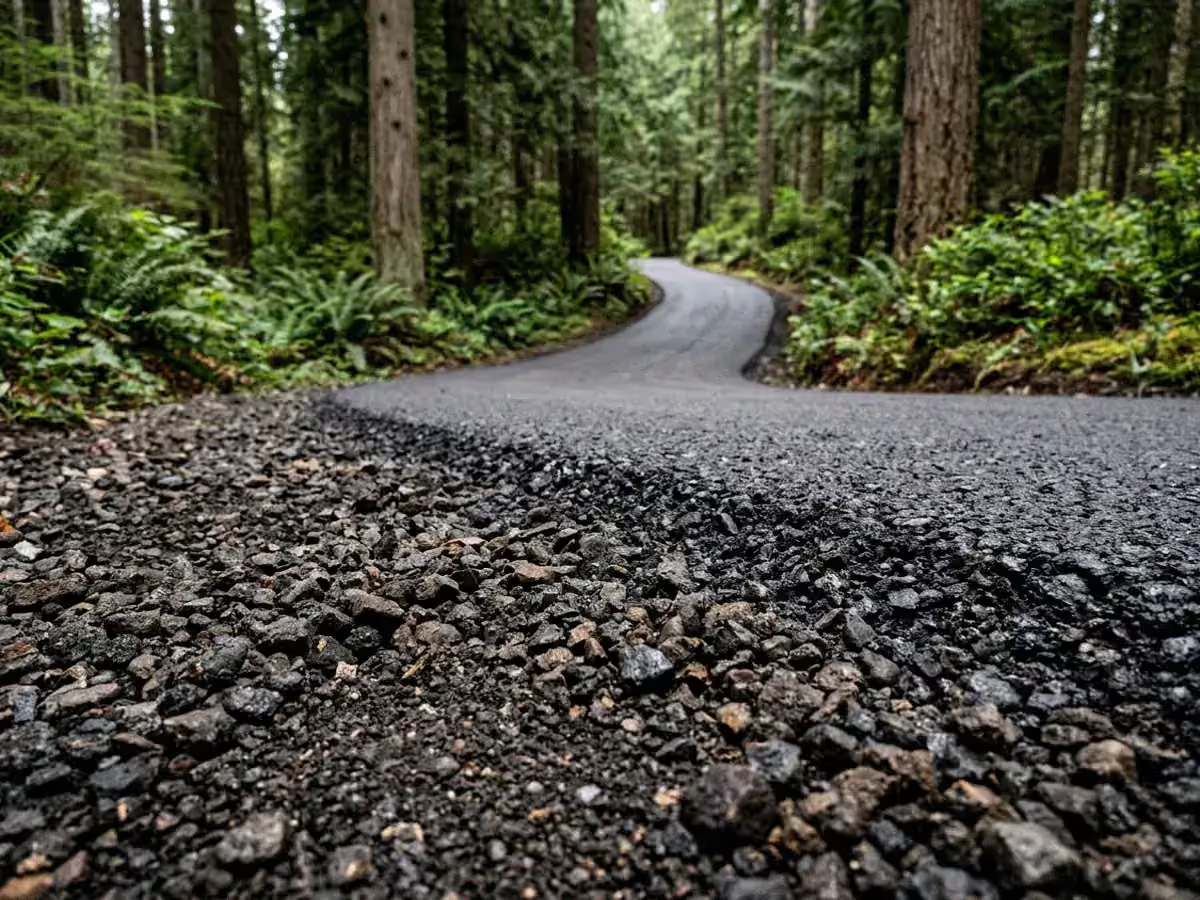
How Asphalt Millings (RAP) Performs
Asphalt millings (Reclaimed Asphalt Pavement or RAP) are produced by cold-planing and screening existing highway asphalt into uniform 3/4-inch-minus aggregate. Because every stone chip retains a thin film of aged bitumen binder, millings behave differently than raw quarry gravel: once graded and vibratory-rolled tight, summer sun warmth and tire traffic help the surface knit into a dark, virtually dust-free crust.
Millings perform best as a 3-to-4-inch compacted wearing cap placed over an already solid, well-drained crushed-rock base. Aggressive vibratory smooth-drum rolling is mandatory - unrolled loose millings stay crumbly and track dark grit, whereas properly rolled millings lock down tight and resist washboarding on moderate hills.
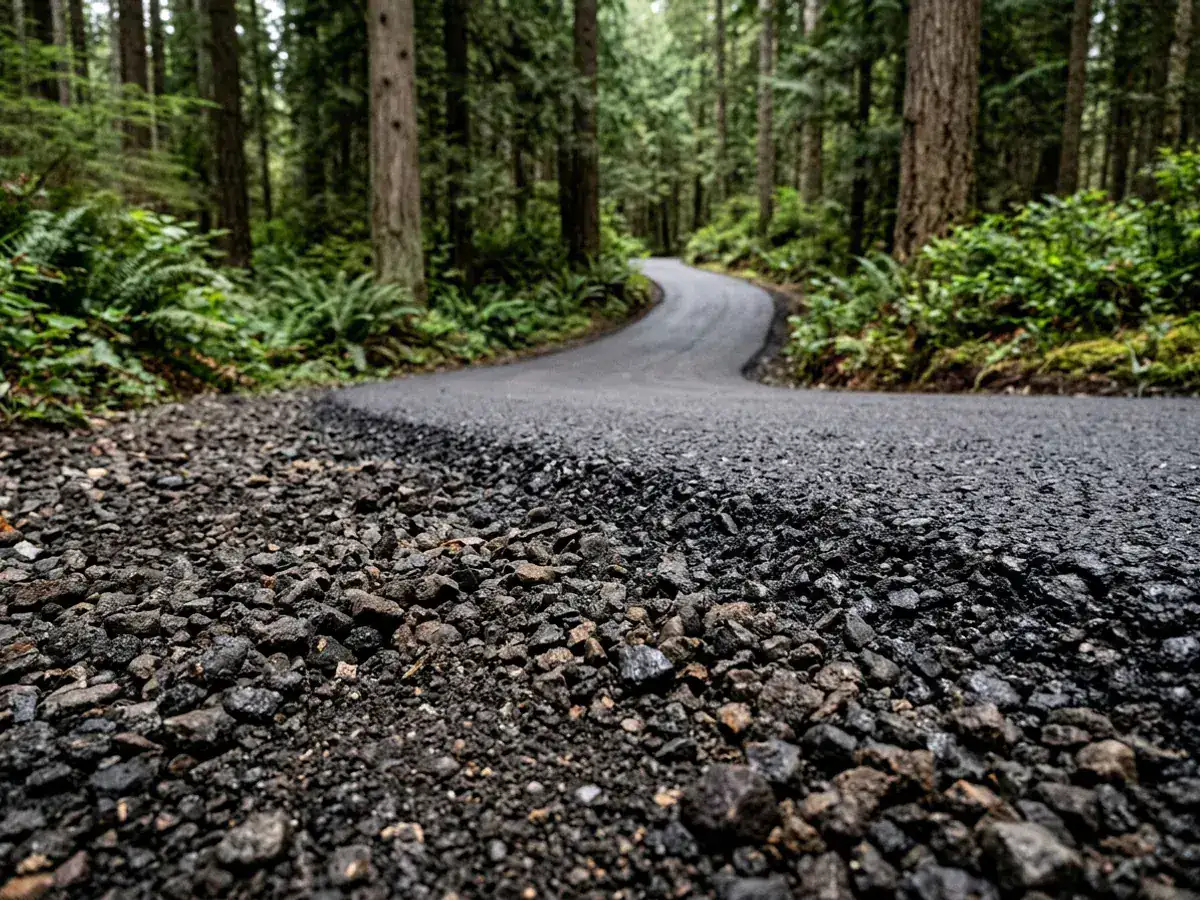
Common WA Gradations & Blends
Local pits and landscape yards stock a few closely related sizes within this family - here is how each option behaves on site.
Screened 3/4"-Minus Clean Millings (Recommended)
Grades smooth as butter with zero oversized slabs; rolls into a tight, uniform charcoal-black finish.
Unscreened Raw Planer Millings (Avoid for Finish)
Cheaper bulk fill, but oversized asphalt slabs drag under grading blades and leave a lumpy top surface.
RAP Over 1-1/4"-Minus Virgin Base (Best Hybrid)
Combines structural load strength below with a low-dust dark wearing surface on top.
Where to Use & Where to Avoid
Matching asphalt millings (rap) to the right layer prevents ruts, plugged French drains, and wasted quarry deliveries.
Best Applications
- Long rural driveways, farm lanes, and shared private roads wanting minimal summer dust
- Moderately sloped driveways (5%-12%) where loose rock tends to scatter under tire spin
- Equipment yards, boat/RV storage pads, and shop aprons wanting a dark blacktop aesthetic
- Homeowners tired of pale gravel dust blowing onto cars, decks, and siding in August
- Snow-country foothill lanes (dark surface absorbs winter sun to melt light frost faster)
Not Ideal For / Avoid
- Driveways inside regulated wetland buffers, lake shorelines, or salmon-bearing stream setbacks (use clean virgin 5/8"-minus basalt near waterways)
- Deeply shaded, wet north-facing cedar tunnels that never receive sun warmth to help cure the binder
- Direct dumping onto spongy clay or sod without a compacted crushed-rock base underneath
- Expecting hot-poured liquid asphalt - millings remain a compacted aggregate crust with semi-soft edges
Sample Coverage & Tonnage
Use these typical Western Washington footprints (including standard roller compaction allowance) to gauge rough volume before your exact quote.
| Sample Project Size | Target Depth | Estimated Volume & Weight |
|---|---|---|
| 12 ft x 40 ft RV / Boat Apron Cap | 3.5" compacted | ~6.5 cu yds (~8.5 tons) |
| 12 ft x 120 ft Residential Driveway Cap | 3.5" compacted | ~19 cu yds (~24 tons) |
| 14 ft x 250 ft Shared Easement Topcoat | 4" compacted | ~51 cu yds (~64 tons) |
Need Asphalt Millings (RAP) Installed?
Send 2 to 4 photos of your driveway, pad, or yard along with rough measurements. We calculate exact tonnage, coordinate delivery, grade to spec, and compact in lifts.
Western WA Field Rules
Glacial clay, 9 months of drizzle, and county critical-area buffers change how aggregates perform here compared to dry climates.
Washington Stream & Wetland Buffer Rules
Snohomish County, King County, and WA Dept. of Ecology restrict recycled asphalt in critical-area buffers, shorelines, and stormwater infiltration trenches. On creek-side lots, we install clean virgin 5/8"-minus basalt instead.
May Through September Gives Tightest Cure
While millings can be graded year-round in dry windows, placing and drum-rolling RAP during 65-85 degree summer weather softens the bitumen film just enough to bond remarkably tight.
Seasonal Availability Swings
Clean screened 3/4"-minus RAP supply peaks during WSDOT summer highway paving season. We verify local pit stock quality before scheduling your haul.
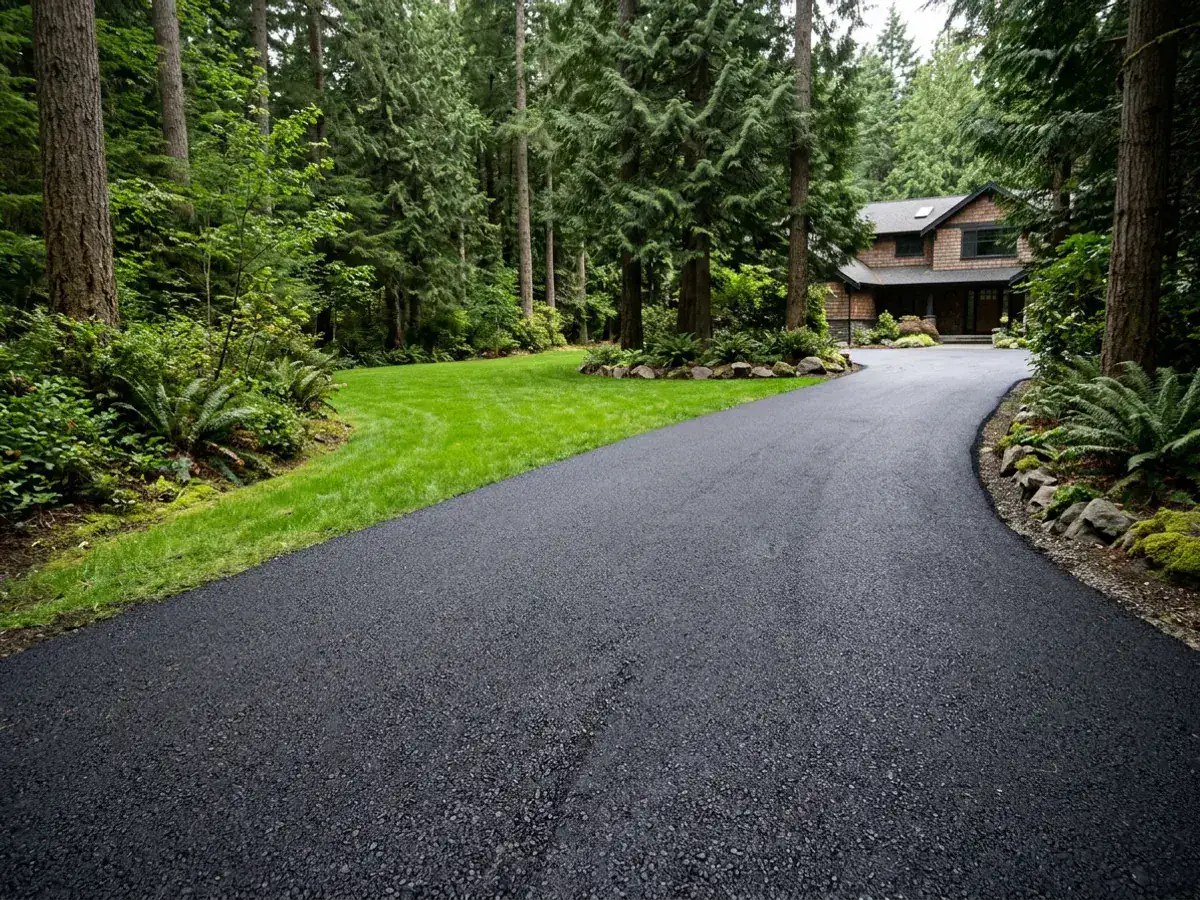
How We Grade & Compact It
Even top-grade quarry material fails if dumped directly onto sod or spread too thick without lift compaction. Here is how Clear Grade installs asphalt millings (rap):
- Confirm parcel drainage setbacks (clear of creek/wetland buffers) and scarify/crown the underlying crushed-rock base.
- Source clean, plant-screened 3/4"-minus millings free of unbroken asphalt chunks or dirt contamination.
- Laser- or blade-grade a uniform 3.5-to-4-inch loose lift with a crisp 2% to 4% water-shedding crown.
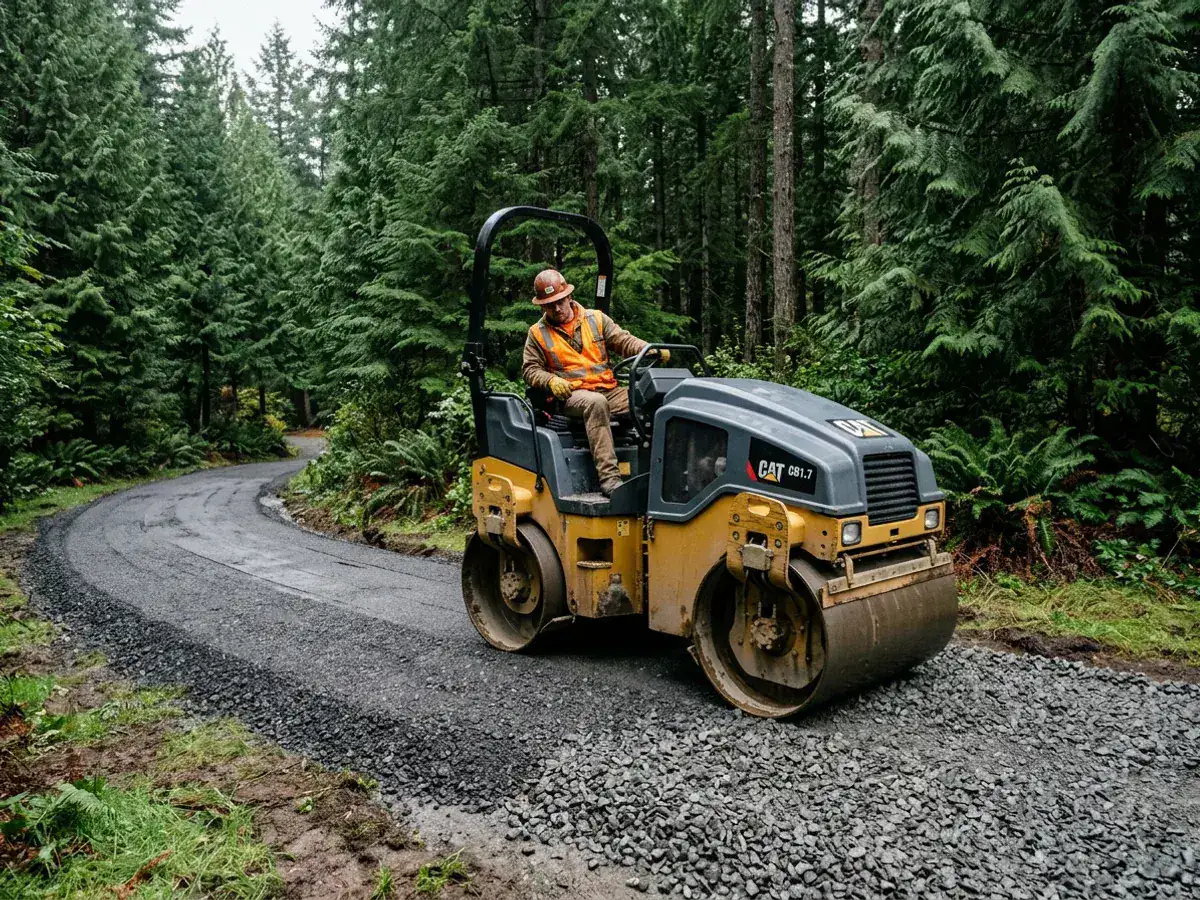
- Compact thoroughly with multiple overlapping passes of a heavy vibratory smooth-drum roller.
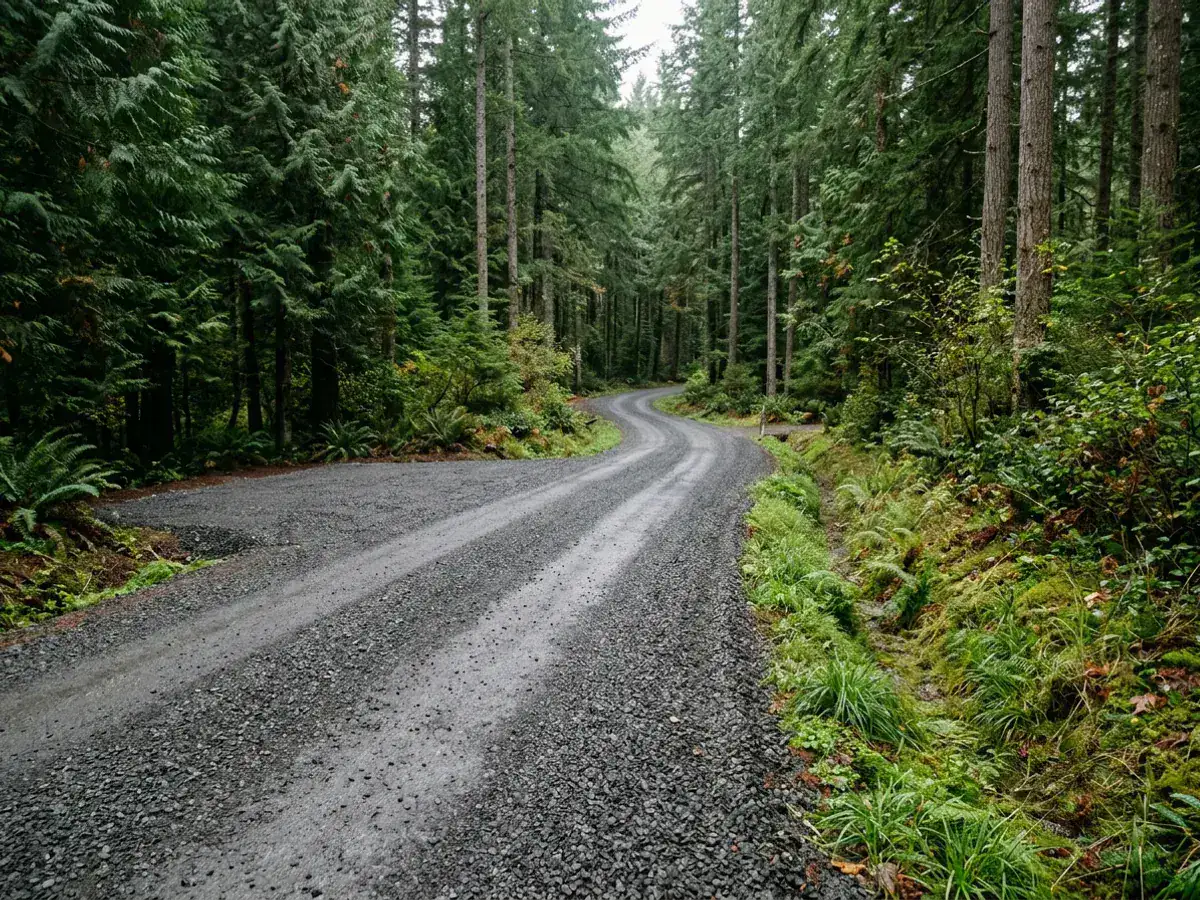
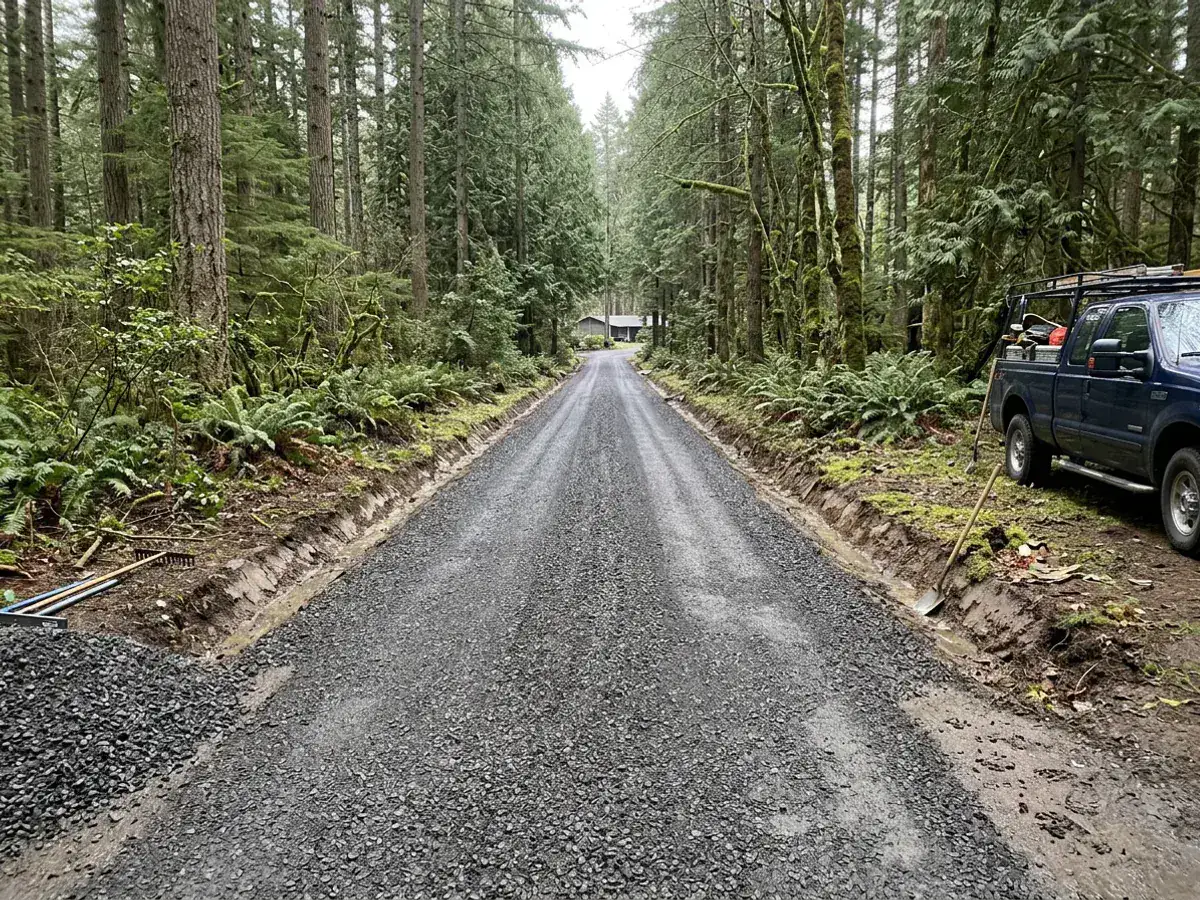
Field & Material Reference Photos
Representative Pacific Northwest equipment, aggregate, and finish examples showing typical site conditions and Clear Grade work standards.
Asphalt Millings (RAP) FAQs
Do asphalt millings harden like a real paved asphalt driveway?
They compact into a firm, semi-bound crust - far tighter and cleaner than loose gravel, especially after one warm summer - though sharp stationary power-steering turns can still scuff surface grains more than hot-mix blacktop.
Are asphalt millings allowed everywhere in Snohomish and King counties?
On upland residential lots, farm lanes, and commercial yards outside critical-area buffers, yes. Near wetlands, ditches feeding fish-bearing streams, or shoreline setbacks, we use virgin 5/8"-minus crushed basalt.
Should you spray diesel or oil on asphalt millings?
Never! Spraying diesel or solvents is illegal, contaminates soil/well water, and actually breaks down bitumen rather than hardening it. Proper screening, warm sun, and heavy vibratory drum rolling are all that is needed.
Can potholes in an asphalt-millings driveway be regraded later?
Yes. Hardened millings require heavy carbide scarifier teeth to rip full-depth before reshaping and re-rolling, which our grading equipment handles cleanly.
Do weeds grow through compacted asphalt millings?
Far less than through dusty pit gravel, because rolled RAP forms a tight, dark, dry crust. Installing geotextile under the base layer and keeping organic dirt off the edges keeps weeds minimal.