
- Simple Regrades
- Full Rebuilds
- Drainage & Crown
- Roller Compaction
- New Access Roads
Pitch water off before it ruts.
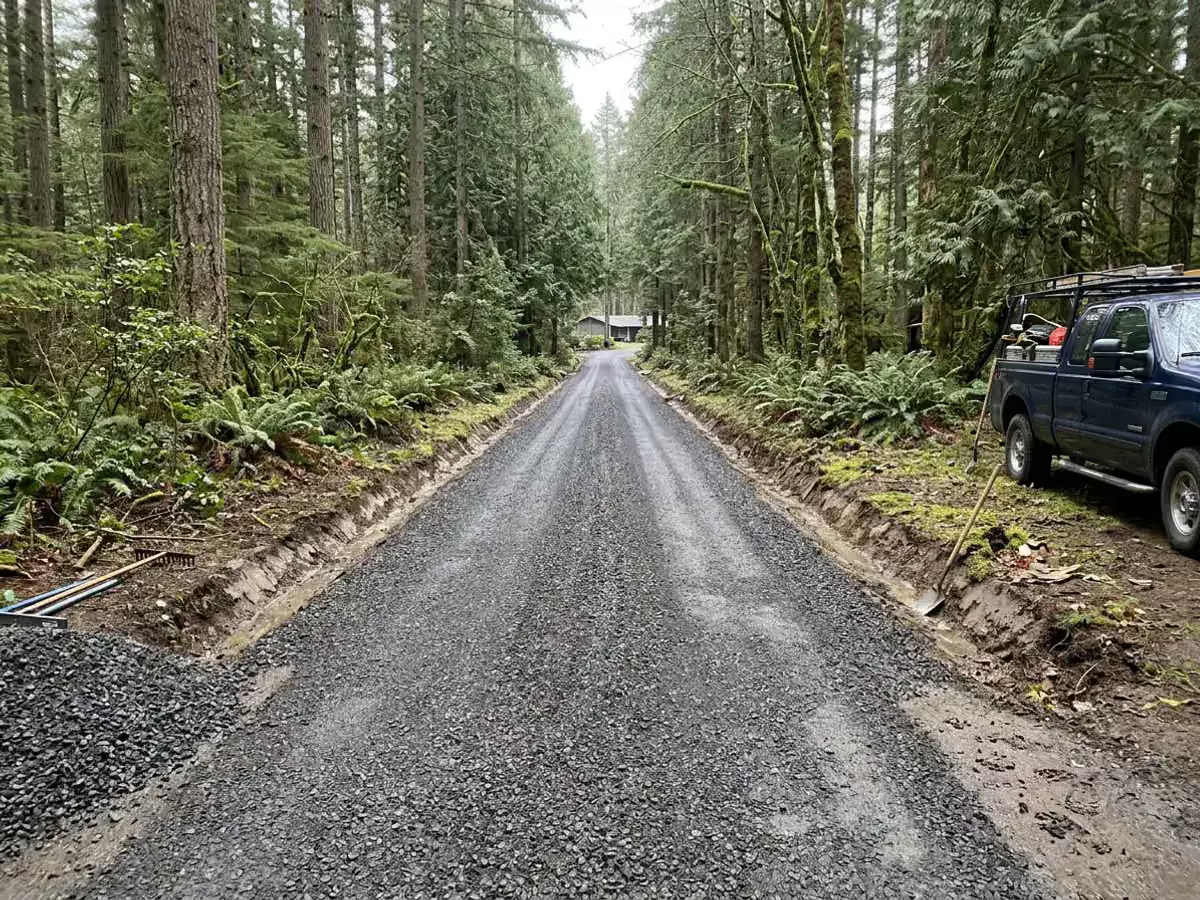
A gravel driveway should never be dead flat. On a flat roadbed, rainwater sits on the surface, softens the stone fines, and turns into potholes under the very next tire pass. On a steep un-crowned hill, rainwater races straight down the wheel tracks like a creekbed. Clear Grade engineers surface geometry for controlled water movement.
Standing water is the #1 destroyer of gravel roads. Even the best quarry basalt softens and potholes if rainwater is trapped on a flat center or dammed up by raised grassy shoulders.
Compare Driveway Scopes
Driveway Restoration & Pothole Repair
Scarify below pothole depth, pull buried stone up, reshape a 2%-4% shedding crown, top-dress with 5/8"-minus, and roller-compact.
Explore scope Raw Land & RV PadsNew Driveways & Geotextile Base
Strip organics to firm till, lay woven road fabric, and compact structural 1-1/4"-minus base plus 5/8"-minus wearing rock.
Explore scope Multi-Home EasementsPrivate & Shared Road Rehab
Full-width grading, turnout bays, ditch/culvert resets, and roller compaction with itemized quotes easy for neighbors to split.
Explore scopeControlled water movement off rock
Every property slope demands a specific profile. Flat straightaways need a centered A-frame crown pitching 2% to 4% toward both edges; hillside cuts often need a single cross-slope pitching into an armored inside ditch and cross-culvert.
- Center crown shaping (roughly 2 to 3 inches higher at centerline on a 12-foot lane)
- Cutting away raised sod and old gravel shoulder berms that trap water on the driving edge
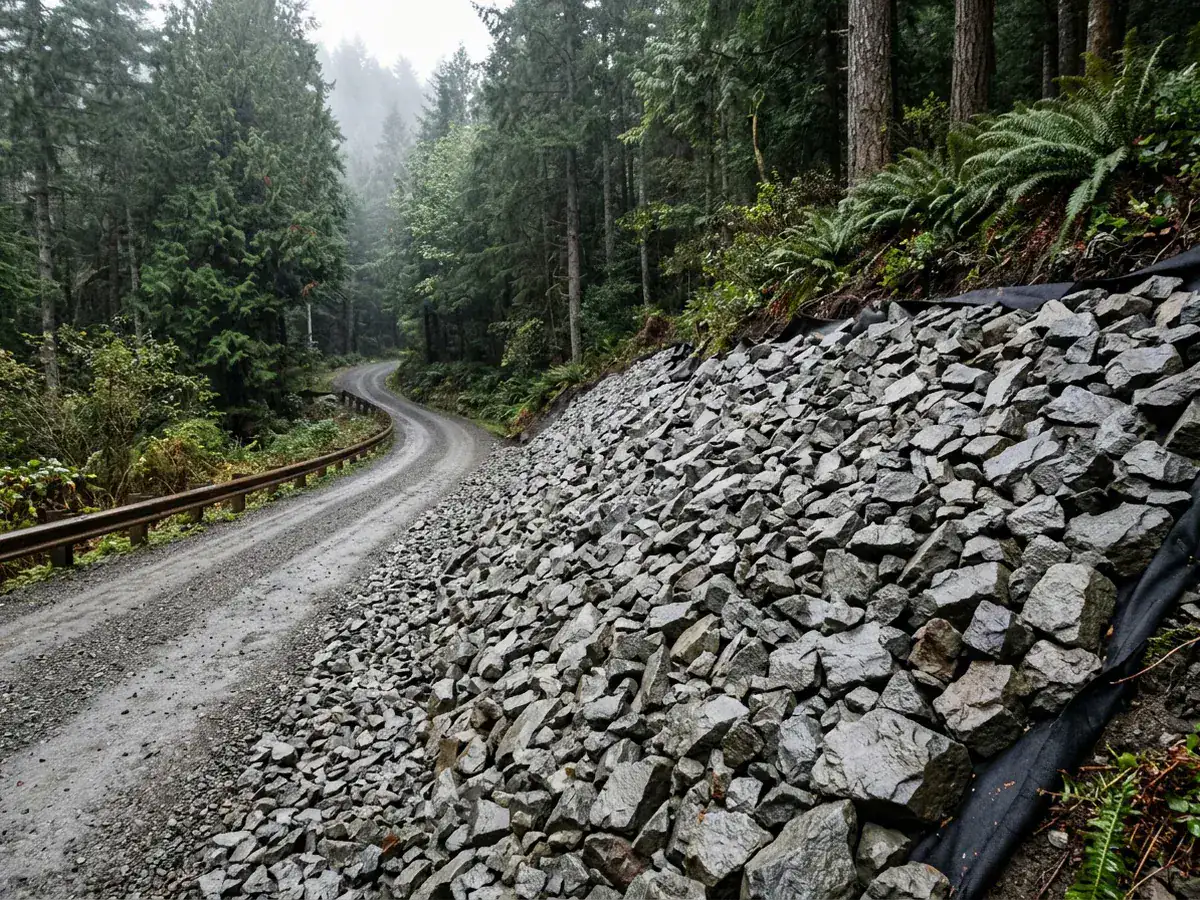
- Hillside cross-slope grading and gentle water-diversion swells on steep woodland drives
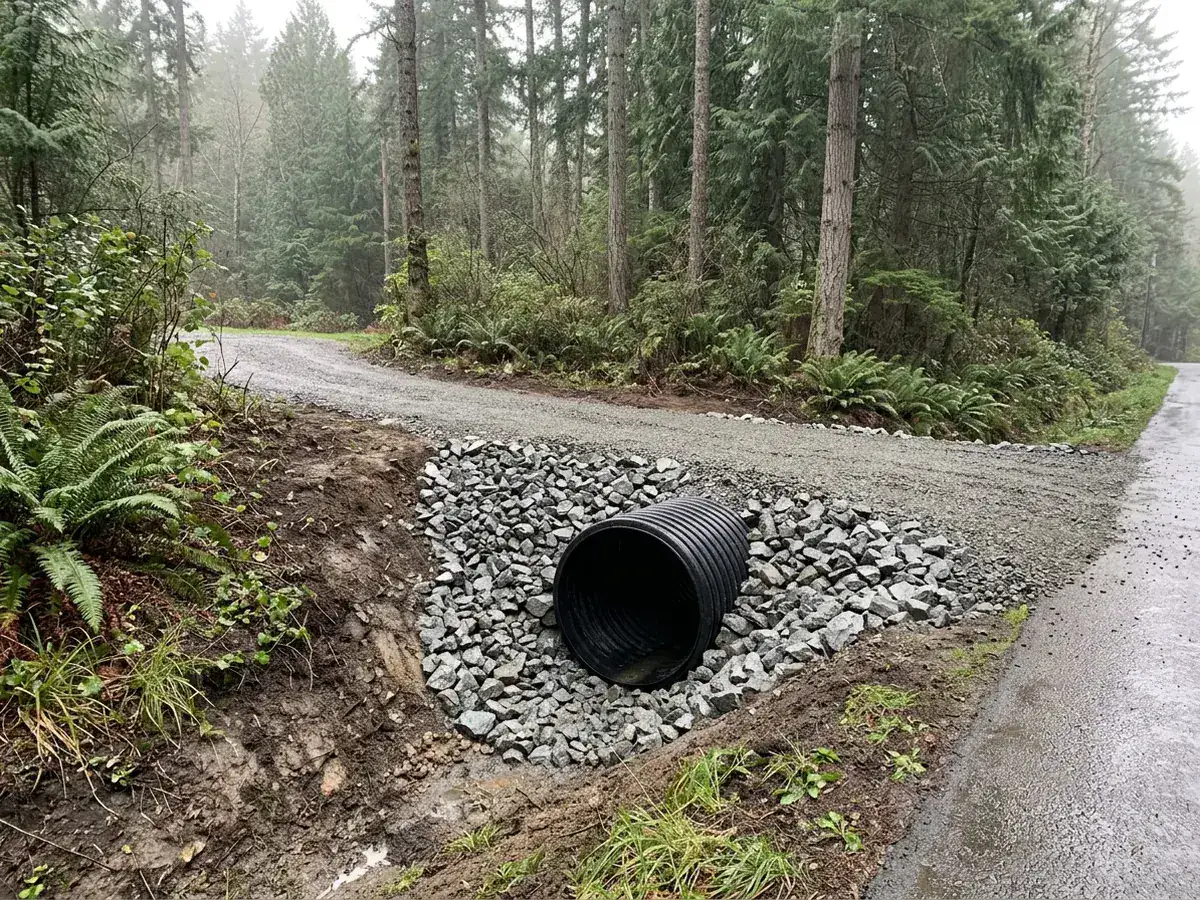
- Roadside V-ditch shaping, dispersion outlets, and HDPE cross-culvert tie-ins
Right Rock & Material Guide
See how crushed basalt fines, structural base rock, recycled asphalt millings, clean drain stone, and bulk soils perform in wet Western Washington conditions.
Request Written Options for Driveway Crown & Slope Grading.
Upload or text 2 to 4 photos of your work area and access width for a free written estimate, or schedule an on-site operator walkthrough.
Eliminating "secondary ditches"
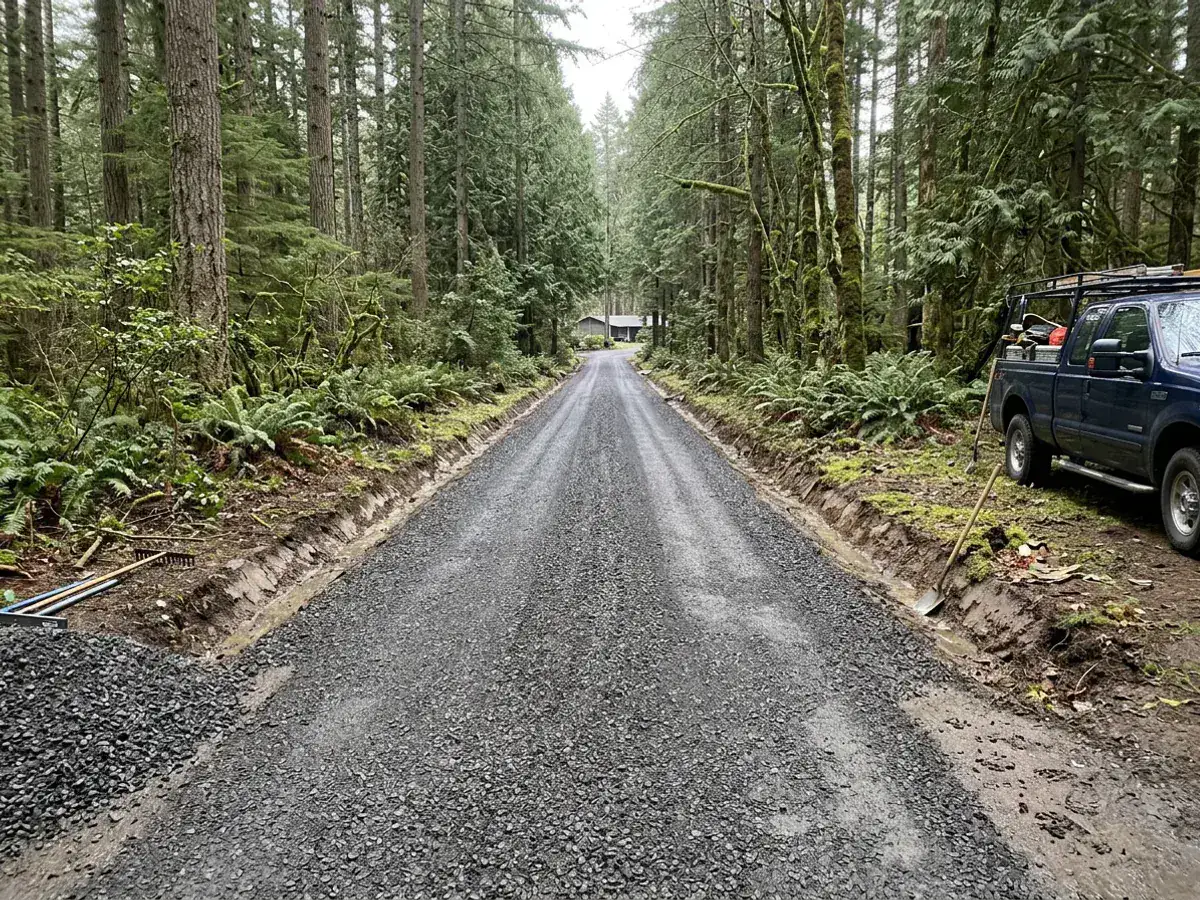
Years of snowplowing, tire push, and grass growth build 3-inch ridges along both edges of older driveways. Those ridges trap water right on the gravel, creating two parallel mud troughs. Stripping shoulders flush lets your driveway breathe and drain again.
Agreed site finish
2% to 4% center crown or engineered cross-slope, flush trimmed shoulders, and free-flowing side swales that shed rain fast.
Tested against winter downpours
Using rotary lasers and digital slope levels alongside operator eye, we verify positive fall from centerline to shoulder and down every ditch line before rolling the final surface tight.
- Snap a photo right after rain if possible - puddles and wash lines show exact low spots immediately.
- Point out any downspouts or uphill hillside springs dumping water onto the driveway.
- Note any existing driveway culverts that flood or back up during heavy storms.
A closer look at the work
Representative Pacific Northwest equipment, aggregate, and finish examples showing typical site conditions and Clear Grade work standards.
Frequently asked questions
How steep should a gravel driveway crown be?
A 2% to 4% cross-pitch (roughly 2.5 to 3 inches higher at the center of a 12-foot-wide lane than at the outer edges) is steep enough to shed Northwest rain briskly without feeling tipped inside your car.
Should a hillside driveway have a center crown or a one-way cross-slope?
On curved hillside bench roads, a single inward cross-slope pitching into a clean inside ditch (paired with cross-culverts) is often safer and prevents water from eroding the steep fill bank on the downhill edge.
What are "secondary ditches" along a driveway?
When tires push gravel outward and grass grows into that ridge along both shoulders, a 2-to-4-inch dam forms on each edge - trapping rainwater on the roadbed like a canal. Cutting those shoulder berms off restores instant sheet drainage.