
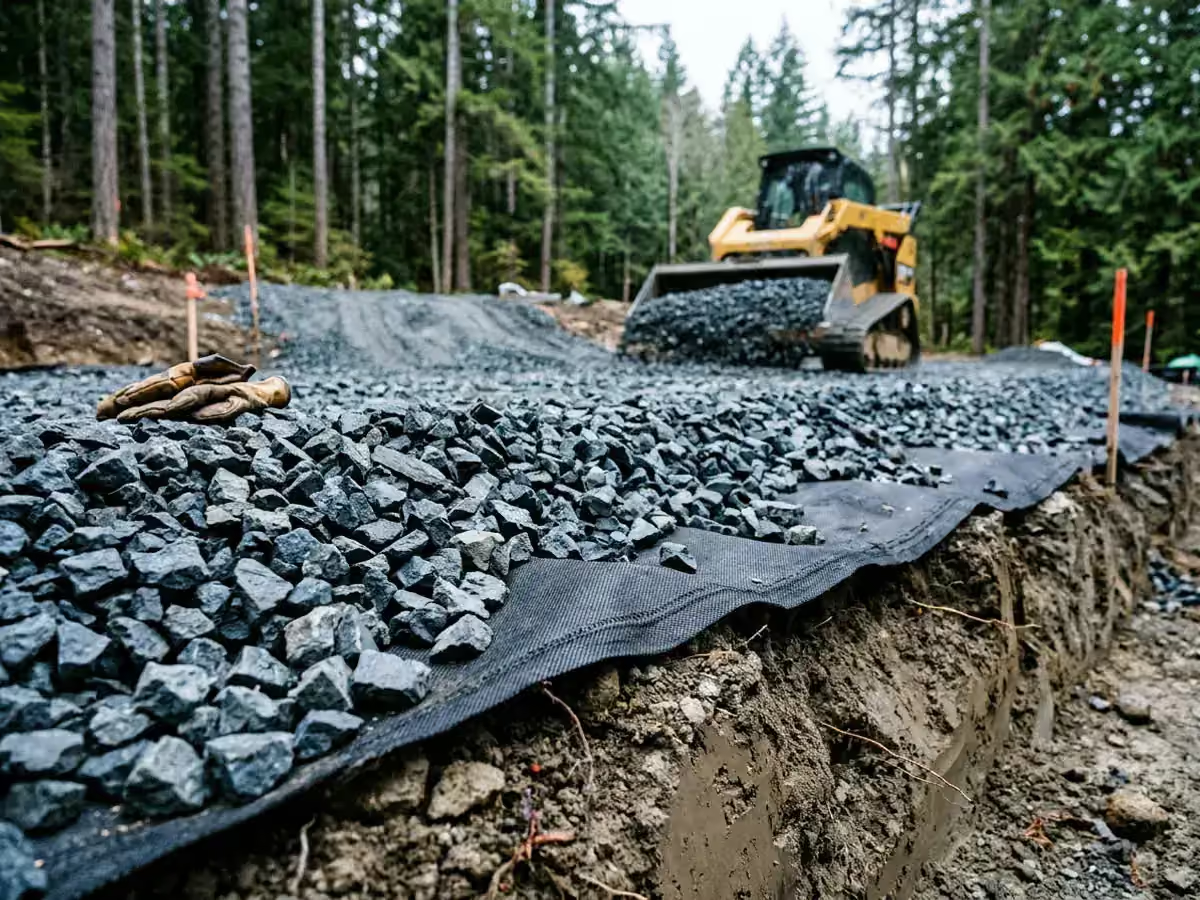
How 1-1/4"-Minus Base Rock Performs
Called 1-1/4"-Minus or WSDOT Crushed Surfacing Base Course (CSBC) at Western Washington quarries, this aggregate steps stone size up to 1.25 inches graded smoothly down through angular chips and stone dust. Larger fractured rock bridges across damp subgrade soft spots and spreads heavy tire loads far wider than small 5/8" topping gravel.
Under 12,000-lb trailer axles or delivery trucks, thin small-stone driveways flex and punch downward into damp Puget Sound soil. Installing a 4-to-8-inch compacted structural base of 1-1/4"-minus over woven geotextile distributes point loads across a broad footprint, giving your 5/8"-minus finish course an unshakeable foundation.
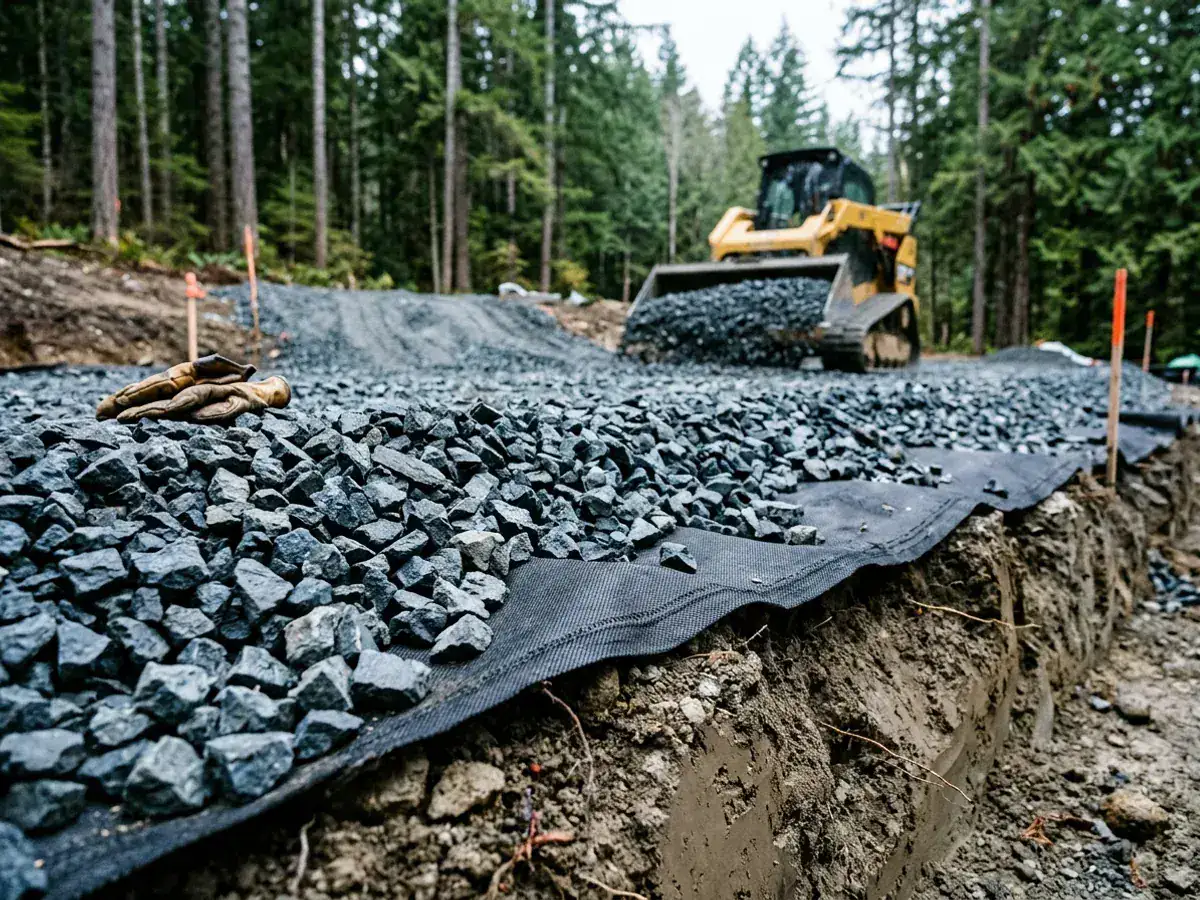
Common WA Gradations & Blends
Local pits and landscape yards stock a few closely related sizes within this family - here is how each option behaves on site.
1-1/4"-Minus Virgin Basalt (WSDOT CSBC)
Top structural choice for residential and commercial driveways, fire lanes, shop slabs, and retaining wall footing pads.
1-1/2"-Minus Heavy Road Base
Slightly chunkier quarry run favored on steep foothill access roads in Monroe, Sultan, Granite Falls, and North Bend.
3/4" Clean Angular Slab Rock (No Fines)
Used specifically INSIDE concrete stem-wall foundations as a radon/capillary break; use 1-1/4"-minus for unconfined exterior pads.
Where to Use & Where to Avoid
Matching 1-1/4"-minus base rock to the right layer prevents ruts, plugged French drains, and wasted quarry deliveries.
Best Applications
- Primary structural base layer under new gravel driveways and rural access lanes
- Heavy-load detached garage, pole barn, metal shop, and DADU building pads
- Class-A motorhome, fifth-wheel, boat, and equipment trailer parking pads
- Rebuilding sunken wheel ruts and soft sections on older shared private roads
- Compacted structural leveling pads under segmental block and boulder retaining walls
Not Ideal For / Avoid
- Barefoot lawn walkways or decorative garden paths (1.25" angular stones feel coarse underfoot unless capped)
- Perforated French drain pipe surround (contains stone fines that block water entry)
- Bottomless winter clay soup without woven fabric or 2"-4" quarry spalls keyed in underneath first
- Thin 1.5-inch cosmetic skim coats (stones are 1.25 inches wide and will drag/roll unless laid >= 4" thick)
Sample Coverage & Tonnage
Use these typical Western Washington footprints (including standard roller compaction allowance) to gauge rough volume before your exact quote.
| Sample Project Size | Target Depth | Estimated Volume & Weight |
|---|---|---|
| 12 ft x 40 ft RV Parking Base | 6" compacted | ~10.5 cu yds (~15 tons / 1 solo truck) |
| 12 ft x 100 ft New Driveway Base | 5" compacted | ~22 cu yds (~31 tons / 1 truck & pup) |
| 30 ft x 40 ft Shop Building Pad | 6" compacted | ~27 cu yds (~38 tons) |
Need 1-1/4"-Minus Base Rock Installed?
Send 2 to 4 photos of your driveway, pad, or yard along with rough measurements. We calculate exact tonnage, coordinate delivery, grade to spec, and compact in lifts.
Western WA Field Rules
Glacial clay, 9 months of drizzle, and county critical-area buffers change how aggregates perform here compared to dry climates.
Minimum Lift Rule (3x Largest Stone)
Civil grading best practice sets minimum compacted lift thickness at roughly 3x the largest stone diameter: for 1-1/4"-minus, aim for at least 4 inches per lift so large stones seat flat without popping loose.
Fire-Apparatus Access Lane Spec
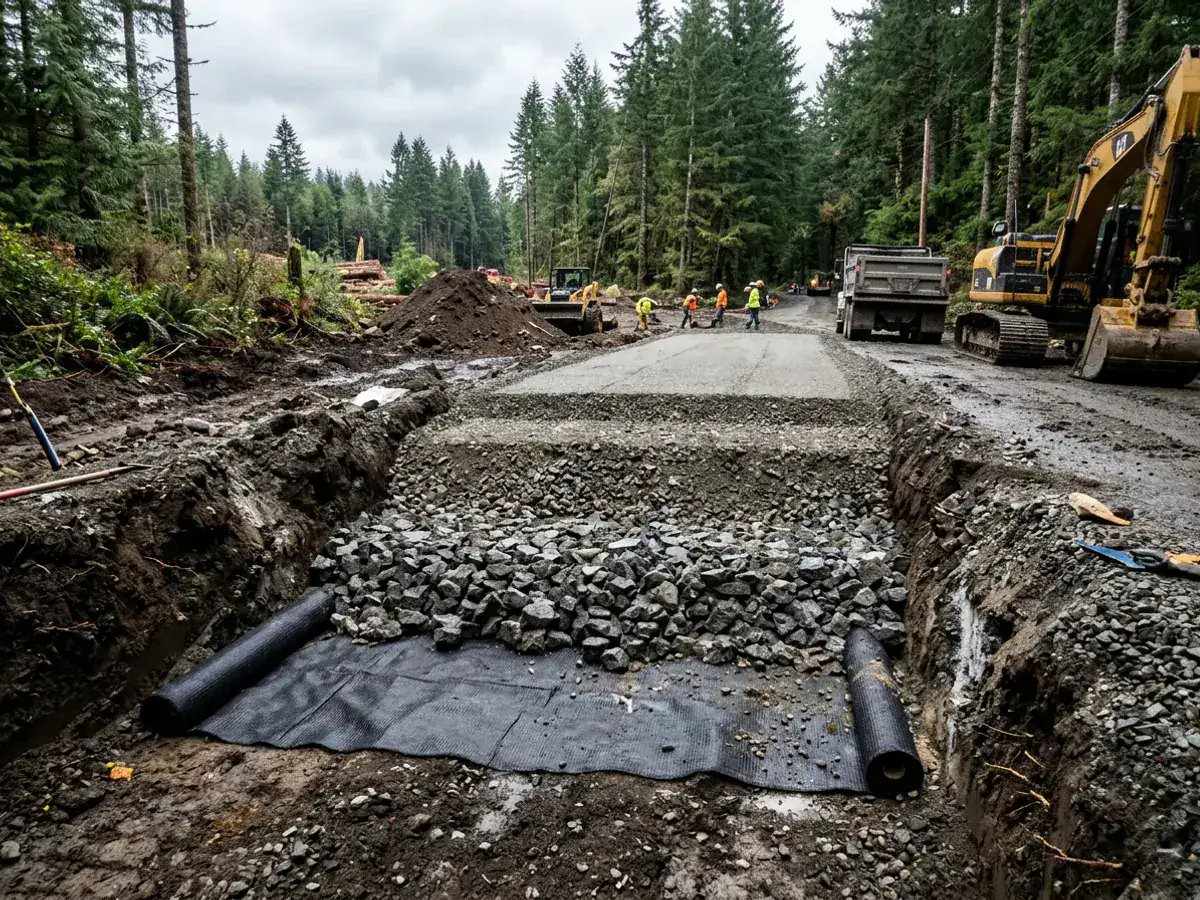
Snohomish and King County rural fire-lane driveways typically require a 12-to-20-foot drivable width engineered for 75,000-lb fire trucks - where 6 to 8 inches of compacted 1-1/4"-minus over geotextile does the heavy lifting.
Cap Now or Cap After Construction
Building a custom home or shop? Run naked compacted 1-1/4"-minus during framing and concrete deliveries, then cap with clean 3" of 5/8"-minus at final occupancy.
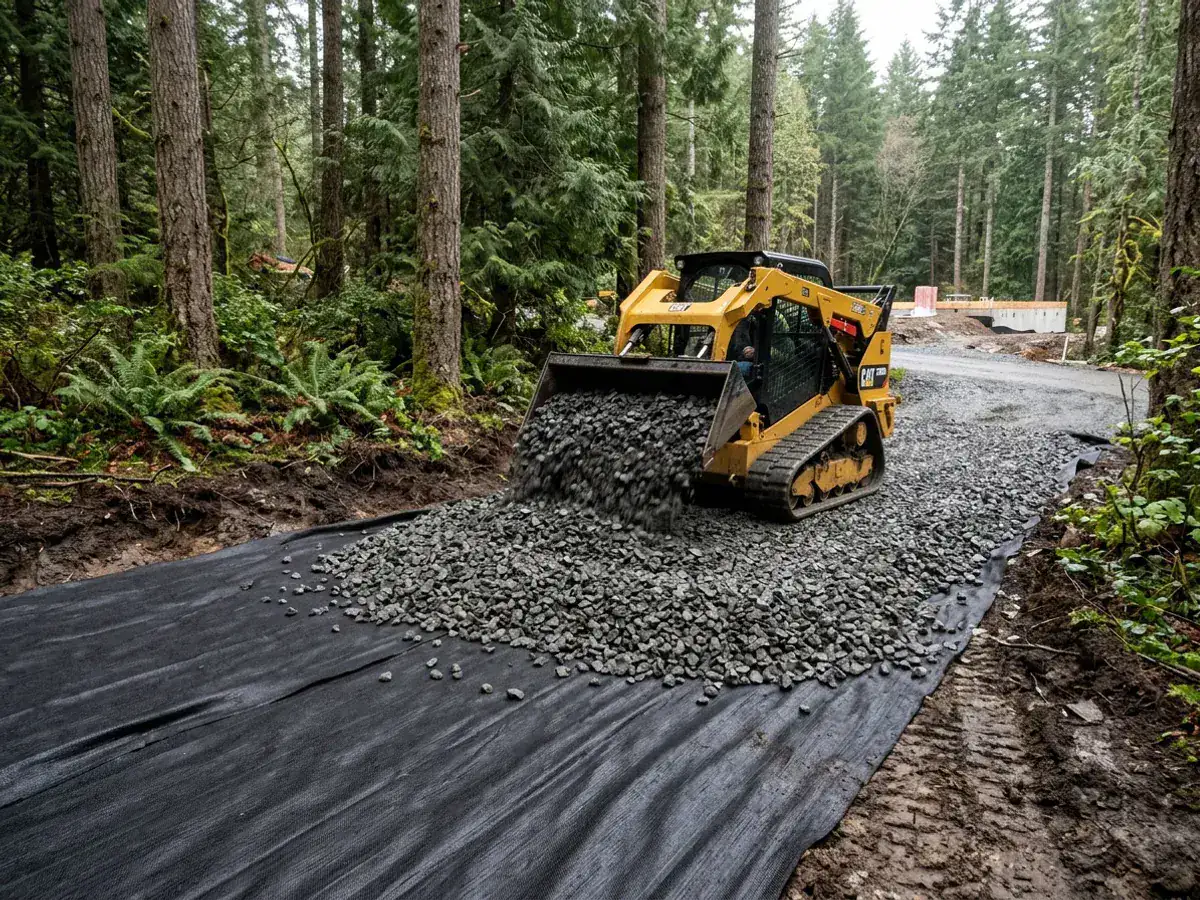
How We Grade & Compact It
Even top-grade quarry material fails if dumped directly onto sod or spread too thick without lift compaction. Here is how Clear Grade installs 1-1/4"-minus base rock:
- Excavate all turf, forest duff, and organic black soil down to undisturbed native glacial till or stiff mineral subsoil.
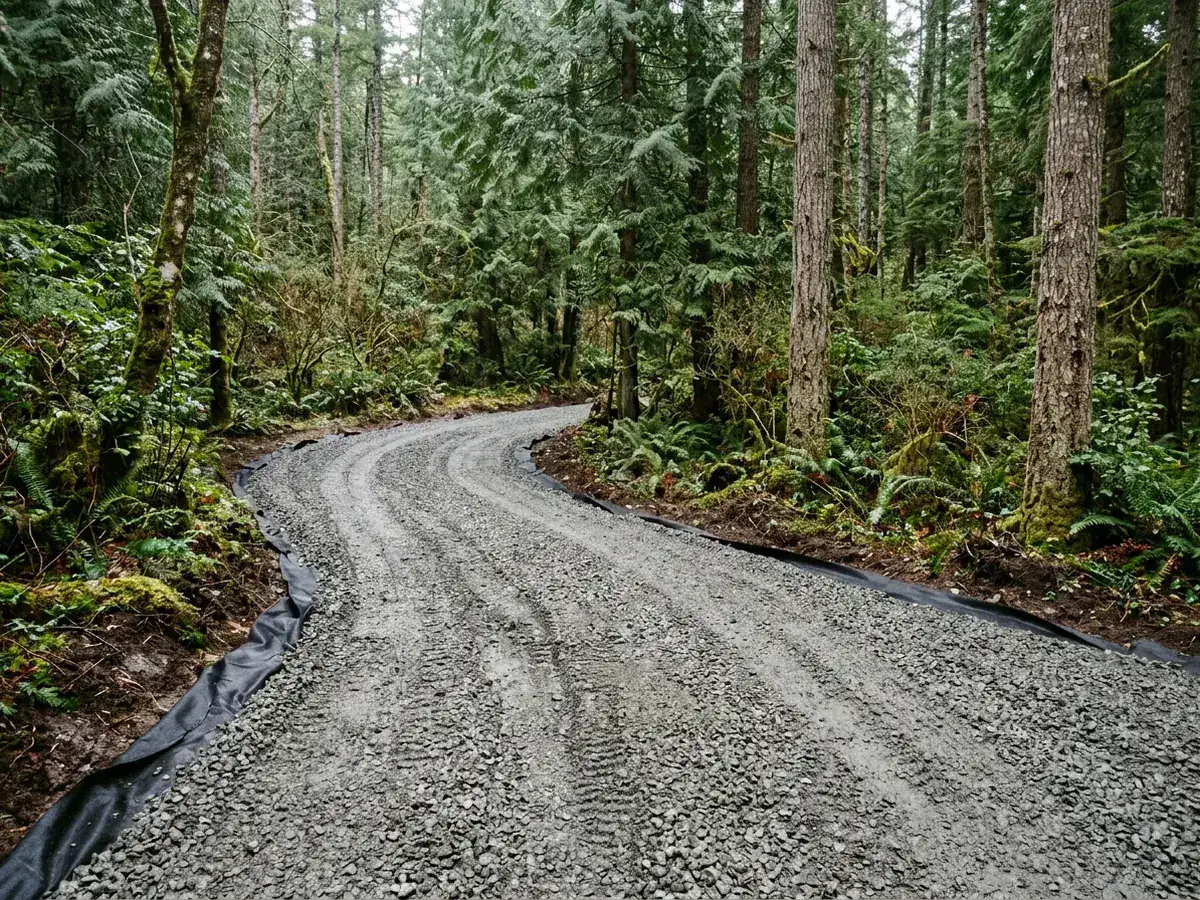
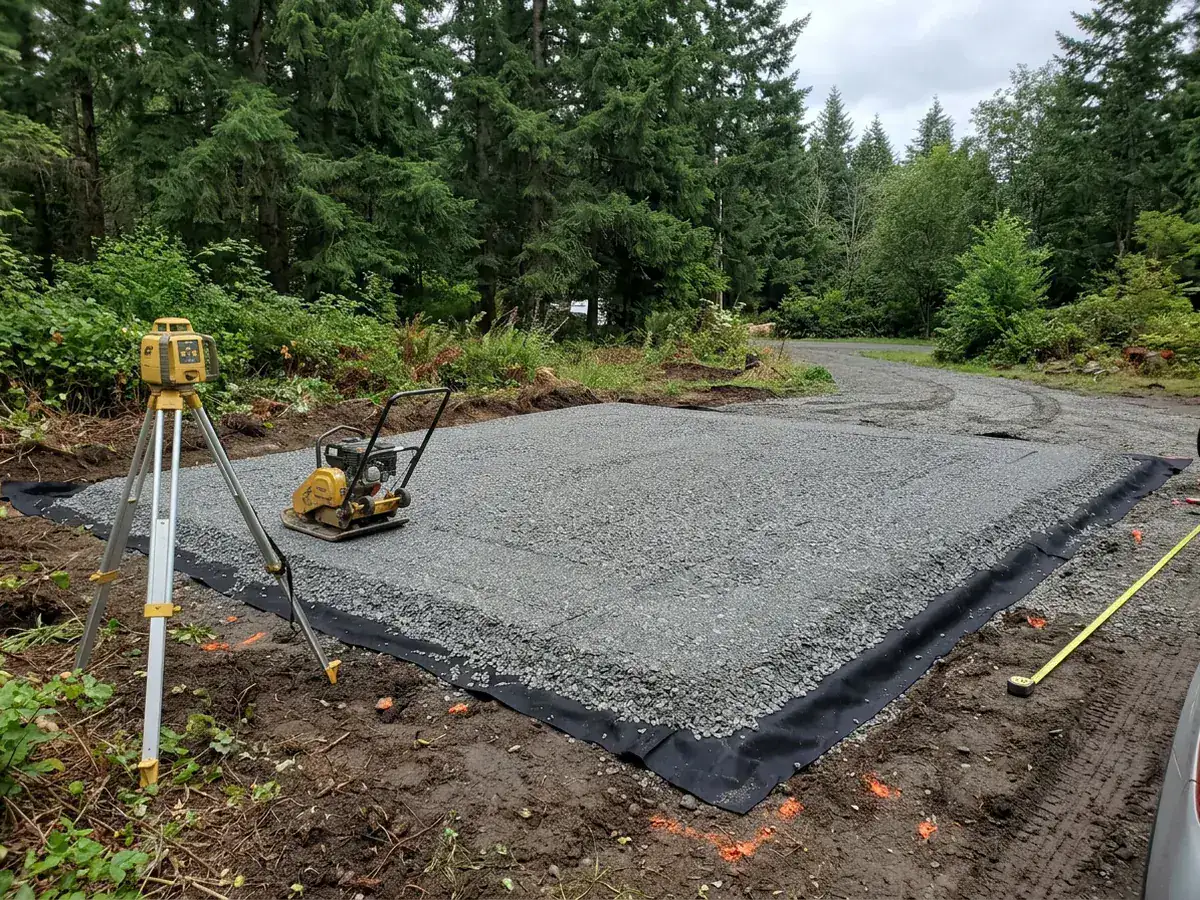
- Lay woven geotextile road stabilization fabric flat across the cut with 18-to-24-inch seam overlaps.
- Place 1-1/4"-minus in lifts no deeper than 4 to 5 inches loose, moisture-condition, and compact hard with a vibratory drum roller.
- Cap with 3 inches of 5/8"-minus crushed surfacing rock if a smoother residential driving finish is desired.
Field & Material Reference Photos
Representative Pacific Northwest equipment, aggregate, and finish examples showing typical site conditions and Clear Grade work standards.
1-1/4"-Minus Base Rock FAQs
Can I drive directly on 1-1/4"-minus without capping it with 5/8"-minus?
Yes, especially on rural acreage roads, farm lanes, and heavy equipment yards. However, for residential driveways where kids play, dogs run, or snow shovels are used, capping with 3 inches of 5/8"-minus gives a noticeably smoother finish.
How thick of a 1-1/4"-minus base does a new WA driveway need?
Typical residential driveways over firm till use 4 to 6 inches of compacted 1-1/4"-minus under a 3-inch 5/8"-minus topcoat (7-9 inches total rock). Soft clay corridors or fire-truck lanes step up to 8-12 inches total section.
Is 1-1/4"-minus better than round pit-run gravel for a shop pad?
Yes. Every face of 1-1/4"-minus is mechanically fractured in a quarry crusher, so stones lock together with zero rolling under concrete slabs or vehicle lifts.
How many tons of 1-1/4"-minus fit in a dump truck?
A standard 4-axle solo dump truck hauls roughly 15 to 18 tons (~11-13 cubic yards), while a truck-and-pup combination delivers 28 to 32 tons (~20-22 cubic yards) per trip.
Do I still need geotextile fabric under 1-1/4"-minus?
Over damp clay, silty loam, or winter-wet ground - always yes. Without separation fabric, tire pressure pumps wet clay upward into the base voids and steals half your gravel depth within two winters.