
- Simple Regrades
- Full Rebuilds
- Drainage & Crown
- Roller Compaction
- New Access Roads
Separate wet clay from clean rock.
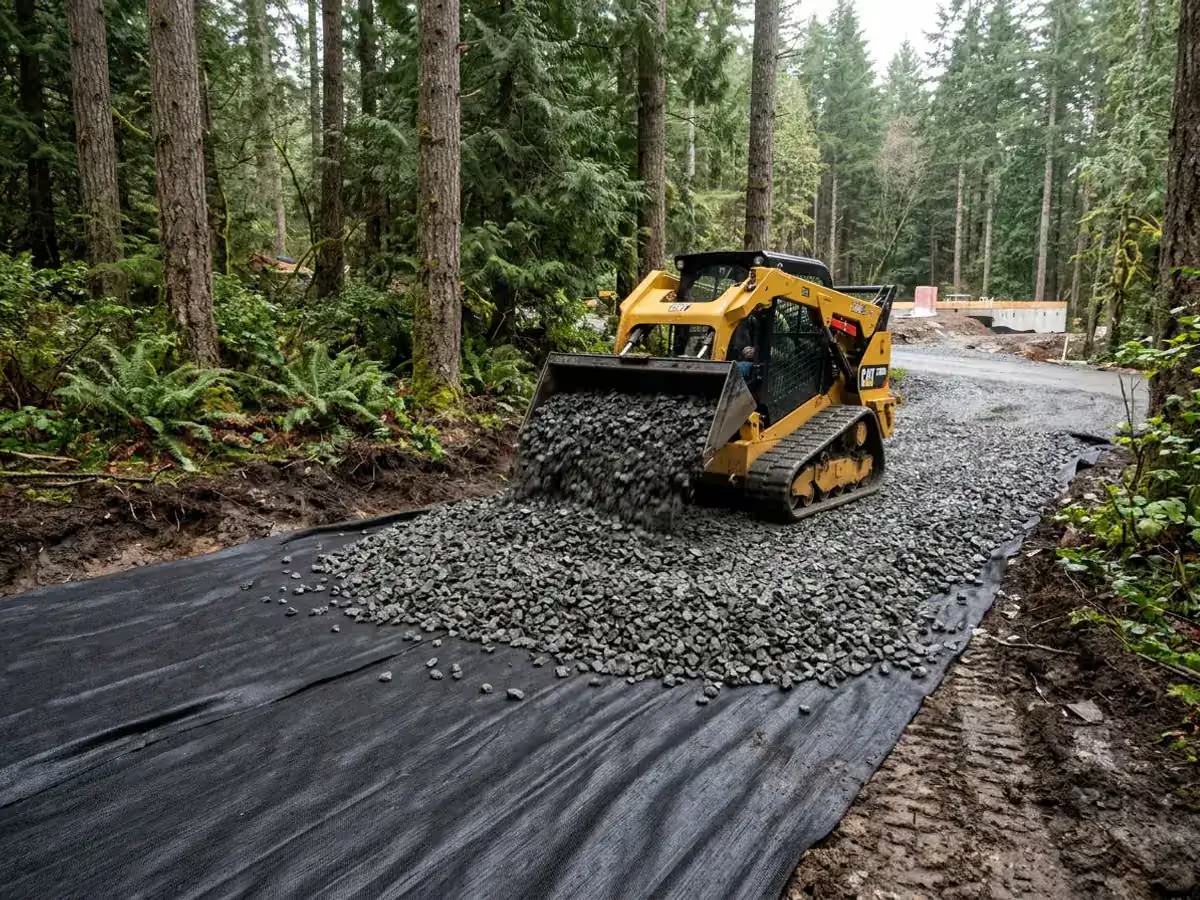
Western Washington glacial clay and silty loam hold moisture like a sponge from October through May. When heavy tires roll over gravel laid directly on bare dirt, downward pressure pushes clean rock down into the mud while pumping slick clay upward into the stone voids. Within two winters, 6 inches of fresh rock vanishes into mud.
In Puget Sound winters, native clay subgrade turns soft and plastic. Without a geotextile barrier, vehicle weight squeezes wet mud upward into your gravel voids - ruining expensive crushed stone in a single rainy season.
Compare Driveway Scopes
Driveway Restoration & Pothole Repair
Scarify below pothole depth, pull buried stone up, reshape a 2%-4% shedding crown, top-dress with 5/8"-minus, and roller-compact.
Explore scope Raw Land & RV PadsNew Driveways & Geotextile Base
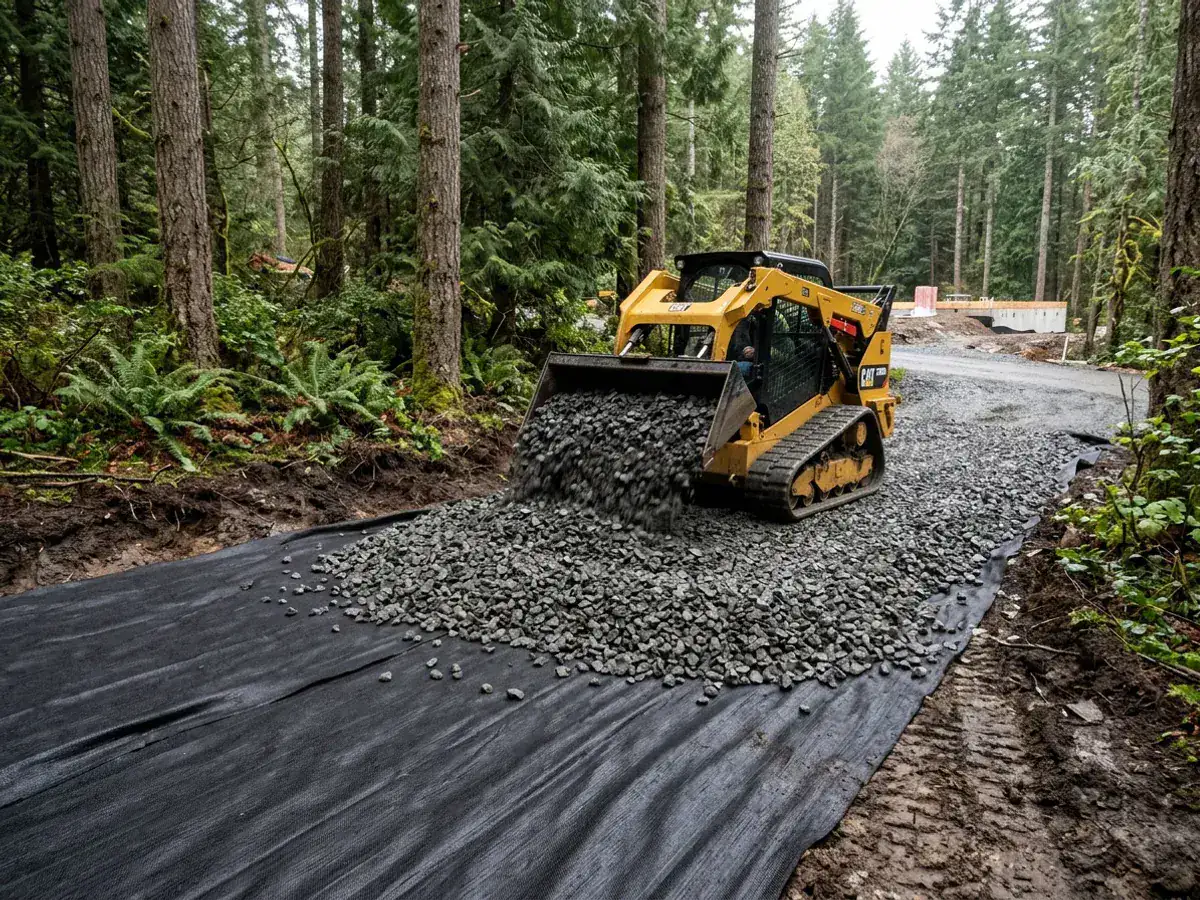
Strip organics to firm till, lay woven road fabric, and compact structural 1-1/4"-minus base plus 5/8"-minus wearing rock.
Explore scope Multi-Home EasementsPrivate & Shared Road Rehab
Full-width grading, turnout bays, ditch/culvert resets, and roller compaction with itemized quotes easy for neighbors to split.
Explore scopePermanent separation & tension strength
Commercial geotextile road fabric acts as both a permanent physical barrier and a tension membrane under your base rock - letting groundwater pass while locking clay below and clean aggregate above.
- High-tensile woven stabilization geotextile for driveways, private roads, RV pads, and truck entrances
- Non-woven needle-punched drainage filter fabric for French drains, swales, and culvert riprap
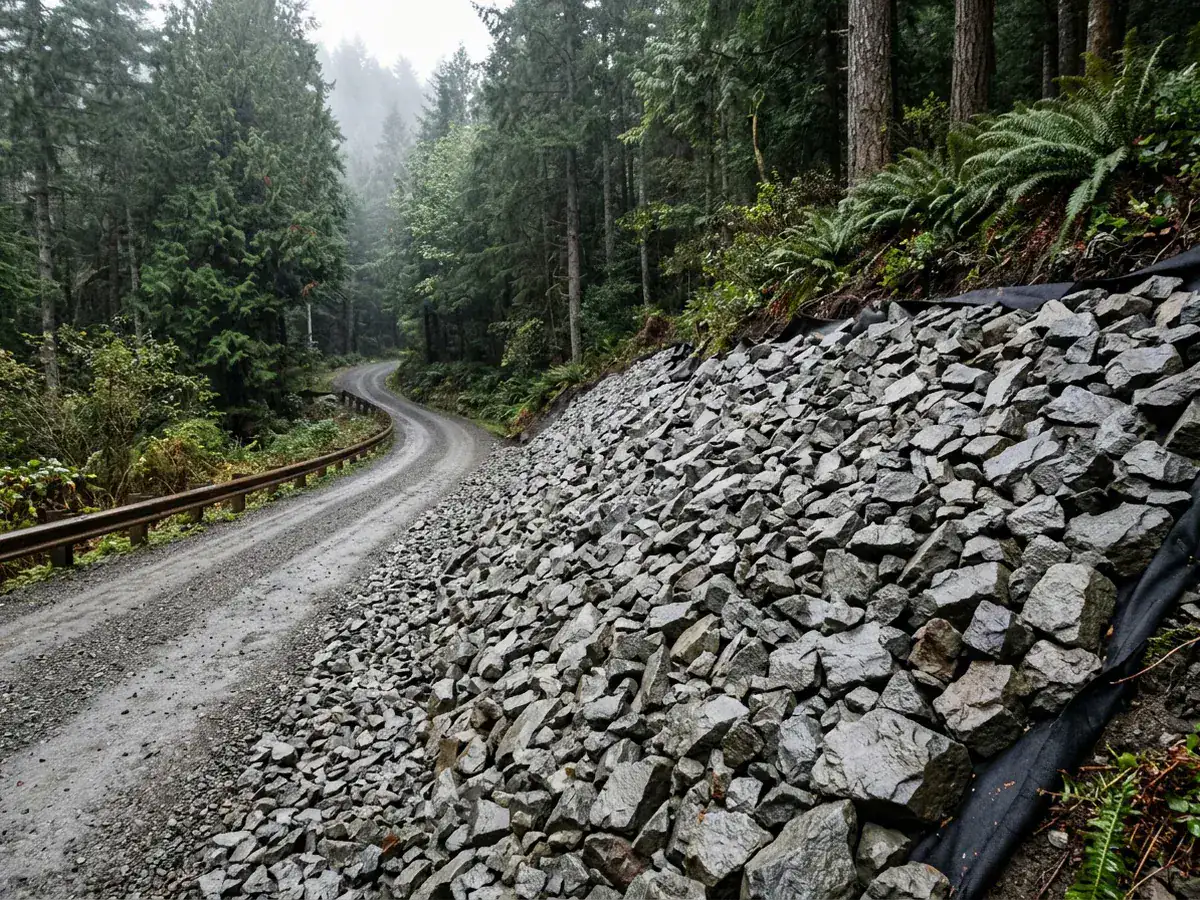
- Soft-spot excavation and bridging with 2"-4" angular basalt quarry spalls over fabric
- Proper 18-to-24-inch fabric overlaps and tensioned base-lift placement without tearing seams
Right Rock & Material Guide
See how crushed basalt fines, structural base rock, recycled asphalt millings, clean drain stone, and bulk soils perform in wet Western Washington conditions.
Request Written Options for Geotextile Fabric & Base Stabilization.
Upload or text 2 to 4 photos of your work area and access width for a free written estimate, or schedule an on-site operator walkthrough.
Woven vs non-woven: using the right roll
Hardware-store landscape weed barrier tears instantly under gravel and clogs with silt. We stock commercial-grade woven polypropylene road fabric (for structural tensile load under roads and pads) and heavy non-woven filter fabric (for high-flow groundwater trenches).
Agreed site finish
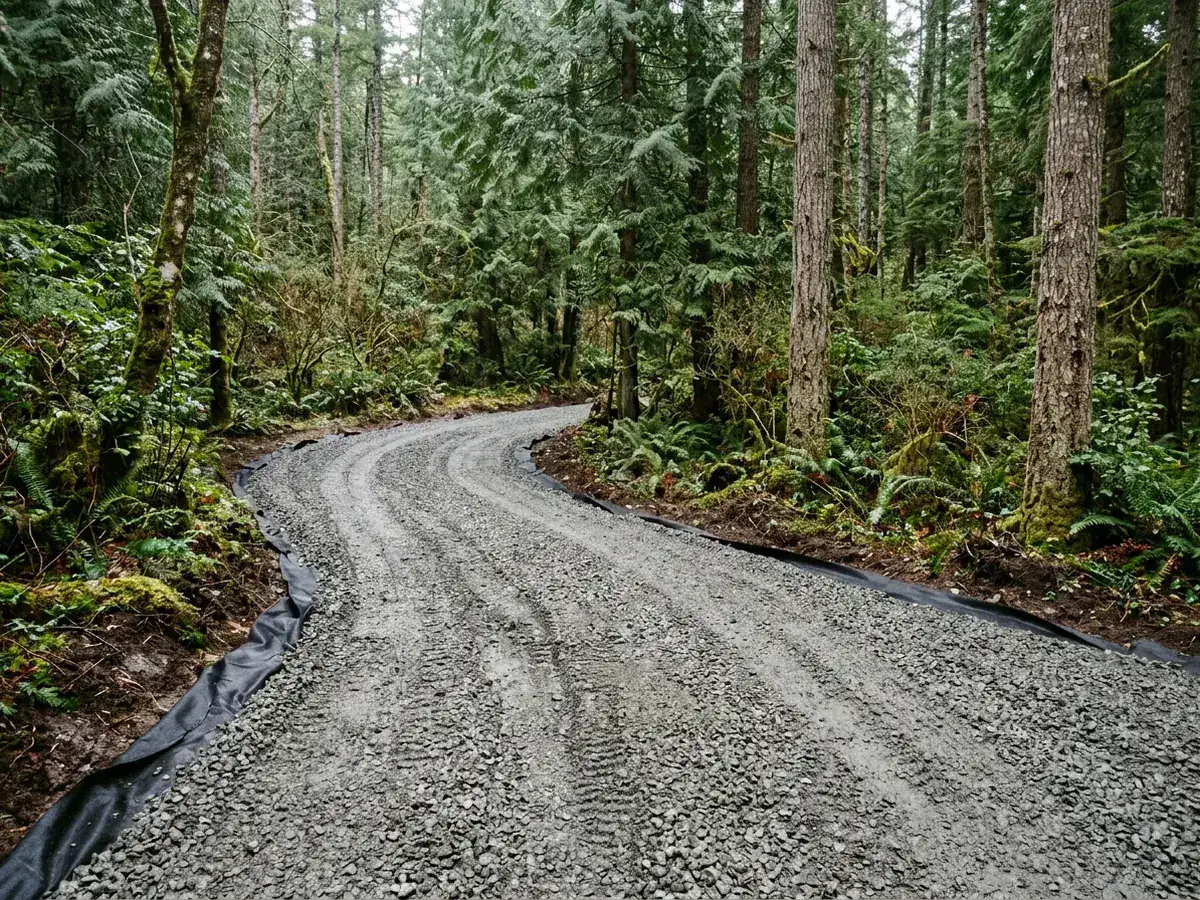
Excavated soft spots, commercial woven stabilization fabric overlapped cleanly, angular base rock keyed in, and crowned compacted topcoat.
Fix chronic mud holes permanently
Have one 30-foot mushy low spot on your driveway that swallows rock every winter? Instead of dumping another hopeless load on top, we dig out the soupy pocket, lay woven fabric, key in spalls + base rock, and crown it once and for all.
- Identify chronic mud zones where tires sink or brown clay oozes up through existing gravel.
- Tell us the heaviest vehicles using the road (passenger cars vs RV, boat trailer, dump truck, or concrete mixer).
- Check if underground shallow pipes cross the soft spot before we excavate bad mud out.
A closer look at the work
Representative Pacific Northwest equipment, aggregate, and finish examples showing typical site conditions and Clear Grade work standards.
Frequently asked questions
What is the difference between woven road fabric and non-woven filter fabric?
Woven stabilization fabric looks like heavy black tarp webbing and delivers high tensile strength to stop clay pumping and rutting under roads and pads. Non-woven fabric feels like heavy felt and lets high volumes of groundwater pass into French drains without passing silt.
Can I just lay road fabric right on top of tall grass and dump gravel?
Rolling fabric over thick sod and roots traps decaying organic matter that rots and creates spongy dips. Stripping sod/topsoil down to mineral ground first gives fabric a flat, solid bearing plane.
When do you add 2"-4" quarry spalls on top of geotextile fabric?
Whenever the underlying clay is saturated or soupy, or when heavy construction trucks will use the entrance. Coarse spalls lock over the fabric to create a rigid rock bridge before finer 1-1/4"-minus and 5/8"-minus lifts go on.