
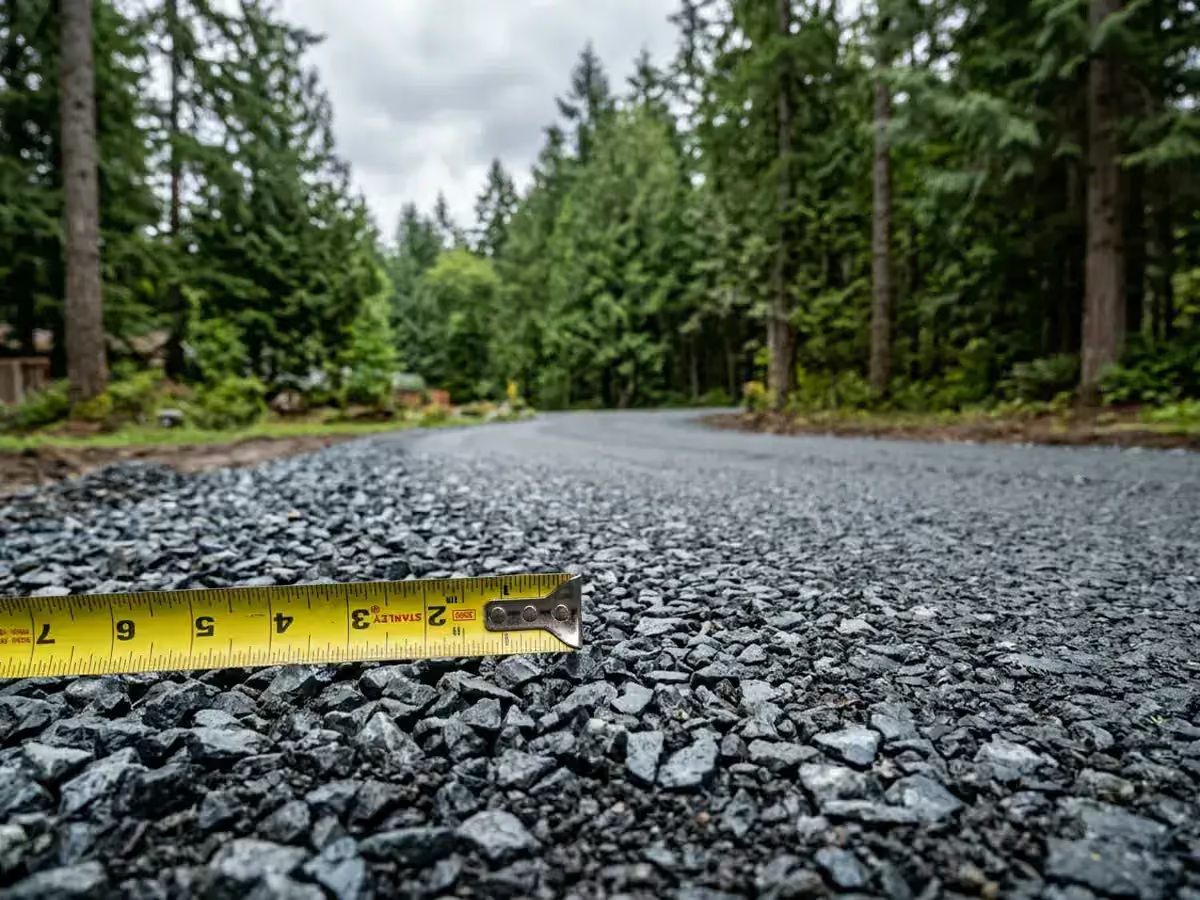
How 5/8"-Minus Crushed Rock Performs
Known at Puget Sound quarries as 5/8"-Minus or WSDOT Crushed Surfacing Top Course (CSTC), this blend combines 100% mechanically fractured blue-gray basalt chips (5/8 inch and smaller) with finely crushed stone dust. Unlike smooth river pebbles that roll like marbles underfoot, sharp fractured faces wedge together while damp stone fines cement the voids tight under vibratory compaction.
When spread in controlled 3-to-4-inch lifts at proper moisture content and compacted with a vibratory smooth-drum roller or heavy reversible plate compactor, 5/8"-minus knits into a hard, quiet driving and walking crust. Rainwater sheets off the crowned top instead of soaking down into your subgrade.
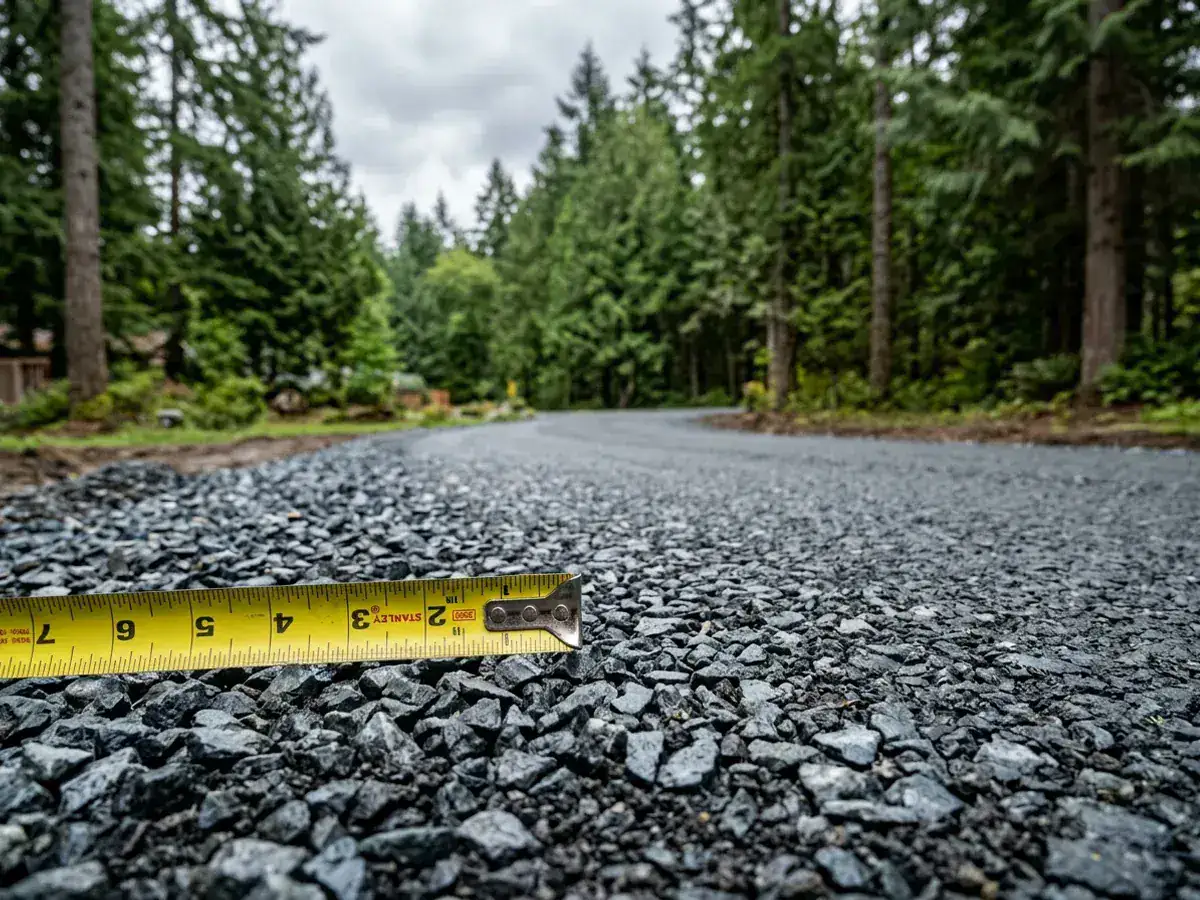
Common WA Gradations & Blends
Local pits and landscape yards stock a few closely related sizes within this family - here is how each option behaves on site.
5/8"-Minus Crushed Basalt (WSDOT CSTC)
Best all-around wearing cap for residential driveways, RV pads, shed bases, and under concrete slabs.
3/8"-Minus Fine Crushed Chip ("Trail Mix")
Smoother underfoot for garden paths, fire-pit patios, and courtyard walkways; too fine for heavy truck hills.
3/4"-Minus Commercial Crushed Rock
Used by select Eastside quarries as a heavier single-spec driveway and utility road surface.
Where to Use & Where to Avoid
Matching 5/8"-minus crushed rock to the right layer prevents ruts, plugged French drains, and wasted quarry deliveries.
Best Applications
- Top wearing surface (final 3"-4" cap) on residential gravel driveways and private roads
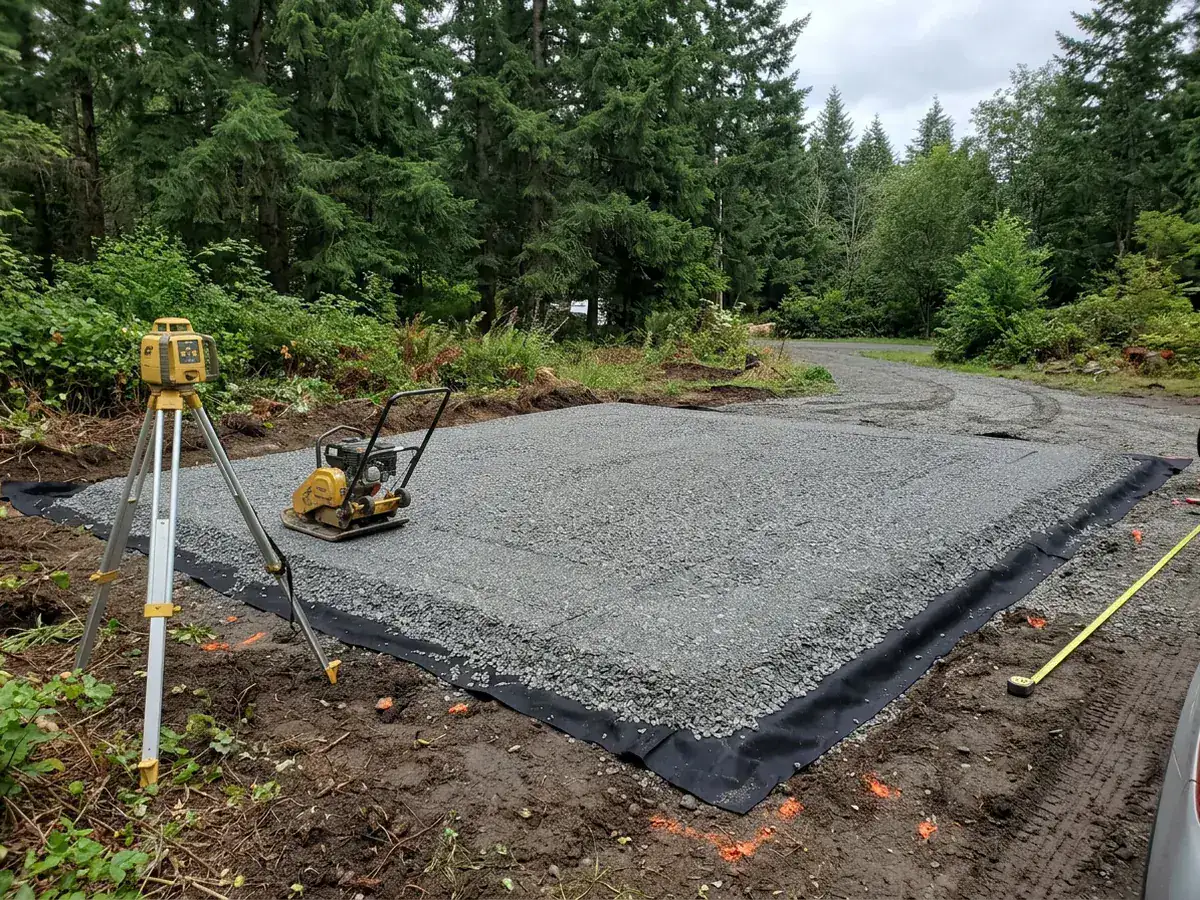
- Laser-leveled prefab shed pads, greenhouse bases, and hot-tub foundations
- Concrete slab, patio, and monolithic shop sub-base capillary/leveling courses
- RV, boat trailer, and extra side-yard vehicle parking stalls
- Firm, wheelchair- and stroller-friendly woodland paths and perimeter walkways
Not Ideal For / Avoid
- French drains, footing drains, or dry wells (the stone dust clogs perforated pipe and filter fabric)
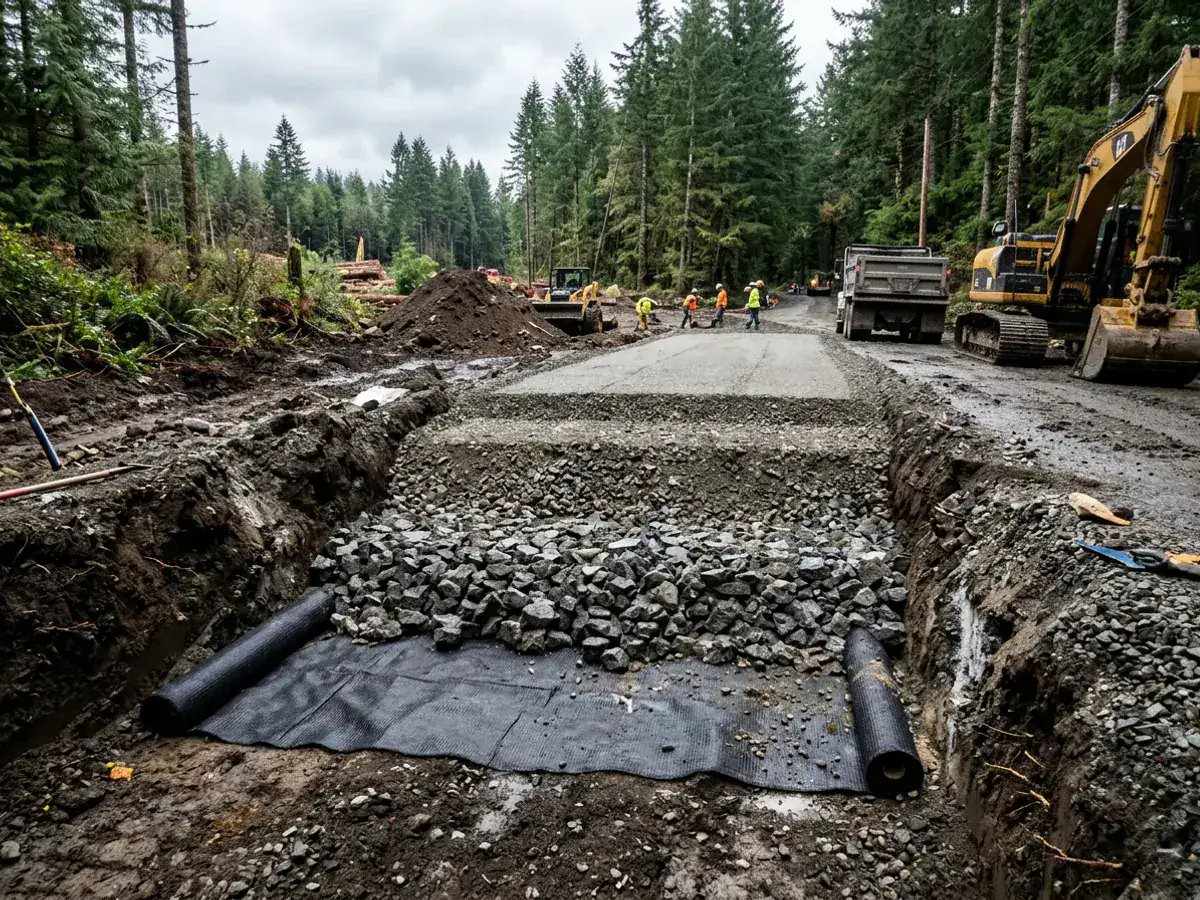
- Deep soft winter mud without geotextile fabric and coarser 1-1/4"-minus or spalls underneath
- Dead-flat uncrowned lanes where standing puddles soften the surface fines into ruts
- Dumping 6 to 8 inches in a single uncompacted lift (leaves the bottom spongy; roll in 3"-4" lifts)
Sample Coverage & Tonnage
Use these typical Western Washington footprints (including standard roller compaction allowance) to gauge rough volume before your exact quote.
| Sample Project Size | Target Depth | Estimated Volume & Weight |
|---|---|---|
| 10 ft x 14 ft Shed or Hot-Tub Pad | 4" compacted | ~2.1 cu yds (~3.0 tons) |
| 12 ft x 100 ft Driveway Resurfacing | 3" compacted | ~13 cu yds (~18 tons / 1 solo truck) |
| 14 ft x 200 ft Private Lane Topcoat | 3.5" compacted | ~36 cu yds (~50 tons) |
Need 5/8"-Minus Crushed Rock Installed?
Send 2 to 4 photos of your driveway, pad, or yard along with rough measurements. We calculate exact tonnage, coordinate delivery, grade to spec, and compact in lifts.
Western WA Field Rules
Glacial clay, 9 months of drizzle, and county critical-area buffers change how aggregates perform here compared to dry climates.
Summer Moisture Conditioning Matters
In dry July and August weather, bone-dry quarry 5/8"-minus can segregate (dust drops to the bottom, chips stay loose). Lightly misting the lift with a hose before rolling activates the fines so it locks like concrete.
Safe Inside Stream & Wetland Buffers
Clean virgin WA quarry basalt is chemically inert and county-preferred near sensitive creeks, shorelines, and wellheads where recycled asphalt or concrete is restricted.
Scarify Before Topping Old Driveways
Never feather a thin 1-inch layer of 5/8"-minus into water-filled potholes - tires whip it right out. Always rip potholes to full depth first so old and new rock knit together.
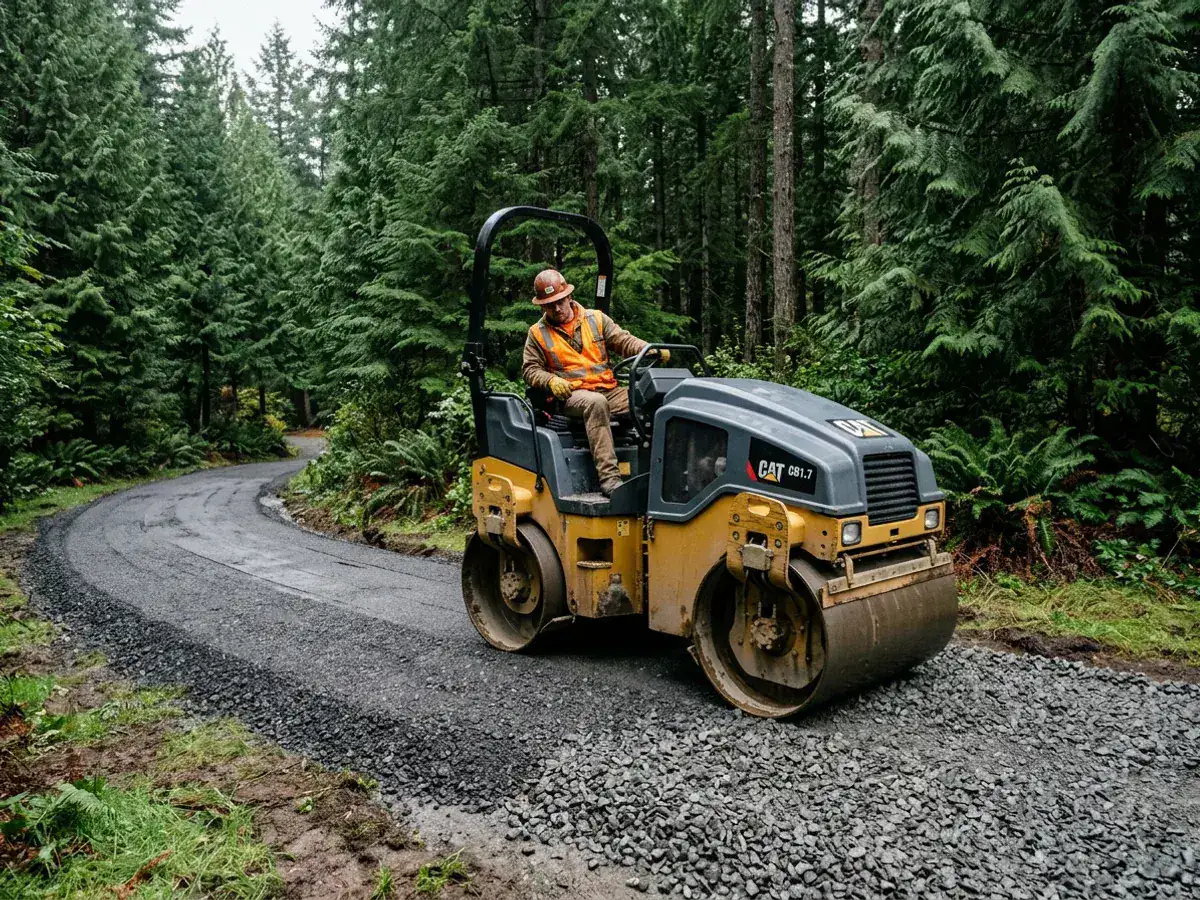
How We Grade & Compact It
Even top-grade quarry material fails if dumped directly onto sod or spread too thick without lift compaction. Here is how Clear Grade installs 5/8"-minus crushed rock:
- Prepare a firm, drained base (either scarified existing roadbed or stripped mineral soil + woven geotextile + 1-1/4"-minus base rock).
- Spread 5/8"-minus evenly with a grading blade or bucket in 3-to-4-inch loose lifts, establishing a 2% to 4% center crown or cross-slope.
- Lightly mist dry summer aggregate so stone dust lubricates without puddling or turning soupy.
- Make overlapping vibratory passes with a smooth-drum roller or heavy plate compactor until boot heels leave zero imprint.
Field & Material Reference Photos
Representative Pacific Northwest equipment, aggregate, and finish examples showing typical site conditions and Clear Grade work standards.
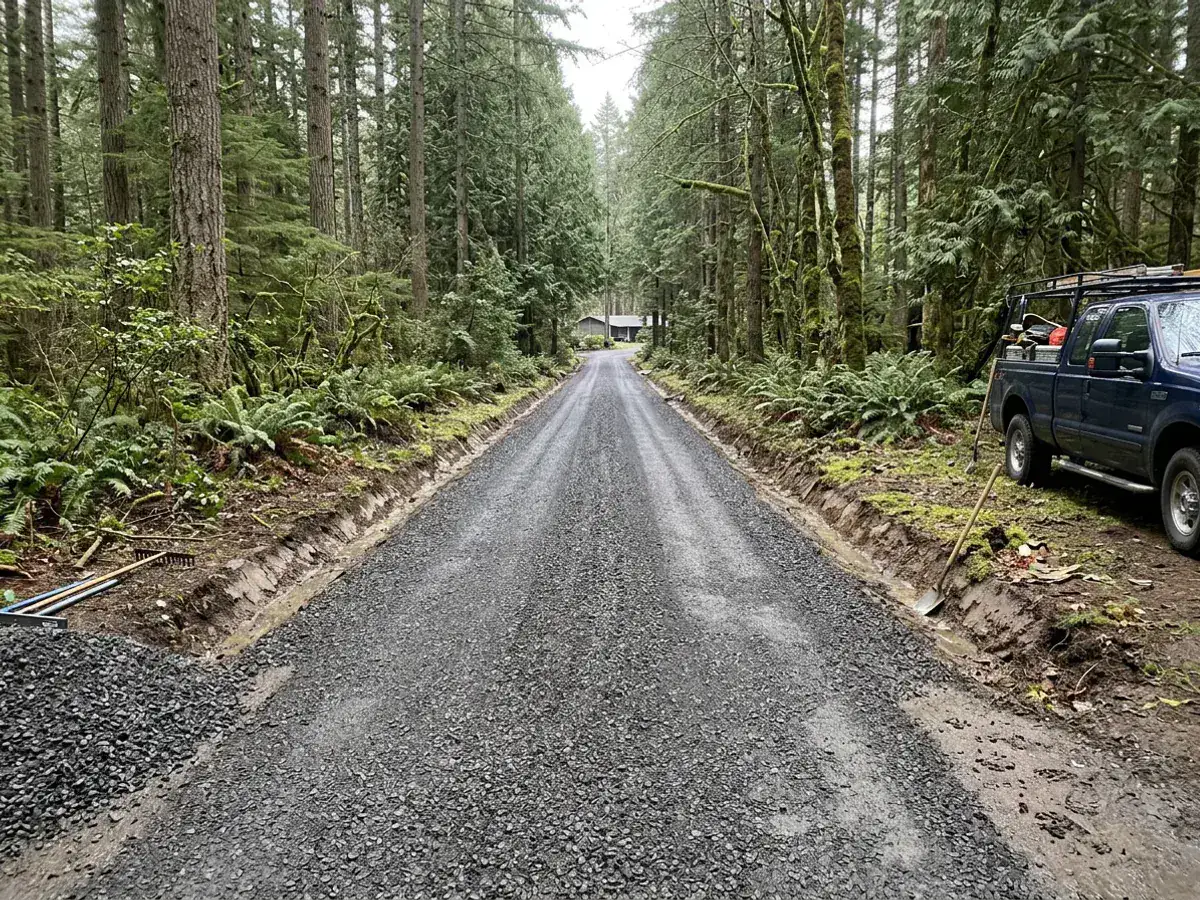
5/8"-Minus Crushed Rock FAQs
What does "-minus" mean in 5/8"-minus gravel?
It means 100% of the crushed stone passes through a 5/8-inch quarry screen all the way down to zero-size rock flour ("fines"). Those fine mineral particles act as natural mortar when dampened and compacted.
How thick should a 5/8"-minus topcoat be on an existing gravel driveway?
After ripping out potholes and reshaping the crown, a 3-to-4-inch compacted lift of fresh 5/8"-minus bonds cleanly into the scarified roadbed and delivers a multi-year driving surface.
Does 5/8"-minus track mud onto shoes or garage floors?
Once roller-compacted and rinsed by one light rain, clean quarry 5/8"-minus locks tight with clean blue-gray stone grit rather than sticky clay mud.
How many square feet does 1 ton of 5/8"-minus cover?
At a 3-inch compacted thickness, 1 ton of 5/8"-minus covers roughly 65 square feet (including compaction allowance). At 4 inches compacted, 1 ton covers roughly 48 to 50 square feet.
Can I put pavers or a shed directly on compacted 5/8"-minus?
Yes - compacted 5/8"-minus is the ideal structural base for timber-skid sheds and hot tubs. For interlocking concrete pavers, add a thin 1-inch screed bed of coarse C-33 concrete sand or 1/4"-open chip on top of the compacted 5/8"-minus base.