
- Simple Regrades
- Full Rebuilds
- Drainage & Crown
- Roller Compaction
- New Access Roads
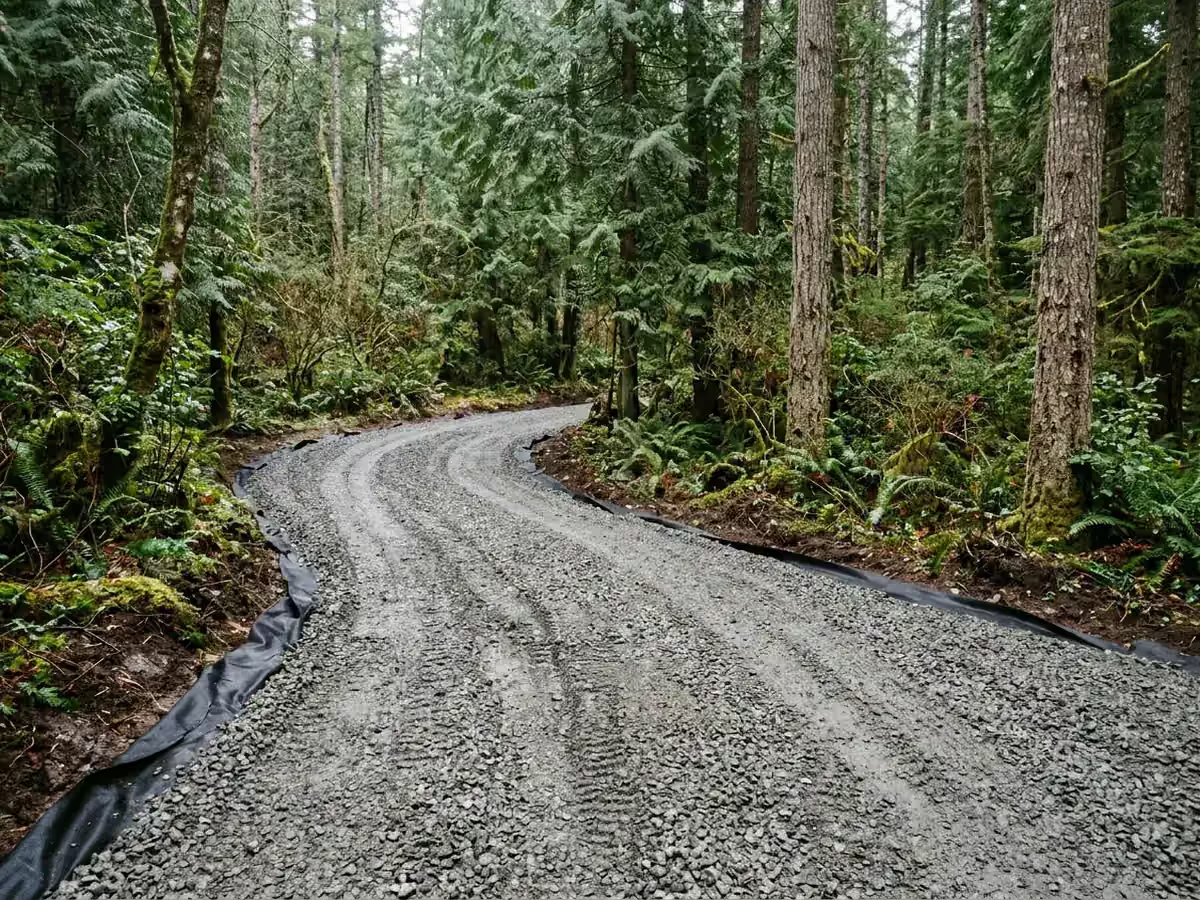
Fabric-backed roads built for rain.
A new gravel driveway or RV pad built without stripping organic soil and separating clay will pump mud into the rock during the first November rainstorm. Clear Grade constructs long-lasting driveways, builder construction entrances, and parking pads across Snohomish and Eastside King County.
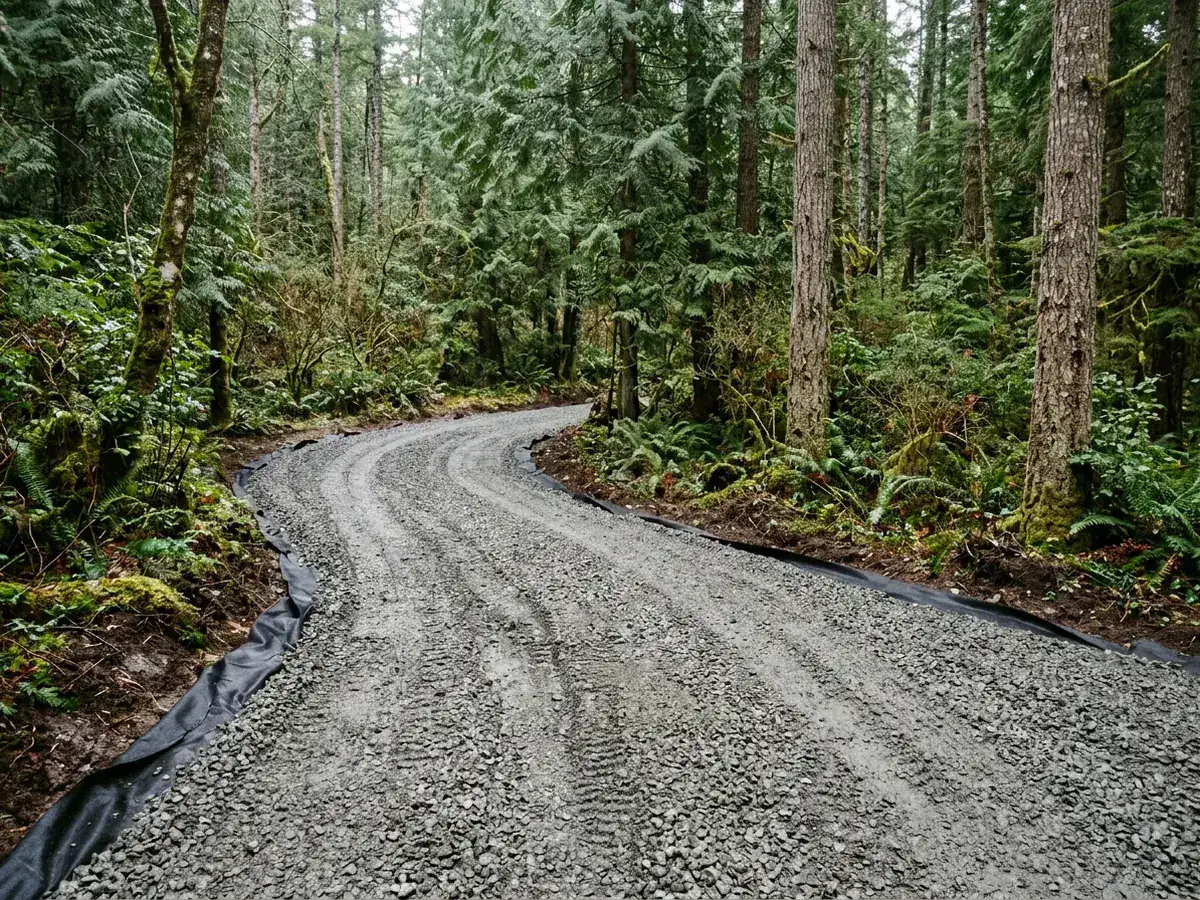
A gravel driveway built directly on top of Northwest topsoil turns into two muddy ruts by December. Stripping down to firm subgrade, laying road geotextile fabric, building base thickness, and compacting with a vibratory roller builds a road that supports concrete mixers and Class-A RVs.
Compare Driveway Scopes
Driveway Restoration & Pothole Repair
Scarify below pothole depth, pull buried stone up, reshape a 2%-4% shedding crown, top-dress with 5/8"-minus, and roller-compact.
Explore scope Raw Land & RV PadsNew Driveways & Geotextile Base
Strip organics to firm till, lay woven road fabric, and compact structural 1-1/4"-minus base plus 5/8"-minus wearing rock.
Viewing this scope Multi-Home EasementsPrivate & Shared Road Rehab
Full-width grading, turnout bays, ditch/culvert resets, and roller compaction with itemized quotes easy for neighbors to split.
Explore scopeBuilt from stripped subgrade up
From a 45-foot side-yard RV pad to an 800-foot wooded acreage road, we excavate down to firm native bearing soil and build each structural layer so concrete mixers, fire engines, and daily traffic never rut the lane.
- Corridor tree clearing, full stump dig-outs (never ground under roads!), and organic stripping
- Woven geotextile stabilization fabric over damp Puget Sound clay and silt subgrades
- Compacted 1-1/4"-minus base rock (plus 2"-4" quarry spalls in soft spots) capped with 5/8"-minus
- Crowned road profile, roadside swales, HDPE culverts, and hammerhead turnarounds
Right Rock & Material Guide
See how crushed basalt fines, structural base rock, recycled asphalt millings, clean drain stone, and bulk soils perform in wet Western Washington conditions.
Request Written Options for Gravel Driveway Installation.
Upload or text 2 to 4 photos of your work area and access width for a free written estimate, or schedule an on-site operator walkthrough.
RV pads, boat stalls & turnarounds
Need dry, level parking beside your garage or shop? We strip the sod, cut into any side slope, set clean timber or boulder edges if needed, and roller-compact a rock pad that stays mud- and weed-free.
Agreed site finish
Stripped subgrade, geotextile separation fabric, compacted structural base rock, crowned 5/8"-minus surface course, and clean side drainage.
Start as construction entrance, finish at move-in
Building a new home on raw land? We install a heavy quarry-spall and base-rock construction road for heavy build traffic now, then return before final occupancy to grade and roll a crisp 5/8"-minus finish cap.
- Measure approximate driveway or RV pad length and width (10-12 ft standard single lane; 12-20 ft for RV/fire access).
- Flag desired route, turnaround bays, and where the road meets the public street.
- Check if your city or county requires a driveway apron / right-of-way permit at the street connection.
A closer look at the work
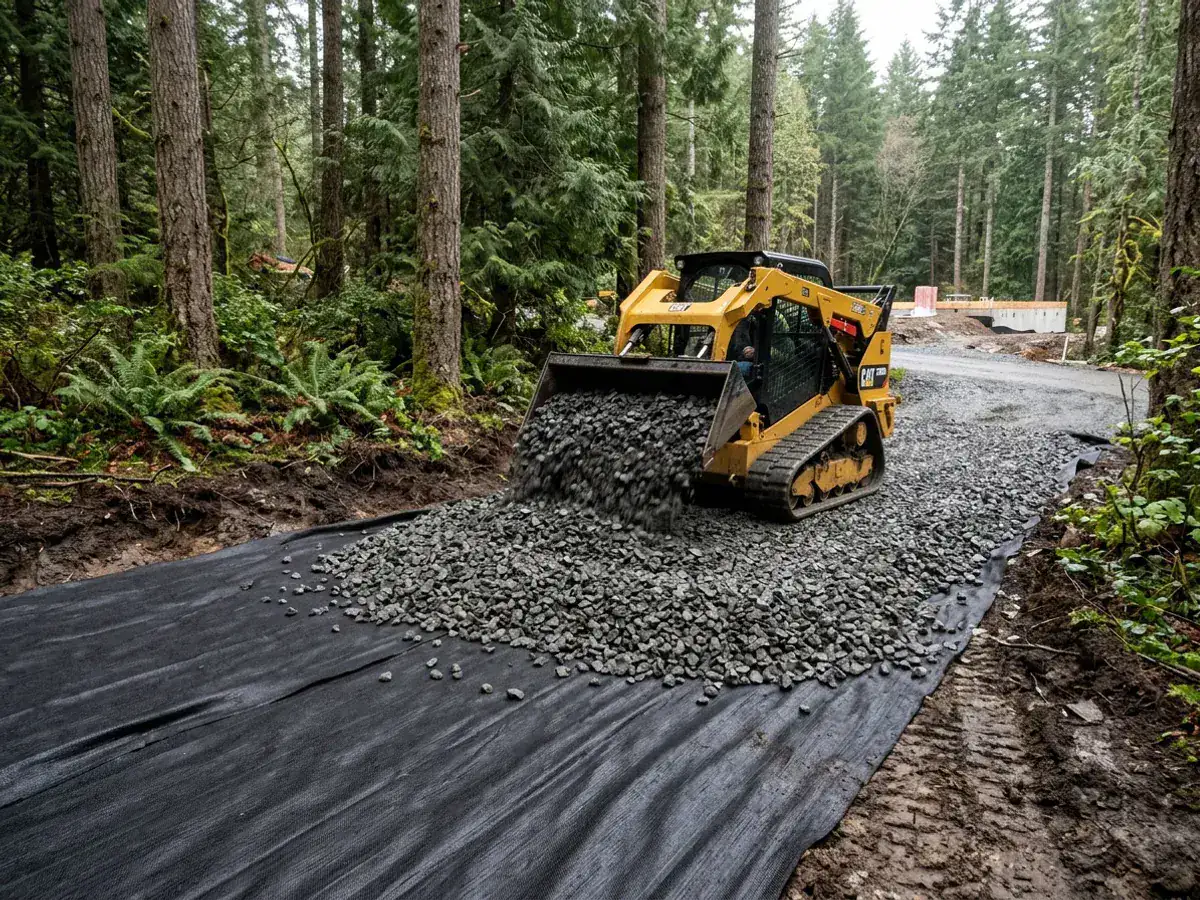
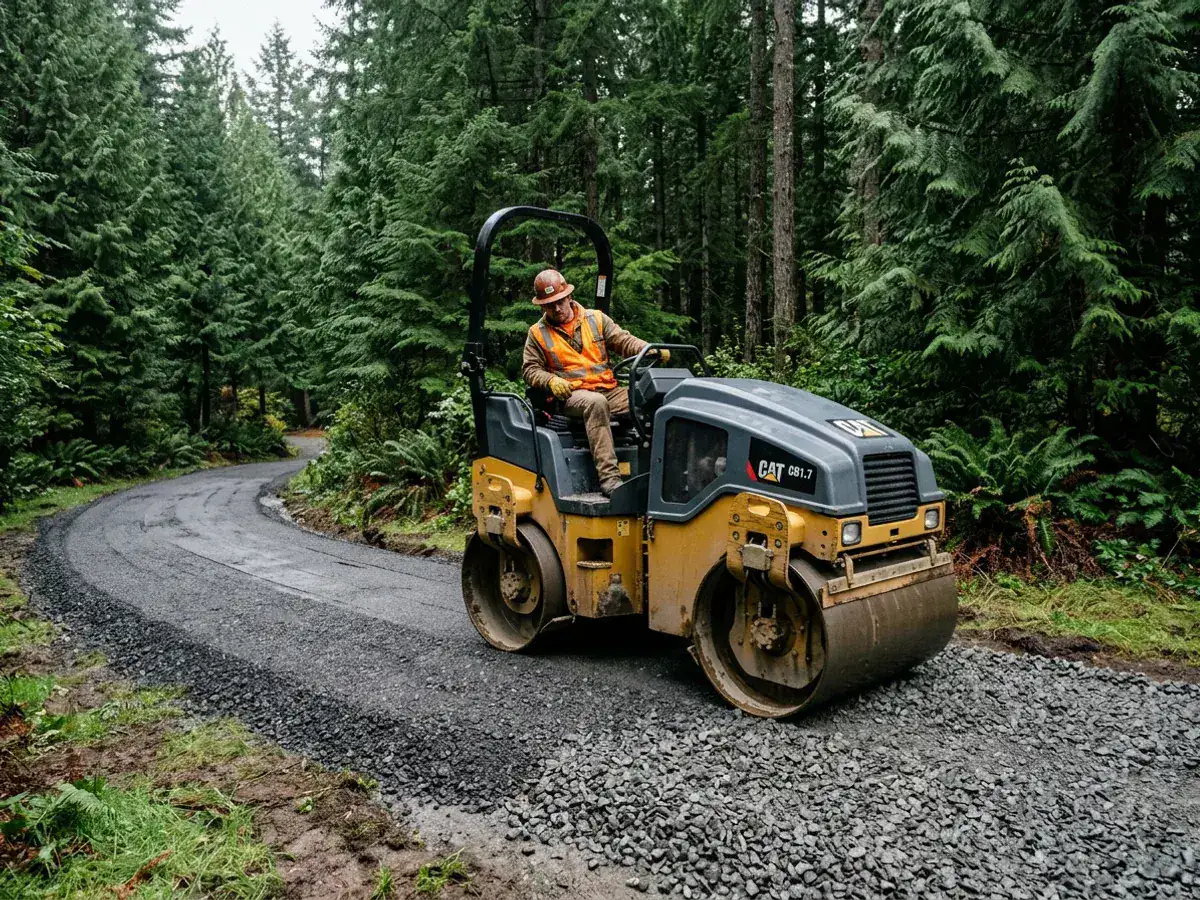
Representative Pacific Northwest equipment, aggregate, and finish examples showing typical site conditions and Clear Grade work standards.
Frequently asked questions
Why is geotextile fabric so important under Puget Sound gravel driveways?
Without separation fabric, tire weight pumps wet clay upward into your clean gravel while pushing expensive rock down into the mud. Geotextile keeps clay and gravel permanently separated, cutting long-term rock maintenance in half.
How wide and thick should an RV or boat trailer parking pad be?
Most RVs and wake-boat trailers fit comfortably on a 12-foot by 30-to-45-foot pad built with 6 to 8 inches of compacted crushed rock over fabric so heavy tongue jacks and tires never sink.
Can you clear trees and stumps along the new road corridor first?
Yes - we clear the trees, dig out every stump in the roadbed (never grind under a road!), cut side ditches, install culverts, and rock the road from start to finish.