
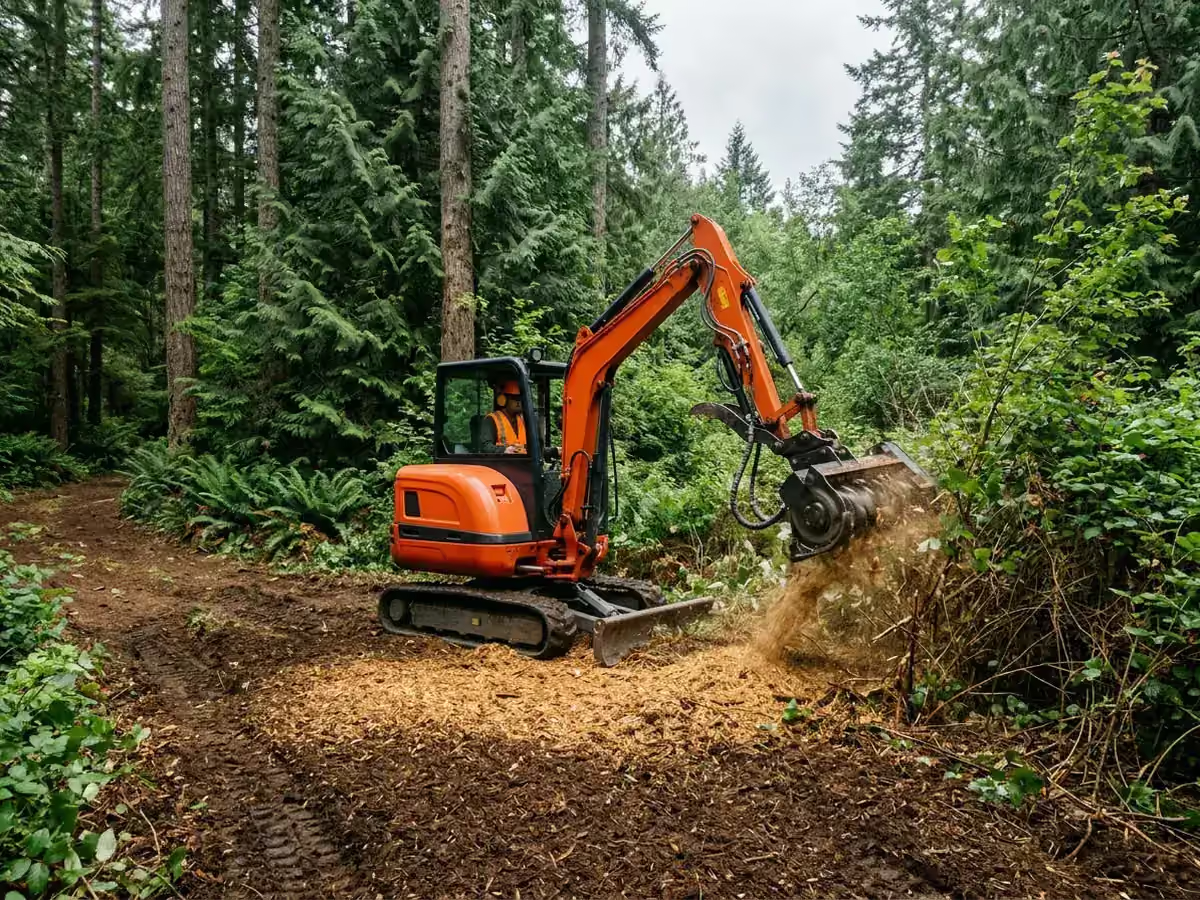
One-pass mulching. Zero burn piles.
Forestry mulching is the fastest, cleanest way to reclaim wooded acreage, overgrown perimeters, and steep slopes without tearing up topsoil or paying to haul away truckloads of branches. Clear Grade processes standing brush, saplings, and thickets directly into ground-cover mulch.
Instead of pushing up giant dirt-clogged slash piles that sit for years or require burn permits, a high-speed mulching head turns standing brush, saplings, and brambles into clean wood mulch right where they stand.
Why owners pick mulching
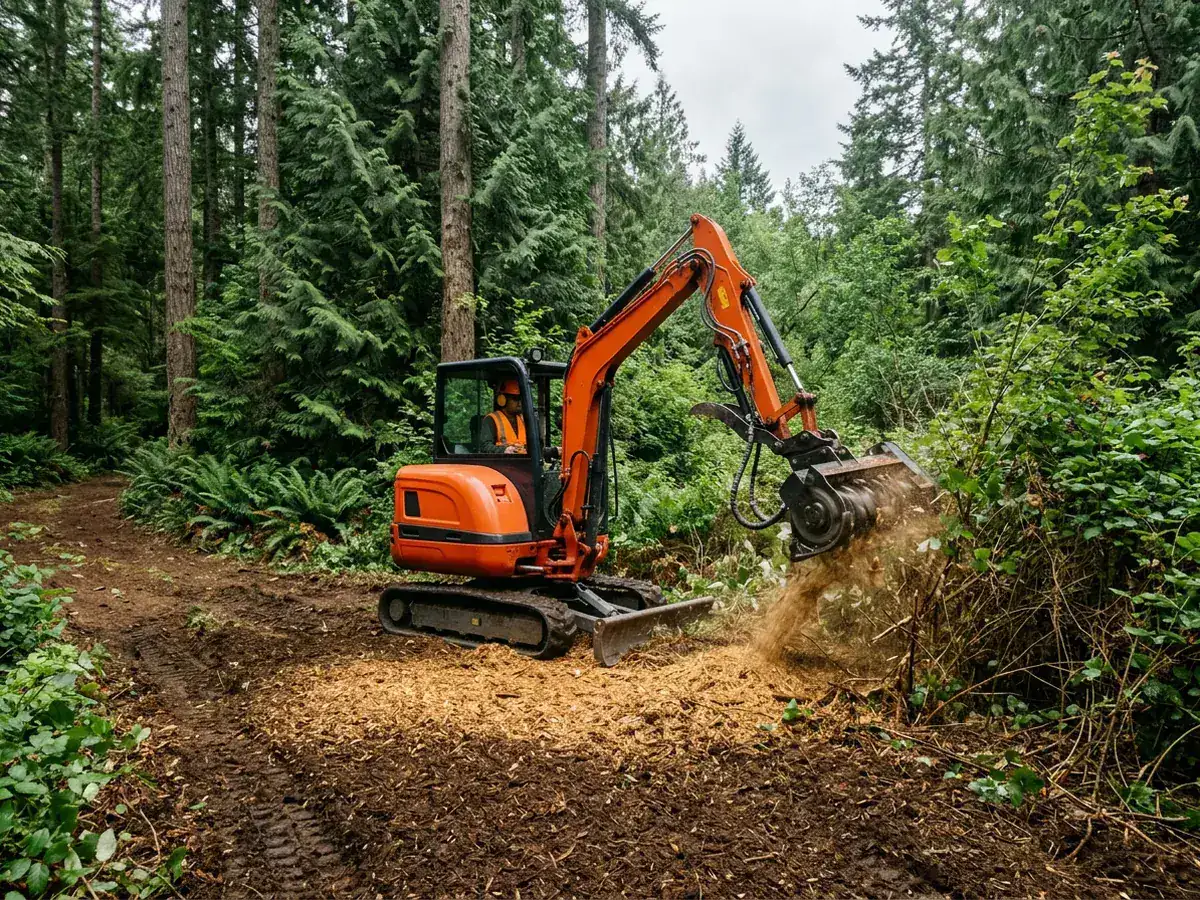
Traditional dozer clearing scrapes away topsoil, leaves muddy ruts, and creates massive dirt-filled brush piles that cost thousands to haul or burn. Mulching leaves root structure intact on slopes and lays down an immediate erosion-resistant woodchip blanket.
- Woodland understory clearing ("park-out" look around mature trees)
- Steep hillside, ravine edge, and roadside ditch mulching with excavator reach
- Multi-acre brush, alder sapling, and pasture perimeter reclamation
- No burn permits, smoke complaints, or haul-away disposal charges
Right Rock & Material Guide
See how crushed basalt fines, structural base rock, recycled asphalt millings, clean drain stone, and bulk soils perform in wet Western Washington conditions.
Request Written Options for Forestry & Brush Mulching.
Upload or text 2 to 4 photos of your work area and access width for a free written estimate, or schedule an on-site operator walkthrough.
Steep banks & wide acreage
An excavator-mounted mulcher reaches over ditches, fences, and creek buffers and works surgical circles around mature trees without compacting feeder roots. On wide-open multi-acre tracts, we scale equipment to match your acreage and timeline.
Agreed site finish
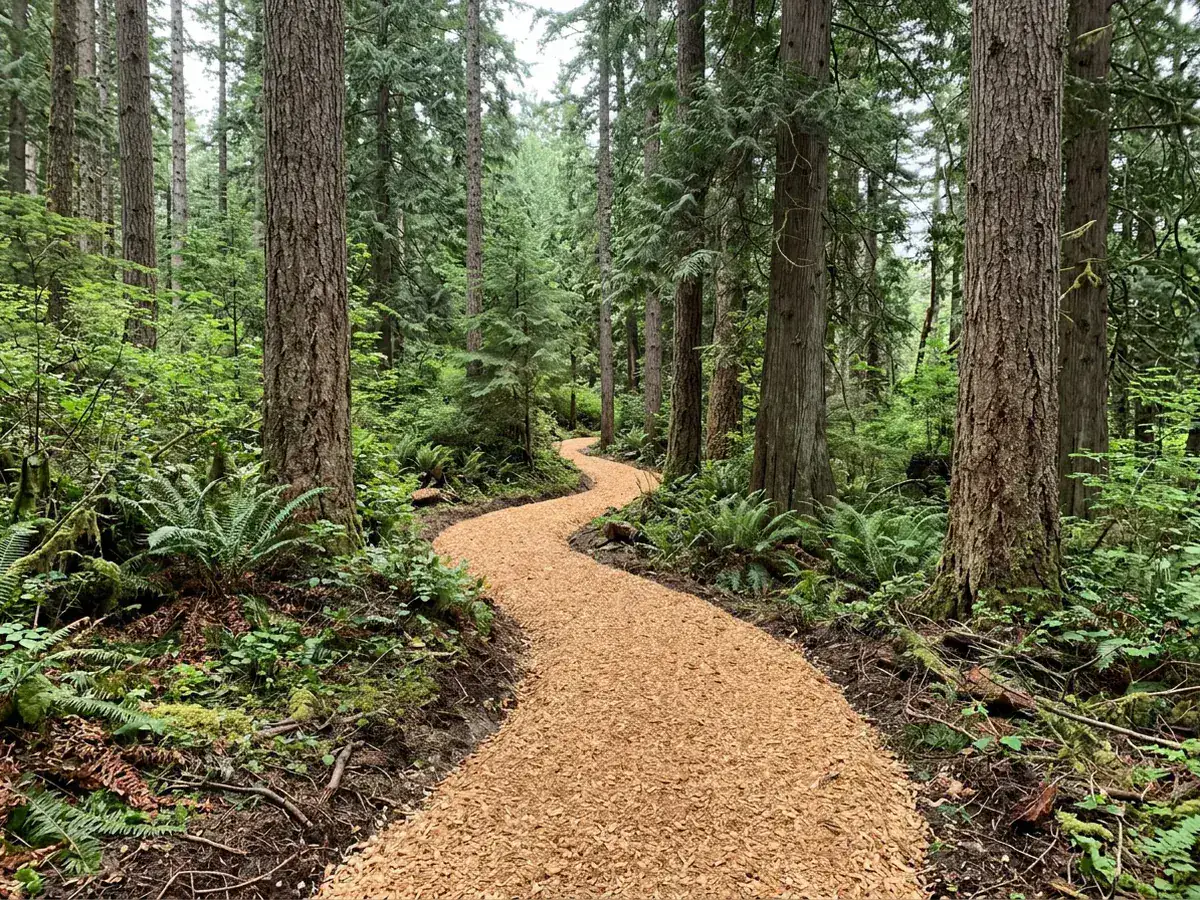
Cleared areas are left covered in shredded organic mulch that suppresses weeds, holds moisture, prevents winter mud runoff, and breaks down naturally into soil.
When to mulch vs when to grub roots
Mulching excels on wooded acreage, trails, slopes, and natural buffers. If you plan to pour concrete, lay sod immediately, or till a garden bed, we recommend root grubbing and haul-off instead.
- Walk or flag the perimeter and tie high-visibility ribbon around any young trees or shrubs to save.
- Remove hidden metal hazards you know about - old wire fencing, T-posts, tires, or farm scrap.
- Show us slope steepness, ditches, and trailer turnaround space at the road.
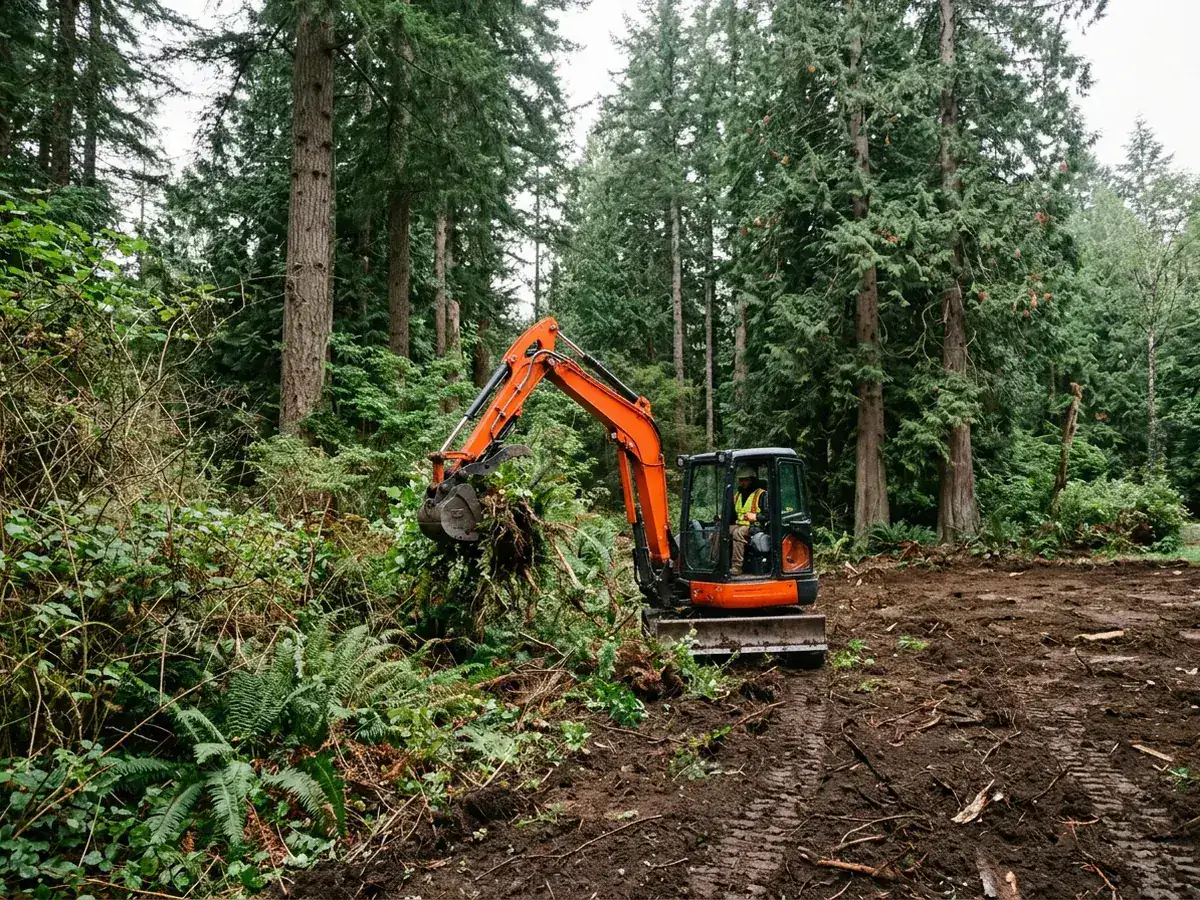
A closer look at the work
Representative Pacific Northwest equipment, aggregate, and finish examples showing typical site conditions and Clear Grade work standards.
Frequently asked questions
How thick of brush and saplings can forestry mulching handle?
Forestry mulching handles dense blackberry, Scotch broom, salmonberry, vine maple, and small-diameter saplings effortlessly, while larger trees are felled and removed or decked separately.
Can you mulch steep hillsides and roadside ditches?
Yes. Because our boom-mounted excavator mulcher reaches outward and downward from stable ground, we safely clear steep banks, ravines, and ditch lines where wheeled mowers and skid steers cannot safely drive.
Will mulching hurt the roots of my big cedar and Douglas fir trees?
Selective mulching at grade avoids deep digging around shallow conifer feeder roots and turns competing underbrush into beneficial mulch around retained trees.