
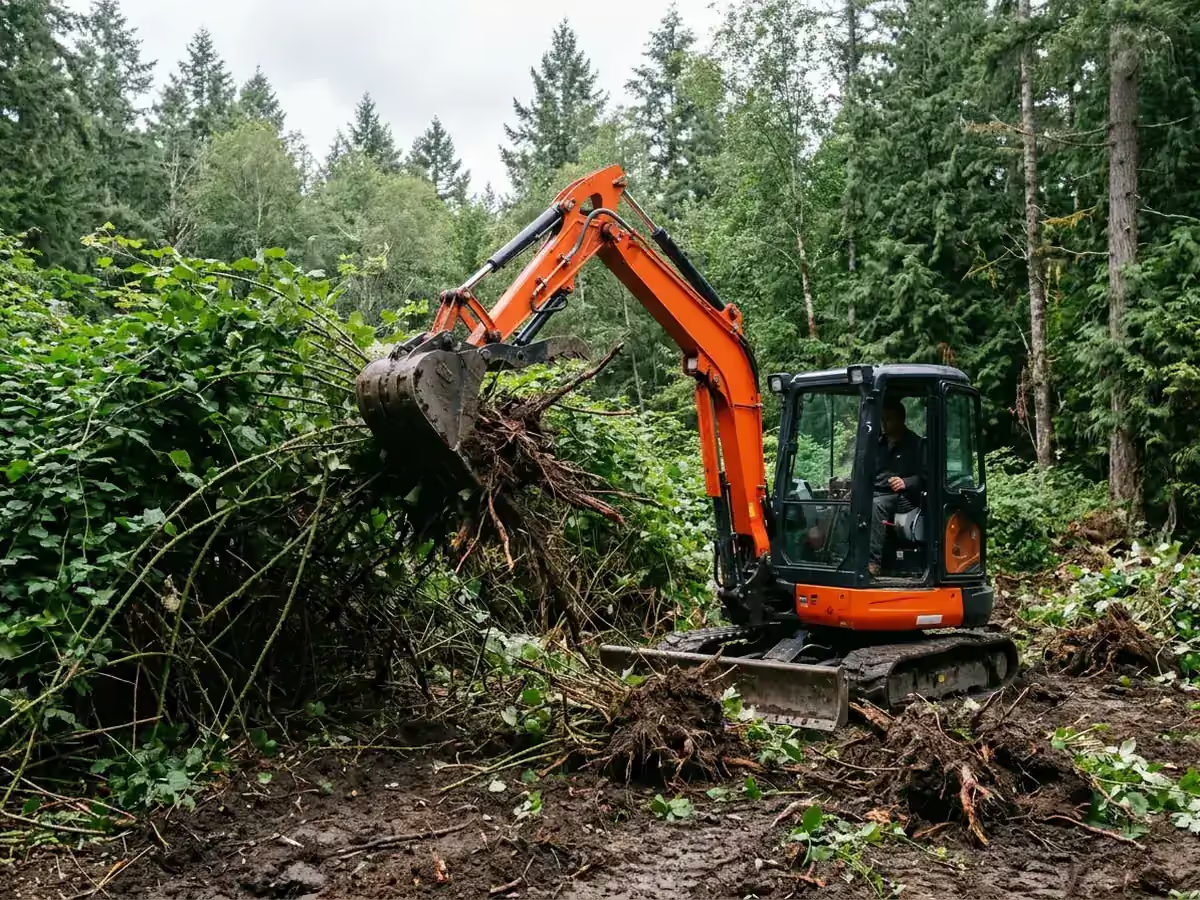
Rip blackberry out at the roots.
String trimmers and walk-behind mowers bounce off mature Himalayan blackberry canes - and cutting canes at ankle height leaves massive underground root crowns ready to sprout right back. Clear Grade shreds dense cane walls down to bare dirt and rakes or excavates the root crowns beneath.
Himalayan blackberry canes grow up to 30 feet in a single season and root wherever cane tips touch wet ground. Simply mowing the tops leaves tough woody root balls intact underground, sending up thorny shoots within weeks.
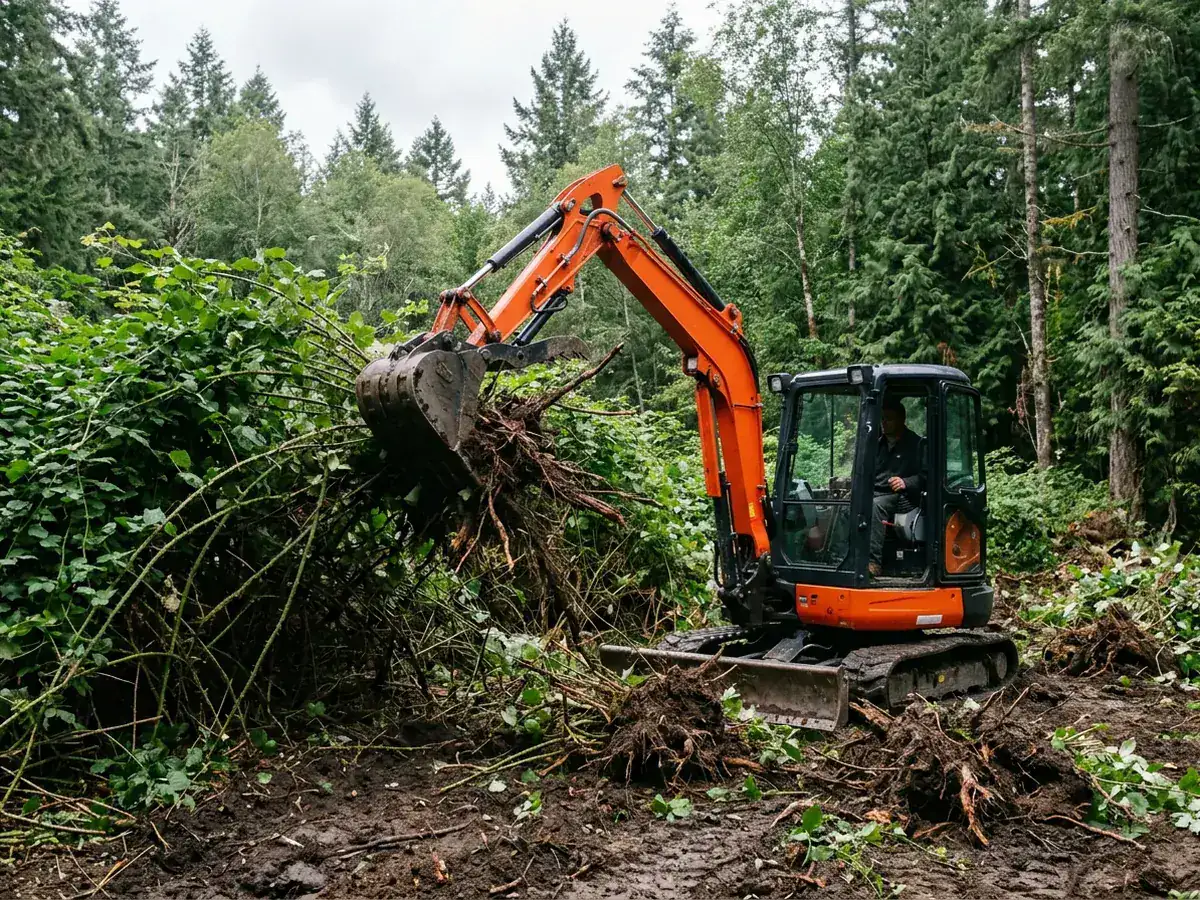
Stop regrowth at the root crown
A mature blackberry patch stores energy in woody root knots the size of basketballs. Shredding the thorny top growth first lets us see the ground clearly, then grub and comb out accessible root crowns where soil disturbance is permitted.
- 10-foot thorny blackberry thickets shredded to ground level in hours
- Root-crown grubbing and raking in future lawn and garden areas
- Steep embankment, ditch, and fence-line cane clearing with boom reach
- Scotch broom, English ivy mats, knotweed prep, and holly removal
Right Rock & Material Guide
See how crushed basalt fines, structural base rock, recycled asphalt millings, clean drain stone, and bulk soils perform in wet Western Washington conditions.
Request Written Options for Blackberry & Invasive Clearing.
Upload or text 2 to 4 photos of your work area and access width for a free written estimate, or schedule an on-site operator walkthrough.
Keeping invasive patches down long-term
Seeds and deep root fragments in Pacific Northwest soil can still send up small shoots after heavy clearing. Leaving the ground smooth enough to mow - or covering it with thick mulch, gravel, or grass - makes follow-up maintenance effortless.
Agreed site finish
Thorny top canes are shredded completely, and accessible root crowns are grubbed and raked out where soil disturbance fits your site plan.
Send two quick photos for pricing
Snap a wide photo showing the full patch plus the gate or driveway width leading to it, and let us know if you want mulched ground cover or bare graded soil.
- Photograph the blackberry patch from two angles and note anything hidden inside (sheds, fences, rocks).
- Identify shallow drainfields or steep critical slopes where deep root grubbing should switch to surface mulching.
- Decide how you plan to maintain the area afterward (lawn mowing, thick woodchips, or gravel).
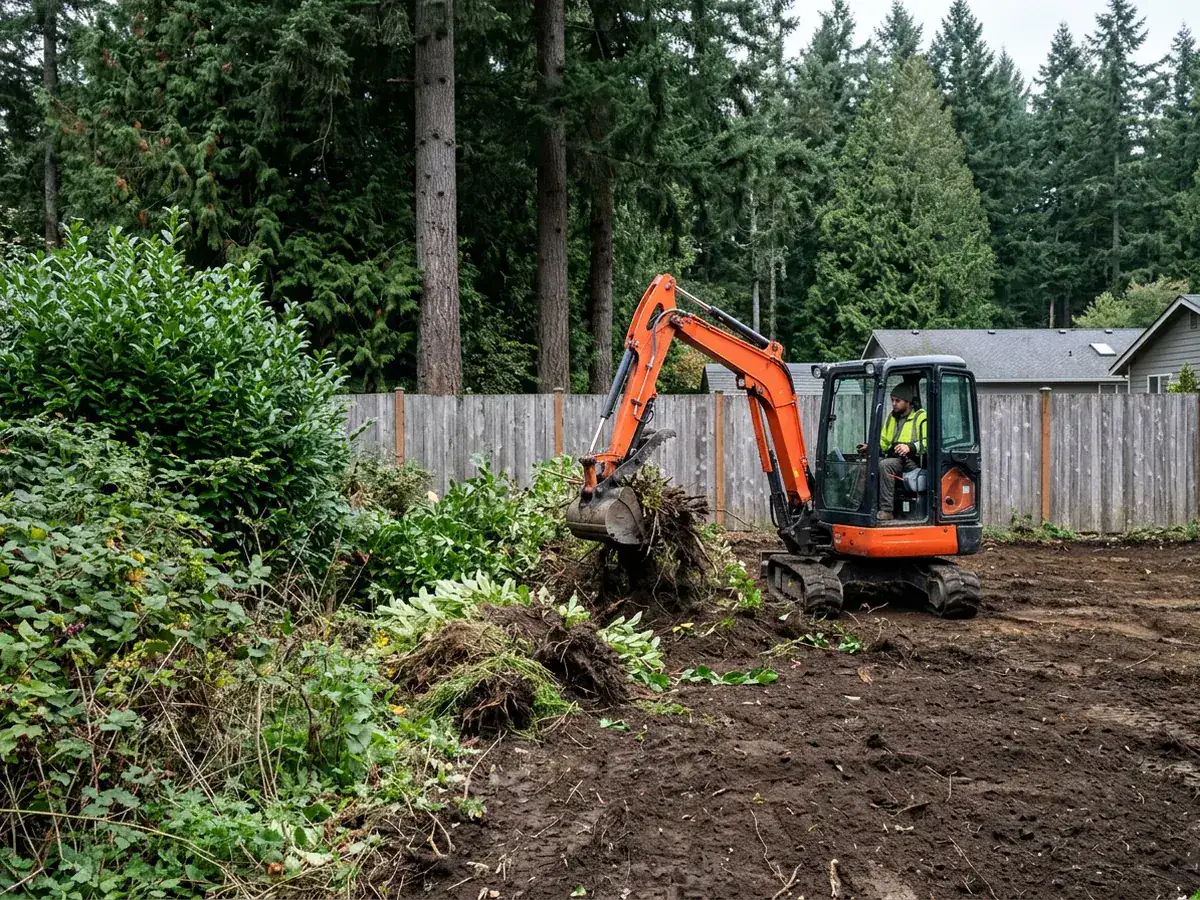
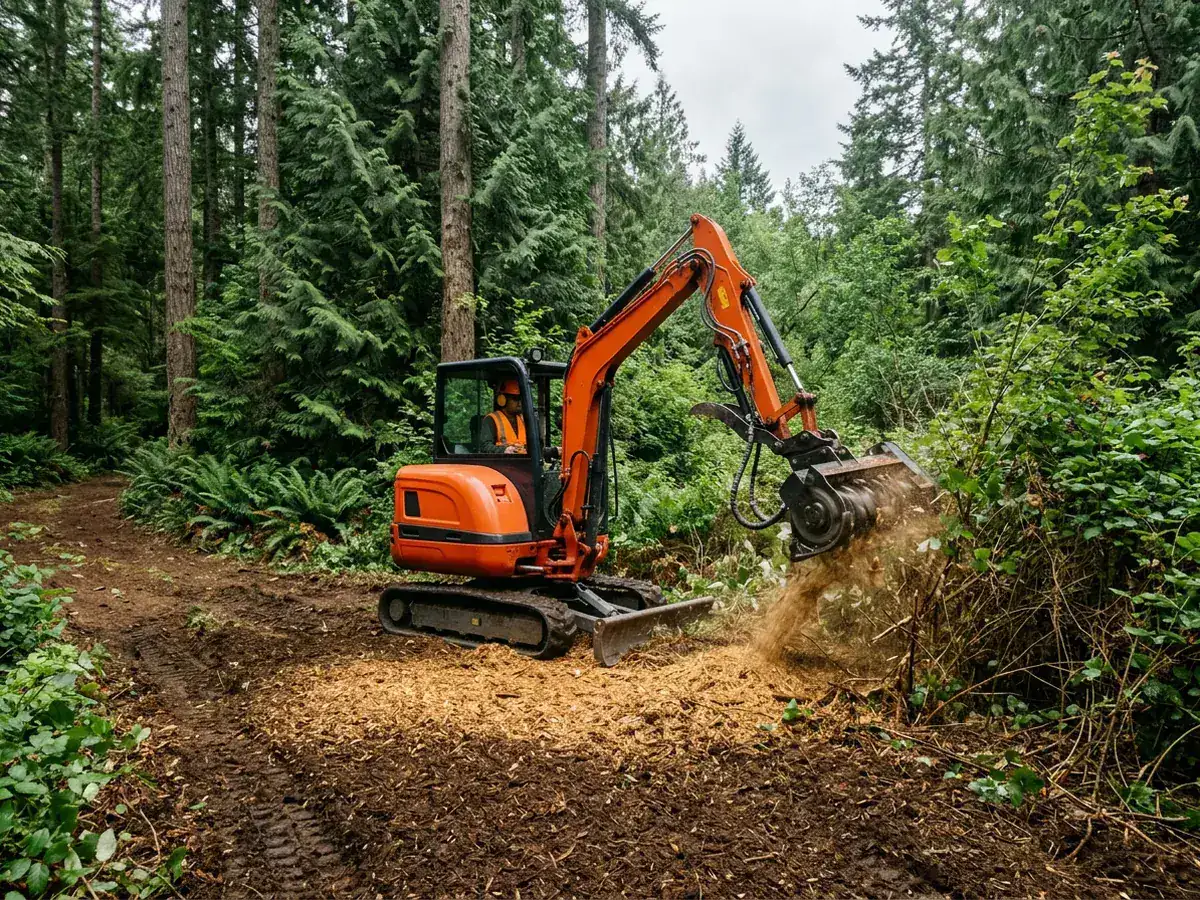
A closer look at the work
Representative Pacific Northwest equipment, aggregate, and finish examples showing typical site conditions and Clear Grade work standards.
Frequently asked questions
Will blackberry ever come back after root grubbing?
Removing the main woody root crowns eliminates 85% to 95% of heavy regrowth energy, though dormant seeds in Northwest soil can still sprout small seedlings. Once the ground is smooth enough to run a lawnmower over (or spot-treat in spring), blackberry never takes over again.
Can you clear blackberry tangled into an existing chain-link or wood fence?
Yes. We mulch and pull canes back carefully to expose the fence, then strip or hand-clear growth along the wire or boards - or remove the old fence completely if you are replacing it.
Do you also clear Scotch broom, English ivy, and holly?
Yes. Scotch broom and holly are pulled cleanly with roots so they cannot resprout, and heavy ground-ivy mats are raked and stripped back cleanly.