
How Quarry Spalls (2"-8") Performs
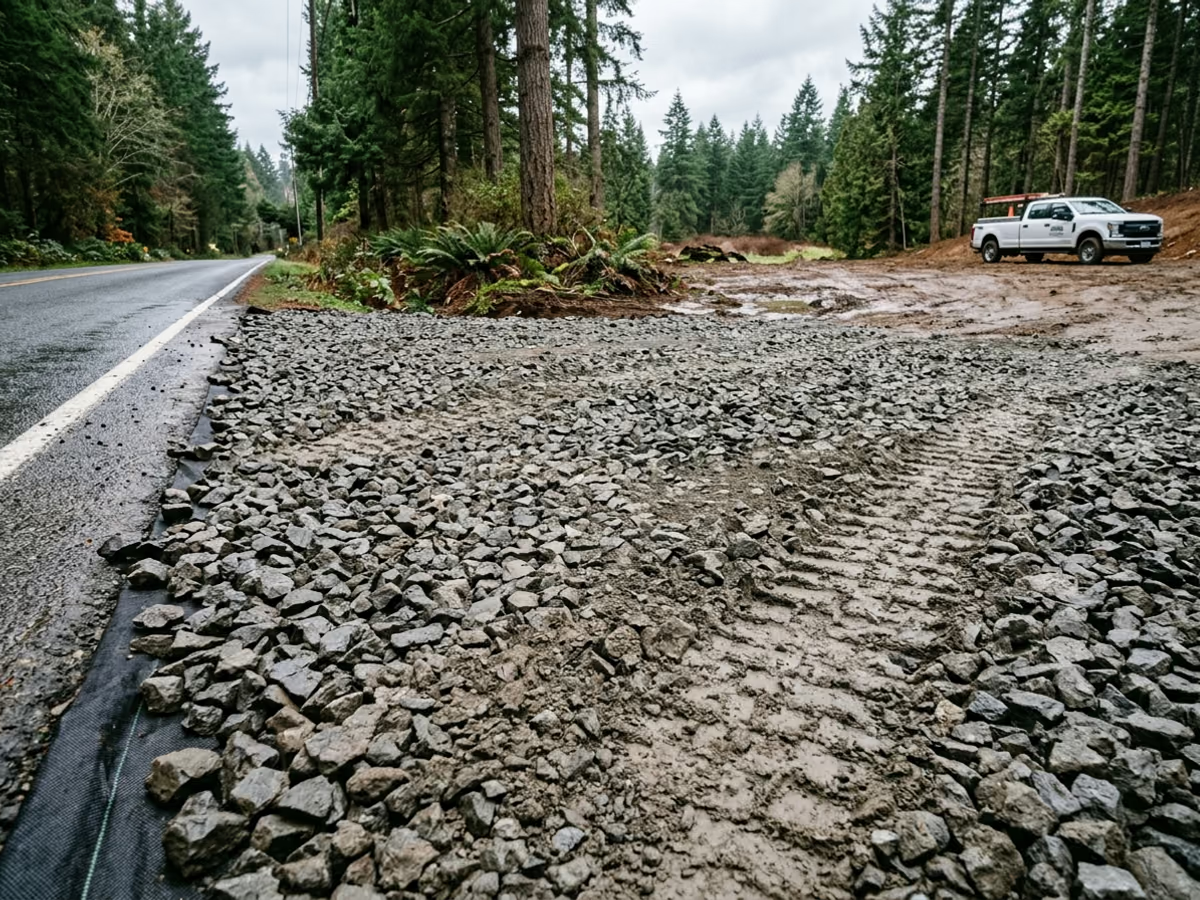
When wet Snohomish or King County clay turns to peanut butter in November, dumping small driveway gravel is like throwing coins into soup - truck tires push small rock straight out of sight. Quarry spalls are fist-to-head-sized jagged chunks of solid blasted basalt that wedge together into an unyielding stone skeleton.
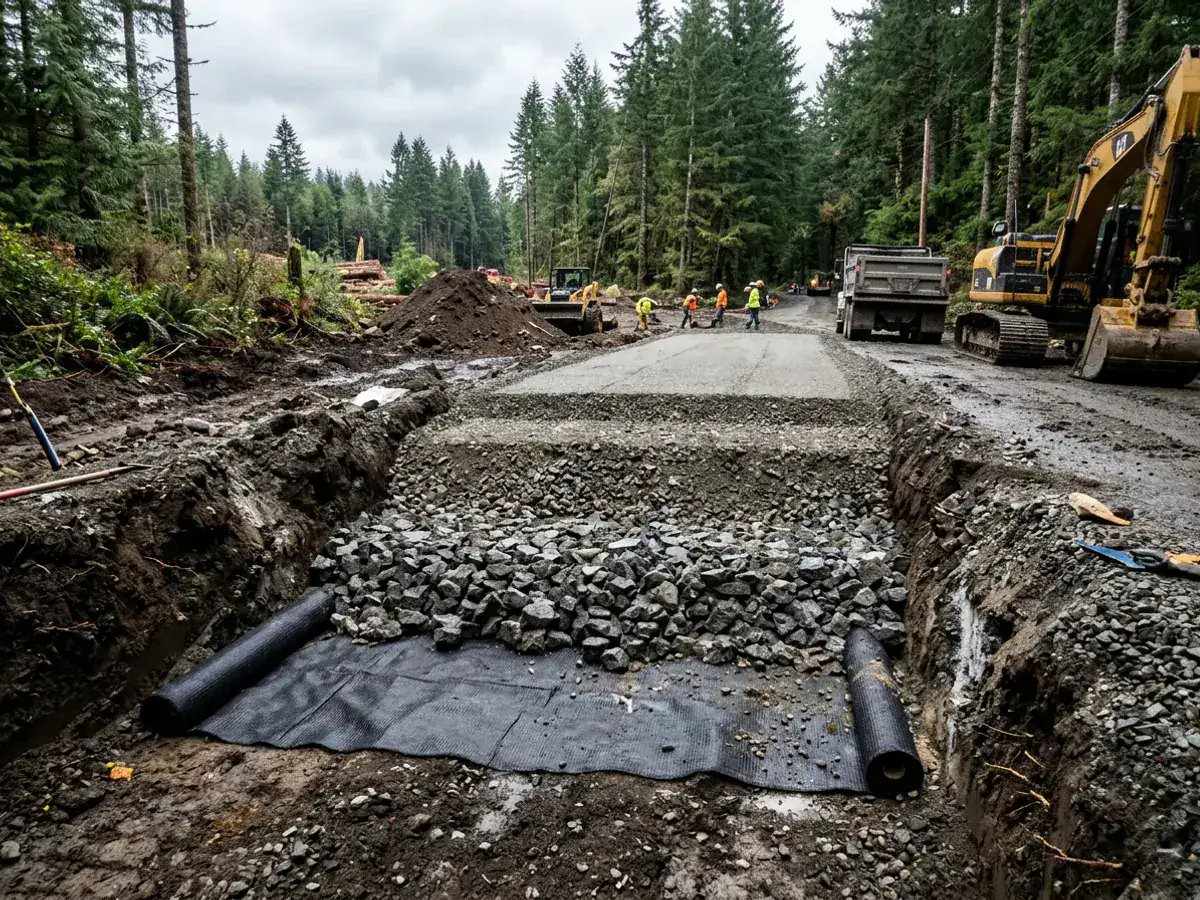
Placed over heavy geotextile fabric and walked in tightly with excavator tracks or a heavy roller, angular spalls bridge across weak saturated subgrades, flex truck tire treads open to shake off sticky mud before paved streets, and resist fast-moving winter ditch runoff without washing away.
Common WA Gradations & Blends
Local pits and landscape yards stock a few closely related sizes within this family - here is how each option behaves on site.
2"-4" Small Quarry Spalls ("Mud Rock")
Ideal under residential driveways and permanent access roads because it chokes and caps cleanly with 1-1/4"-minus rock.
4"-8" Standard Quarry Spalls (TESC Spec)
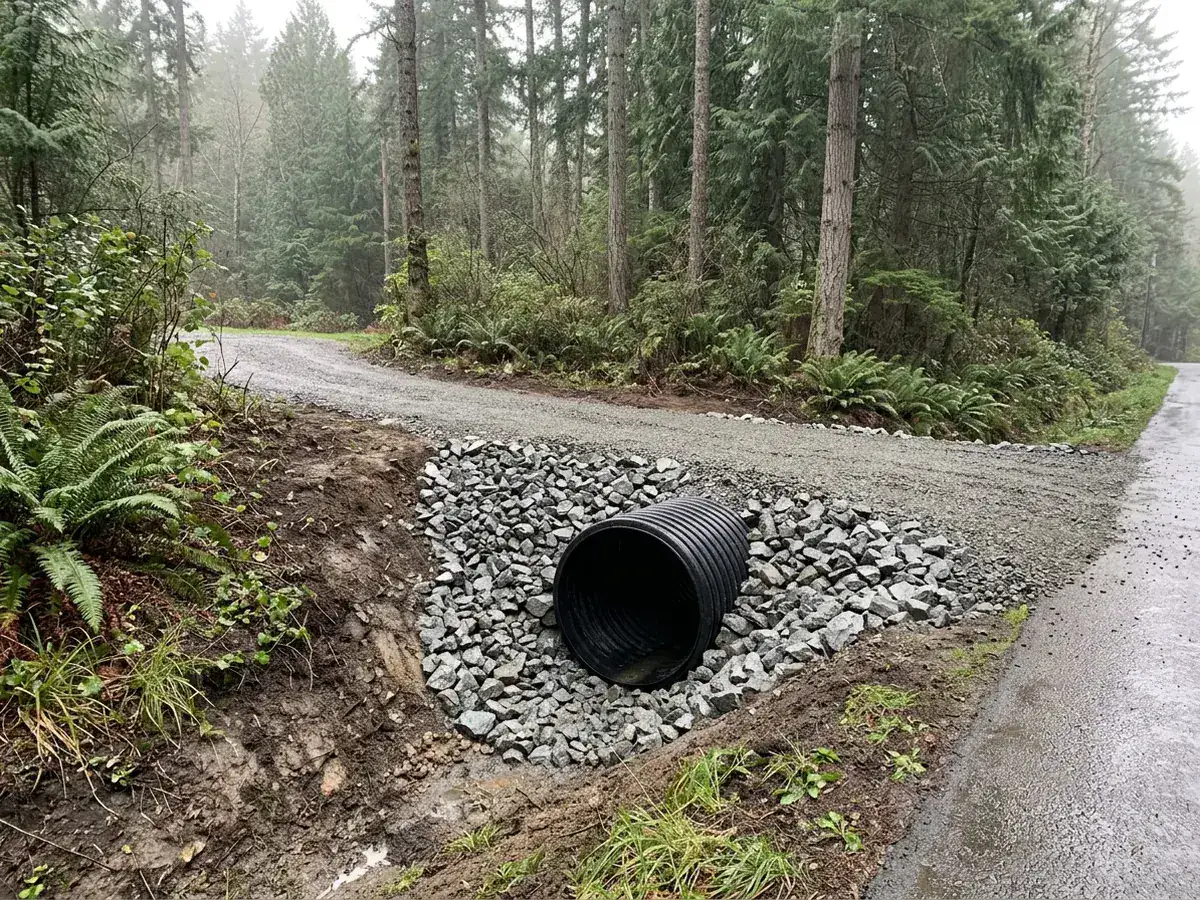
Standard municipal spec for permitted construction entrances, deep winter mud crossings, and culvert inlet/outlet aprons.
8"-18" Light Loose Riprap / Ditch Armor
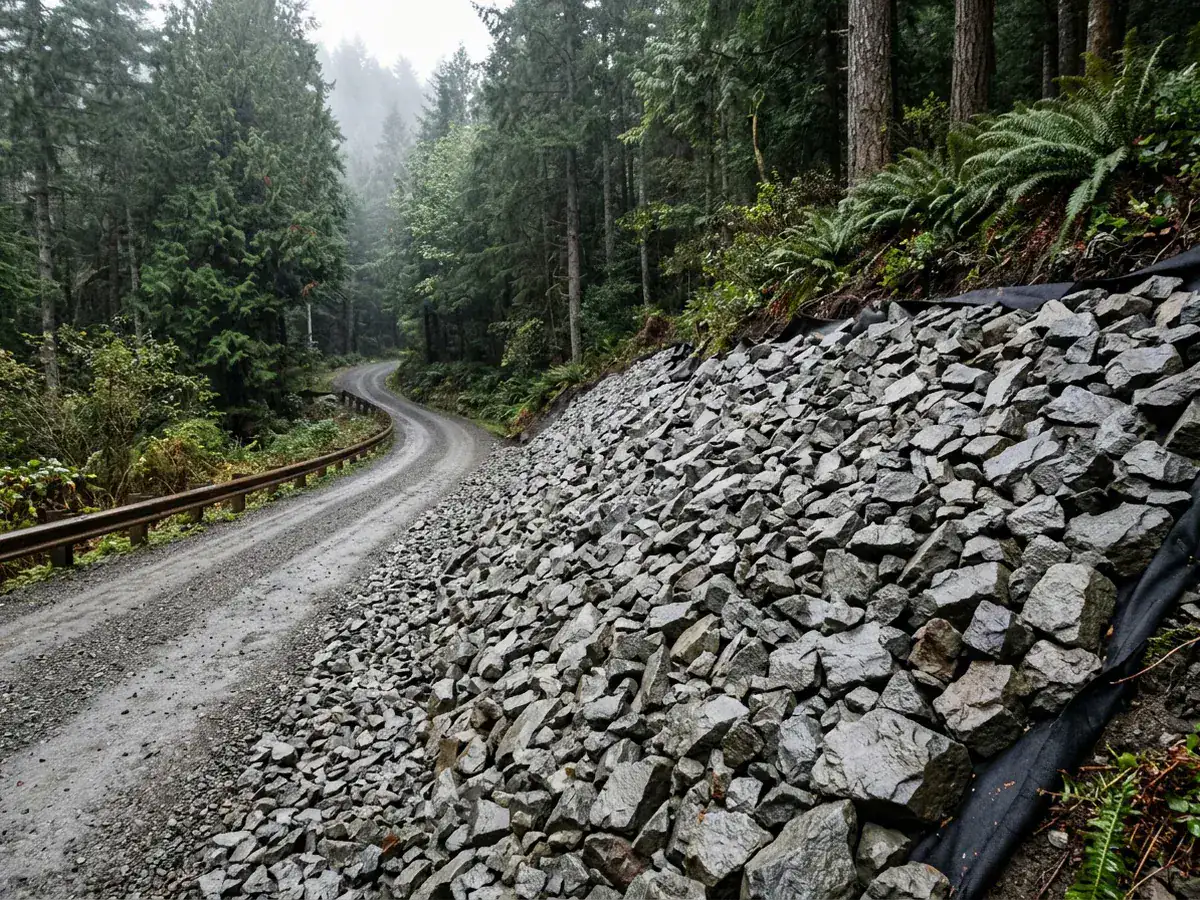
Used on steep creek/ravine washouts, pond spillways, and high-velocity roadside ditch bends.
Where to Use & Where to Avoid
Matching quarry spalls (2"-8") to the right layer prevents ruts, plugged French drains, and wasted quarry deliveries.
Best Applications
- County-compliant TESC stabilized construction entrances on raw-land builds (stops mud tracking onto public roads)
- Bridging deep, soupy clay soft spots and high-water-table crossings under new access roads
- Armoring driveway culvert inlets and outlets so winter storm surges cannot undercut the pipe
- Rebuilding and armoring washed-out hillside gullies, steep ditch banks, and pond overflows
- Heavy logging, dump-truck, concrete-pump, and crane staging pads in wet WA winters
Not Ideal For / Avoid
- Finished residential driveway surface (far too rough and sharp for passenger car tires unless choked and capped)
- Backyard lawn French drains (use clean 1-1/2" washed drain rock around perforated PVC pipe instead)
- Areas that will be mowed, plowed, or walked on regularly without a finer crushed-rock cap
- Dumping directly onto liquid silt without geotextile separation fabric underneath
Sample Coverage & Tonnage
Use these typical Western Washington footprints (including standard roller compaction allowance) to gauge rough volume before your exact quote.
| Sample Project Size | Target Depth | Estimated Volume & Weight |
|---|---|---|
| Culvert Inlet & Outlet Scour Aprons (Pair) | 8"-10" hand/thumb keyed | ~3 cu yds (~4 tons) |
| 15 ft x 50 ft Permitted Construction Entrance | 8" to 12" over fabric | ~22-28 cu yds (~30-38 tons) |
| 12 ft x 80 ft Deep Mud Road Sub-Base | 8" of 2"-4" spalls | ~24 cu yds (~32 tons + base cap) |
Need Quarry Spalls (2"-8") Installed?
Send 2 to 4 photos of your driveway, pad, or yard along with rough measurements. We calculate exact tonnage, coordinate delivery, grade to spec, and compact in lifts.
Western WA Field Rules
Glacial clay, 9 months of drizzle, and county critical-area buffers change how aggregates perform here compared to dry climates.
WA Stormwater Construction Entrance Rules (BMP C105)
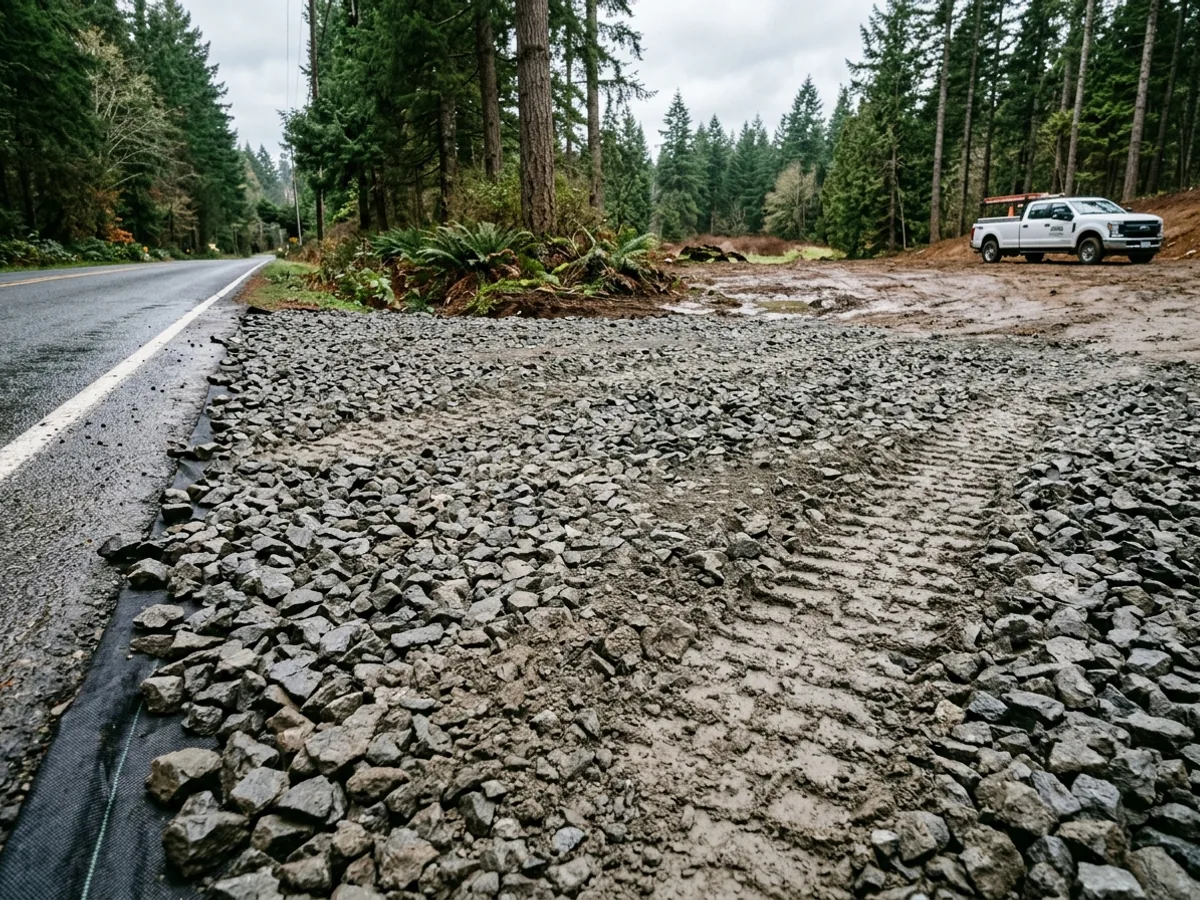
Most Puget Sound jurisdictions require a 50-foot-long by 15-foot-wide pad of 4"-8" quarry spalls, 8 to 12 inches thick over geotextile, before any land-clearing or foundation hauling begins.
"Choking" Spalls Before Adding Fine Gravel
Never pour fine 5/8"-minus directly onto open 4"-8" spalls - the small dust sifts down into the big gaps and leaves sinkholes. Always "choke" the top voids with an intermediate 3"-4" layer of 1-1/4"-minus base rock first.
Thumb Placement Protects Culvert Pipes
Tailgate-dumping 8-inch basalt chunks onto a corrugated HDPE culvert can dent the pipe wall. We place culvert headwall spalls carefully with an excavator bucket and hydraulic thumb.
How We Grade & Compact It
Even top-grade quarry material fails if dumped directly onto sod or spread too thick without lift compaction. Here is how Clear Grade installs quarry spalls (2"-8"):
- Scrape away surface slop and roll out heavy woven or non-woven geotextile fabric across the soft zone or swale.
- Place 6 to 12 inches of 2"-4" or 4"-8" quarry spalls with an excavator bucket/blade - protecting any underlying pipes.
- Track-walk and seat the spalls tightly together so jagged corners interlock into a flat mat.
- For permanent driveways, choke the open top voids with 1-1/4"-minus base rock, roll firm, and finish with 5/8"-minus.
Field & Material Reference Photos
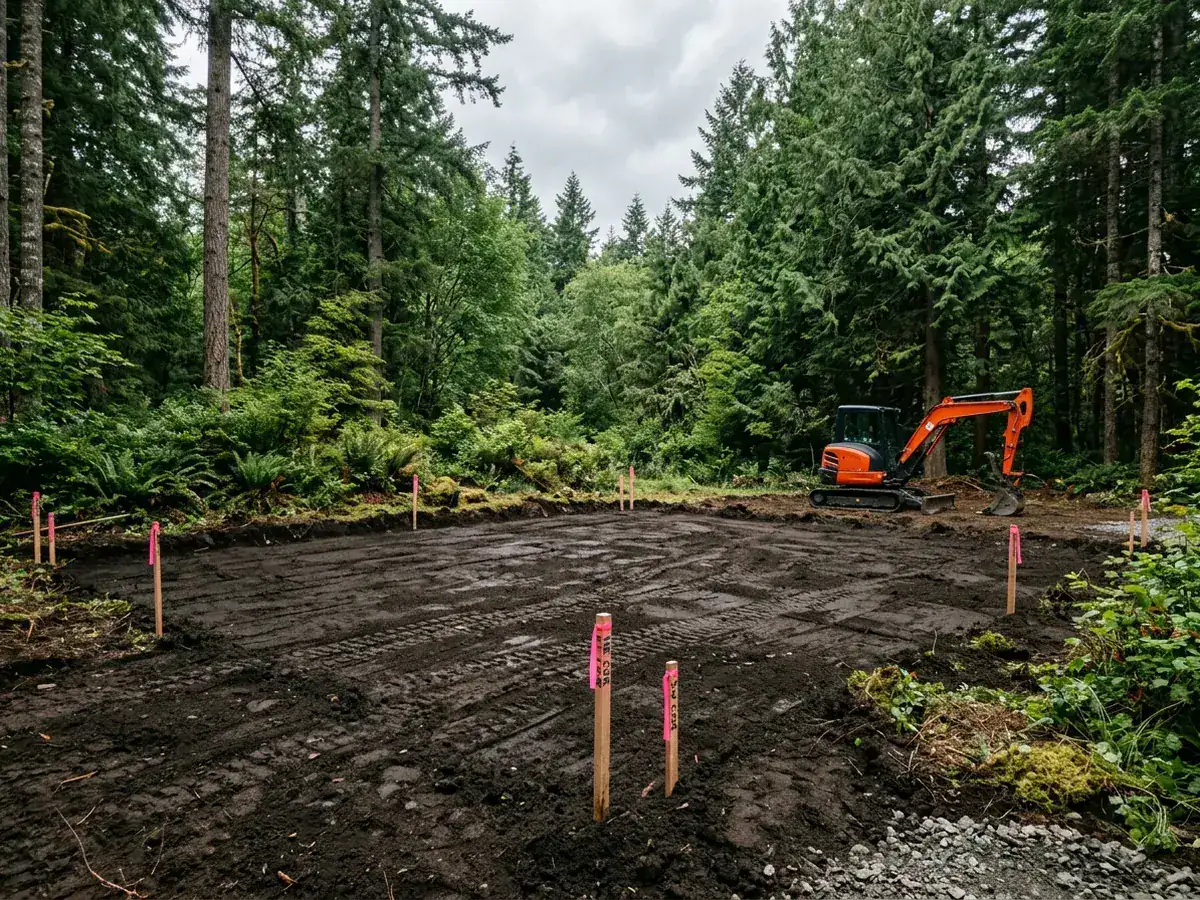
Representative Pacific Northwest equipment, aggregate, and finish examples showing typical site conditions and Clear Grade work standards.
Quarry Spalls (2"-8") FAQs
Should I choose 2"-4" spalls or larger 4"-8" quarry spalls?
Choose 2"-4" spalls under residential driveways and soft spots that you plan to cap soon with finer gravel - they choke and smooth out much faster. Choose 4"-8" spalls for permitted construction entrances, deep mud, and high-velocity culvert riprap.
Can you turn a temporary quarry-spall construction entrance into my finished driveway later?
Yes! That is the smartest way to build on raw WA land. Let concrete trucks and lumber drops beat up the quarry spalls all winter, then have Clear Grade choke with 1-1/4"-minus and cap with fresh 5/8"-minus right before move-in.
Why do cities and counties require quarry spalls at lot clearing entrances?
Municipal stormwater codes prohibit tracking clay mud onto paved public streets where it washes into storm drains. Coarse 4"-8" spalls flex tire lugs open and knock mud loose before trucks exit the lot.
Will quarry spalls pop passenger car tires?
Fresh blasted basalt spalls have sharp edges and uneven voids that bruise light sidewall tires if driven fast. If passenger cars share a construction entrance, we lightly choke the wheel tracks with 1-1/4"-minus rock.
Can quarry spalls hold a steep wet bank behind my driveway?
For shallow surface erosion, ditch scour, and 2:1 bank armoring over filter fabric, yes. For tall vertical grade cuts supporting heavy surcharge loads, we excavate and build an engineered boulder rockery or retaining wall instead.