
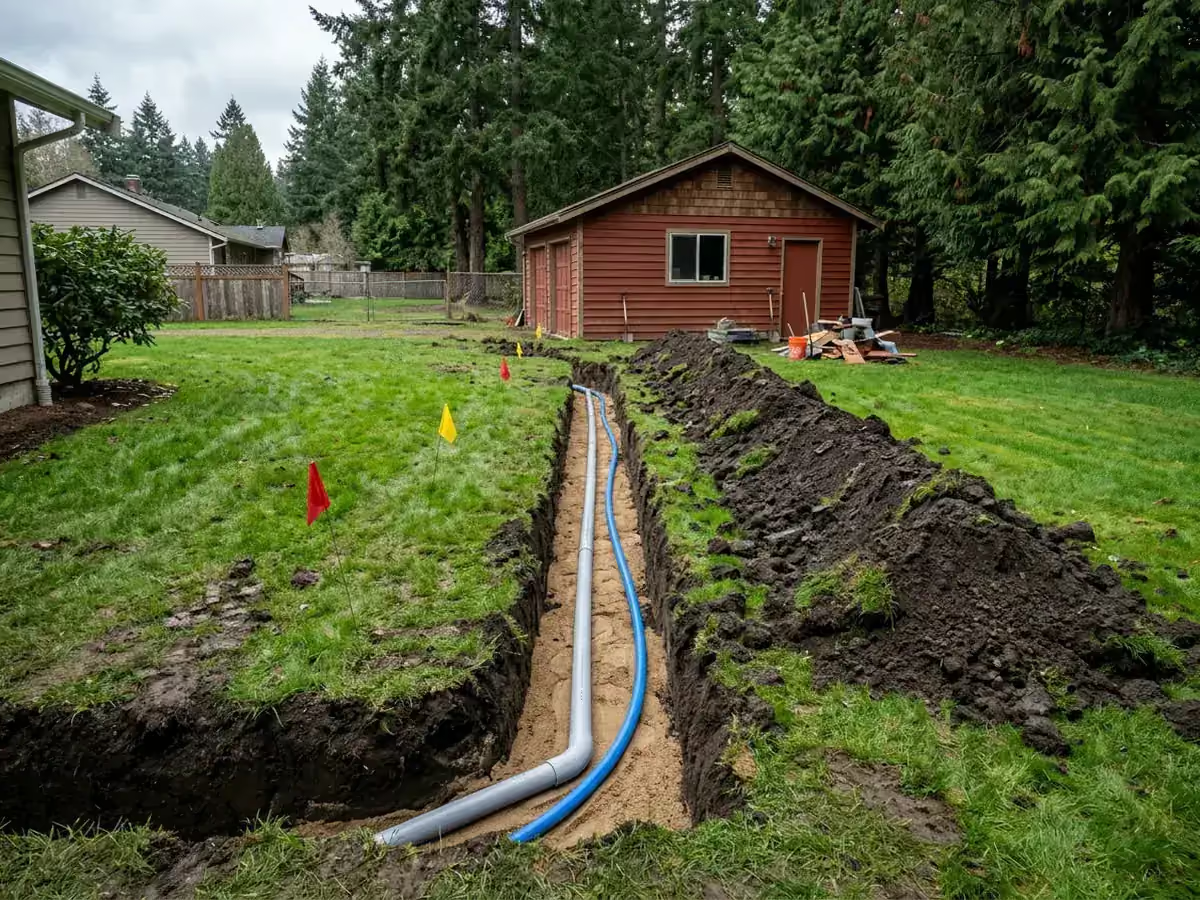
Code-depth trenches & 811 safety.
Running power to a detached shop, tying water and fiber into a new ADU, or replacing a leaking main water service starts with an inspection-ready trench at exact code depth. Clear Grade digs clean utility trenches for homeowners, electricians, plumbers, and GCs across Snohomish and King counties.
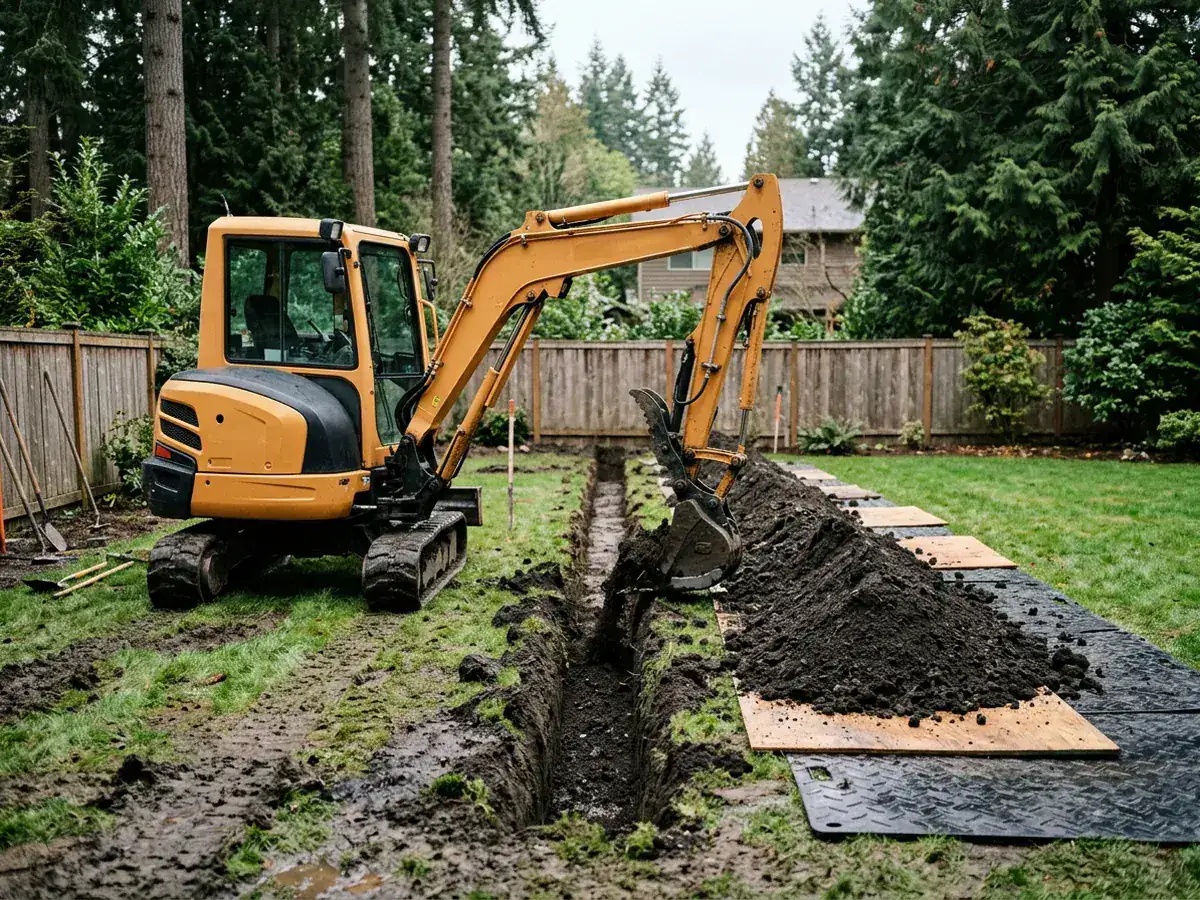
Electricians and plumbers charge top hourly rates - having them hand-dig or fight rocky glacial hardpan with a small walk-behind rental trencher wastes days. An excavator digs straight through cobbles and roots to clean, uniform code depth in a fraction of the time.
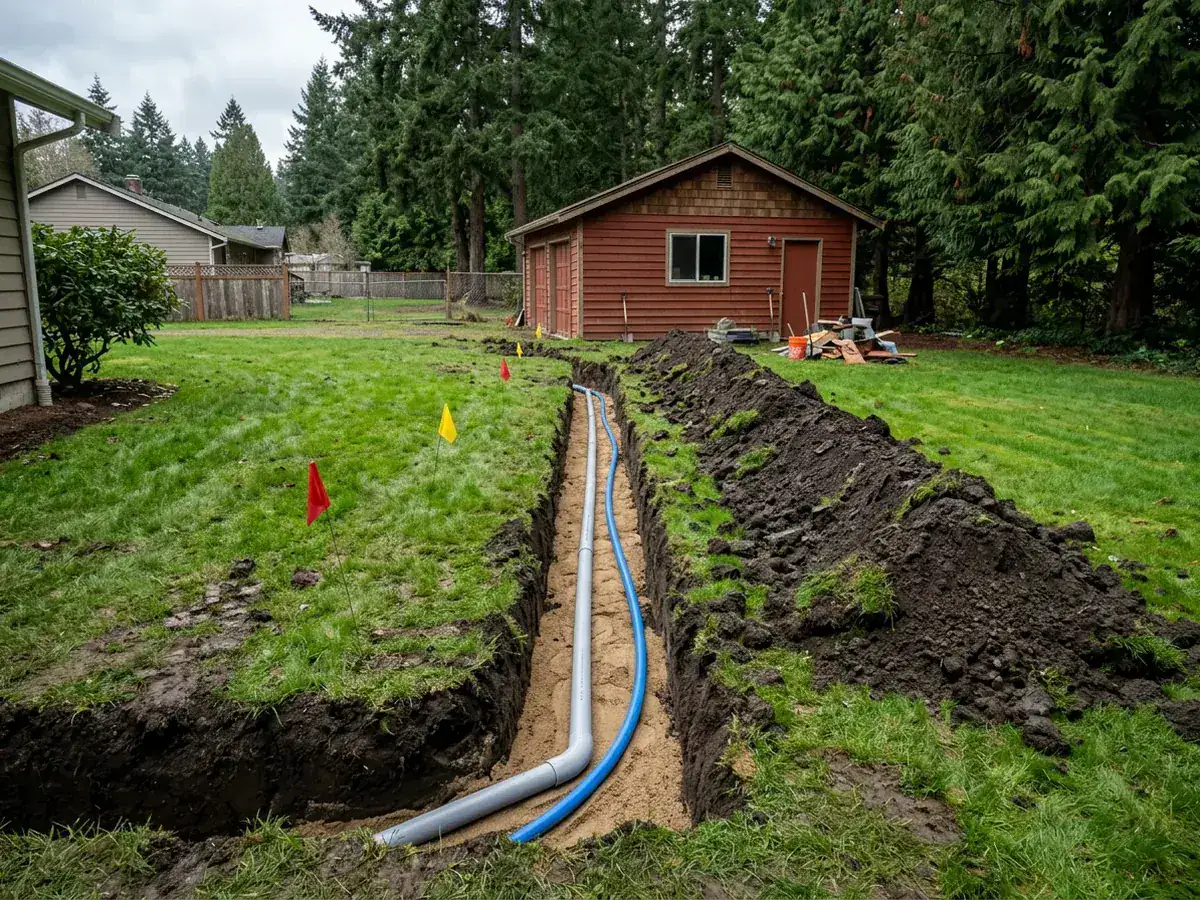
Code depth & sand bedding
Utility inspectors check cover depth before anything gets buried. We dig narrow, smooth-bottom trenches matched to your utility district, PSE/PUD, or NEC code specs so your electrician or plumber drops pipe/conduit straight in without hand-digging high spots.
- Electrical feeder & service conduit trenches (18" to 36"+ cover per PUD/PSE/NEC specs)
- Main domestic water line and fire-line trenches (frost-free & driveway-load depths)
- Natural gas / propane line trenches, low-voltage/fiber conduits, and irrigation mains
- Sand or pea-gravel pipe shading, warning ribbon placement, and lift-compacted backfill
Right Rock & Material Guide
See how crushed basalt fines, structural base rock, recycled asphalt millings, clean drain stone, and bulk soils perform in wet Western Washington conditions.
Request Written Options for Utility Line Trenching.
Upload or text 2 to 4 photos of your work area and access width for a free written estimate, or schedule an on-site operator walkthrough.
811 locates & safe crossings
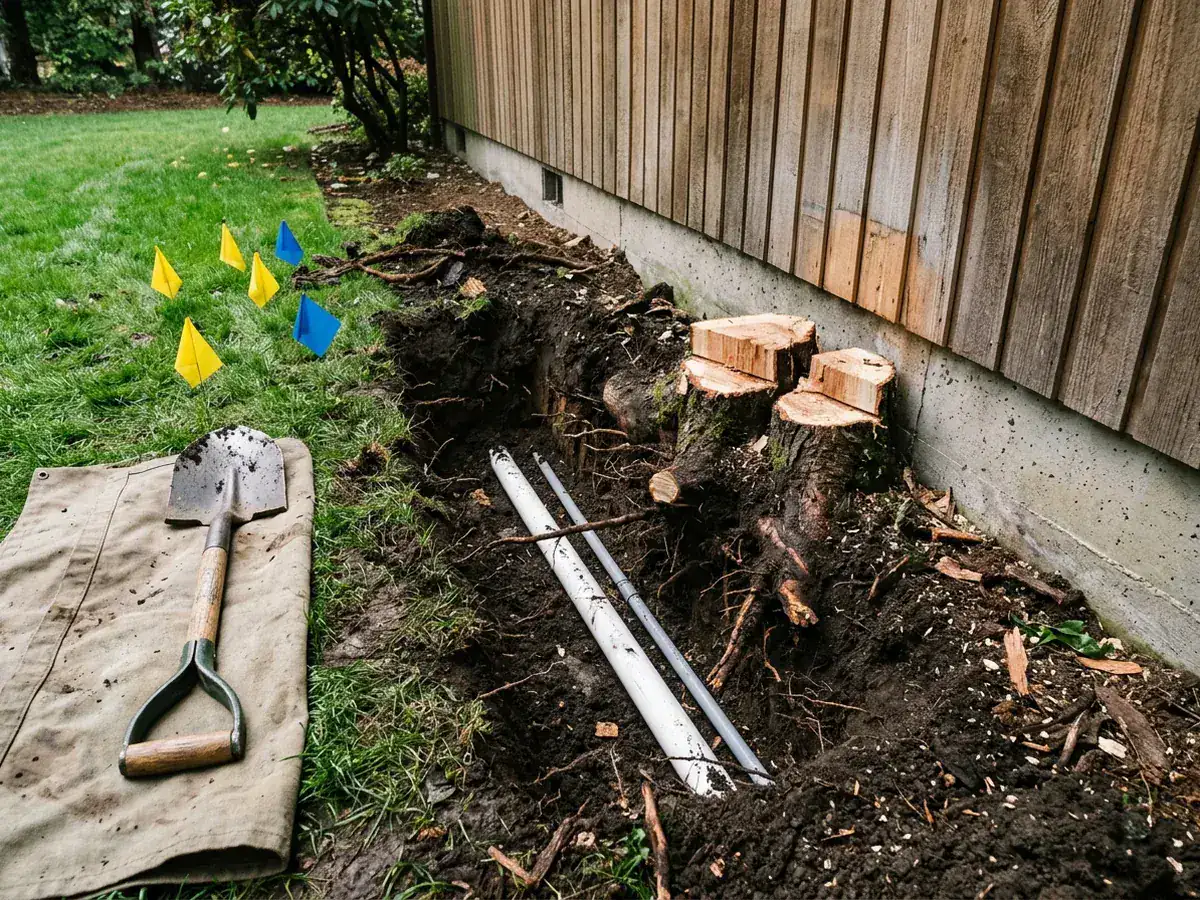
Every dig begins with an active 811 ticket. Where your new trench crosses marked gas, power, water, or telecom lines, our crew pothole-exposes existing utilities by hand so crossings stay 100% safe.
Agreed site finish
Clean, rock-free trench floor at exact depth, 811 crossings hand-exposed safely, and backfill mechanically compacted in lifts after inspection.
Coordinated around open-trench inspection
Need us to dig Tuesday, leave the trench open for your electrician/plumber and Wednesday morning inspection, then return to shade and compact backfill? We schedule around trade inspections cleanly.
- Confirm required trench depth, width, and separation specs from your electrician, plumber, PSE, or Snohomish PUD.
- Send total linear footage and note any driveway, walkway, or tree-root crossings.
- Let us know if you want excavation only or dig + sand shading + post-inspection compacted backfill.
A closer look at the work
Representative Pacific Northwest equipment, aggregate, and finish examples showing typical site conditions and Clear Grade work standards.
Frequently asked questions
How deep do electrical and water trenches need to be in Snohomish and King counties?
While your permit/inspector sets final specs, residential electrical PVC conduit typically requires 18" to 24" minimum cover (deeper for primary utility PUD/PSE feeders), and domestic water lines typically run 24" to 36" deep for frost and load protection.
Can power, water, and fiber share the same trench?
Often yes, when horizontal or vertical separation distances specified by your utility/inspector are maintained (using a wider bucket or stepped shelf inside one trench), saving cost and yard disturbance.
Why do so many utility trenches sink 4 inches a year later?
Because contractors push all 3 feet of loose dirt back into the trench at once and drive a track over the top! Only the top 4 inches compact while the bottom 30 inches stay fluffy. Compacting in 6- to 8-inch lifts with a trench rammer/plate compactor prevents future settling.