
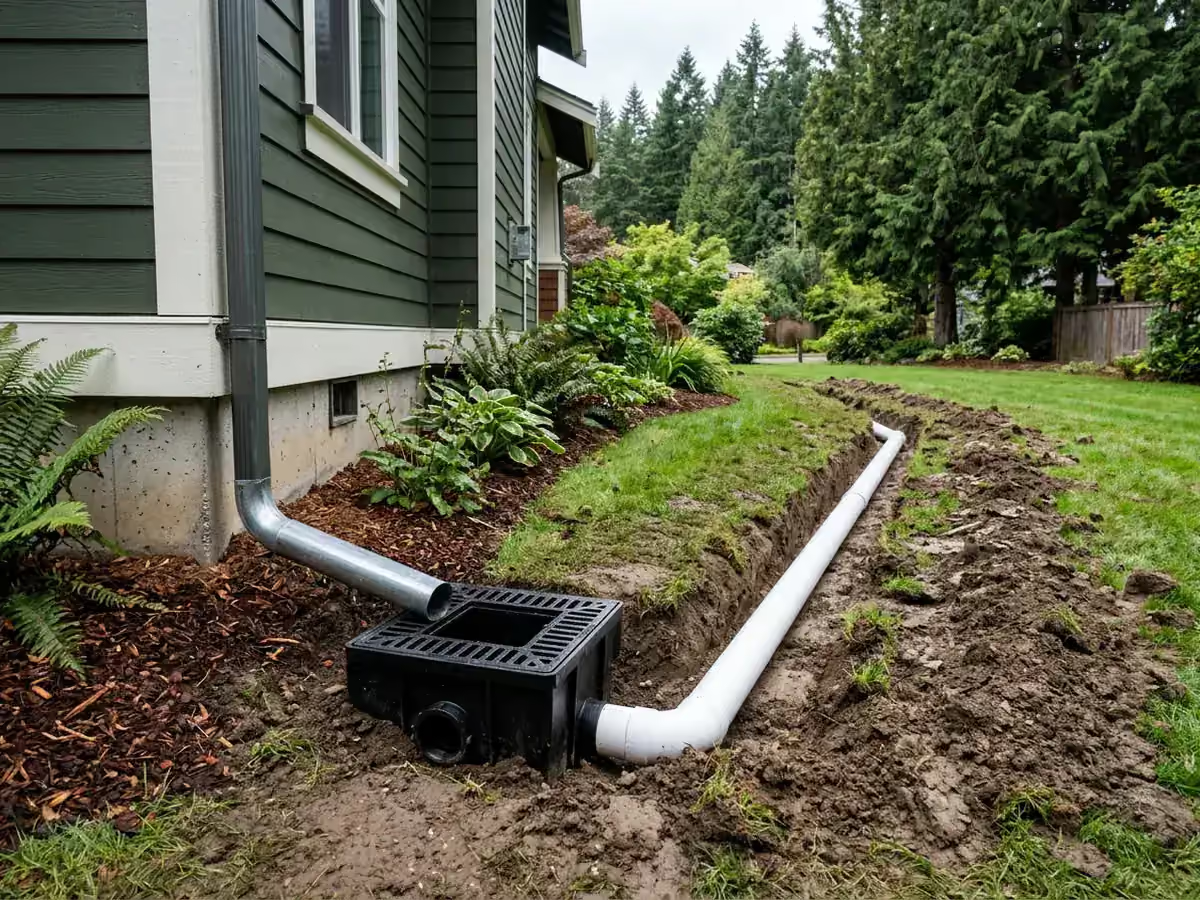
Rigid PVC roof-water tightlines.
A typical 2,000-square-foot Puget Sound roof sheds over 45,000 gallons of water a year. Dumping that volume onto plastic splash blocks two feet from your foundation saturates crawlspaces, floods basements, and erodes walkways. Clear Grade trenches and installs clean underground downspout tightlines across Snohomish and King counties.
Dry crawlspaces start at your downspouts. Piping every gutter downspout into an underground smooth-wall PVC tightline stops foundation saturation, splash-back siding rot, and icy winter walkway puddles immediately.
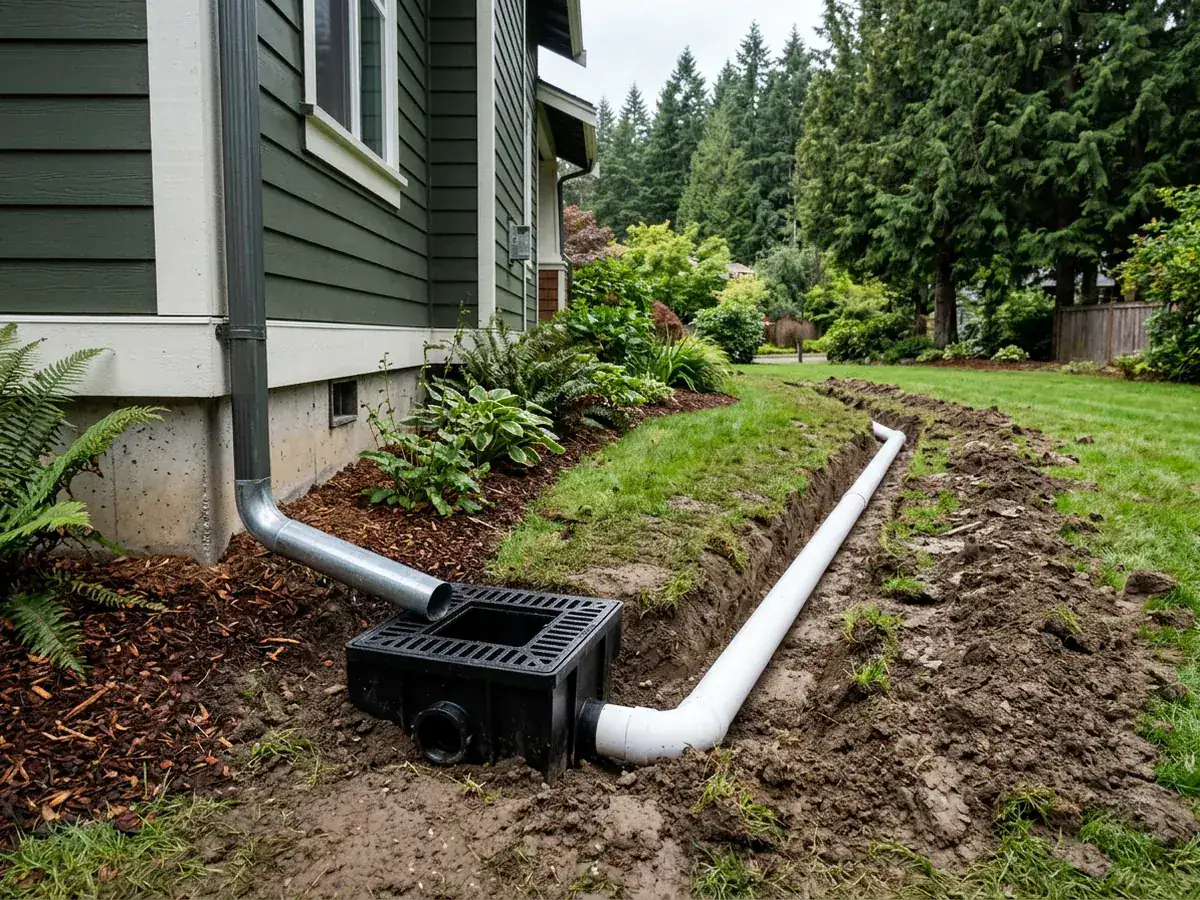
Rigid PVC pipe with cleanouts
Black accordion extensions crush under foot traffic, trap roof granules, and get pierced by tree roots. We trench continuous-slope runs using smooth-wall SDR-35 or Schedule 40 PVC with glued/gasketed joints so roof debris flushes right through.
- Downspout leaf/debris cleanout adapters at each gutter connection
- Solid PVC tightline runs pitched cleanly under lawns, beds, and gravel paths
- Discharge to approved storm stubs, daylight slope outlets, pop-up emitters, or dry wells/infiltration trenches
- Compacted trench backfill and clean lawn/landscape restoration
Right Rock & Material Guide
See how crushed basalt fines, structural base rock, recycled asphalt millings, clean drain stone, and bulk soils perform in wet Western Washington conditions.
Request Written Options for Underground Downspout Drains.
Upload or text 2 to 4 photos of your work area and access width for a free written estimate, or schedule an on-site operator walkthrough.
Share trenches to save budget
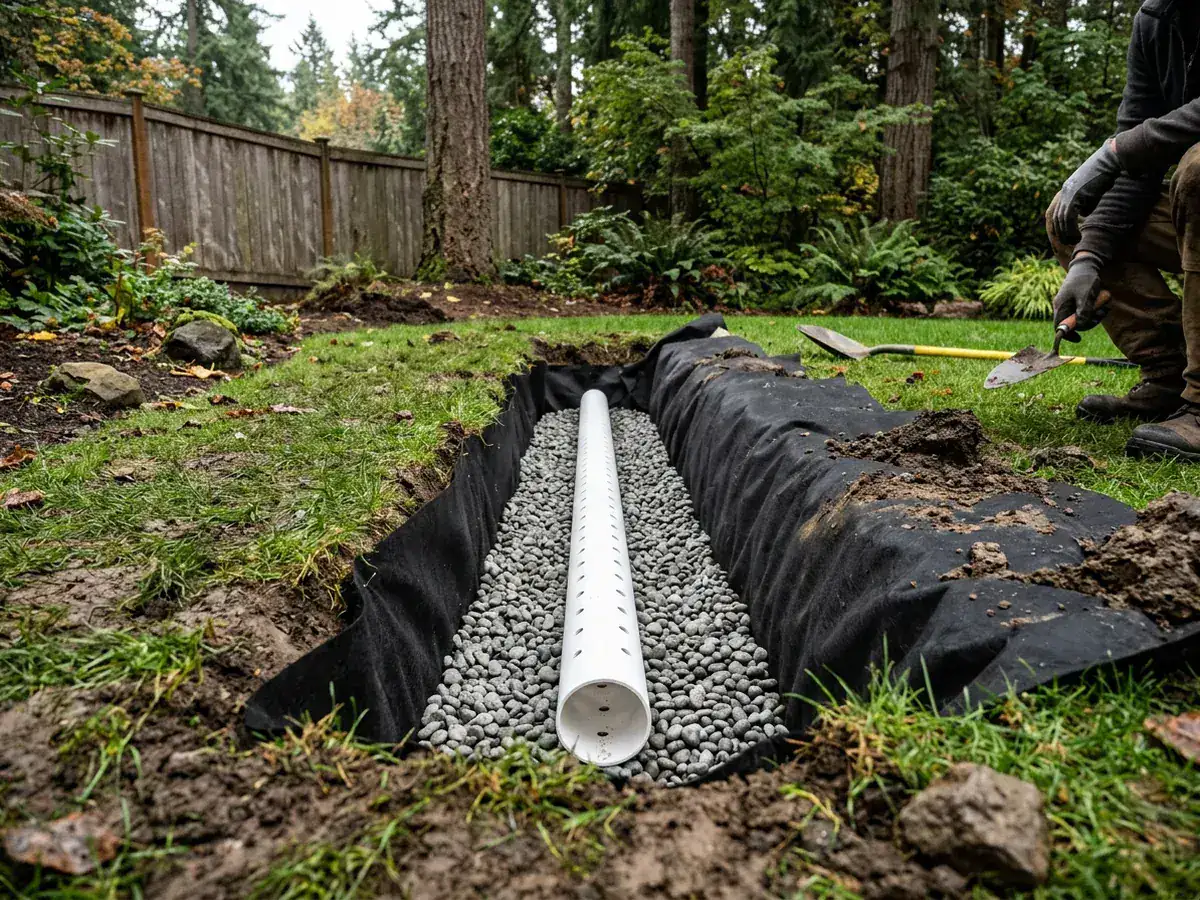
Running a solid PVC roof pipe right alongside a perforated French drain inside one trench saves digging cost and lawn disturbance while keeping roof torrents completely separate from groundwater collection.
Agreed site finish
Debris cleanout adapters at each downspout, solvent-welded/gasketed smooth PVC pipe laid at continuous fall, and compacted backfill.
Count your downspouts and measure the run
Let us know how many downspouts you want tied in, approximate total footage to the outlet area, and send photos of the side yard and discharge spot.
- Count how many downspouts around the house or garage need underground tie-in.
- Measure rough distance from the house to your preferred discharge area or street storm stub.
- Note walkways, concrete patios, or tree root zones along the proposed pipe route.
A closer look at the work
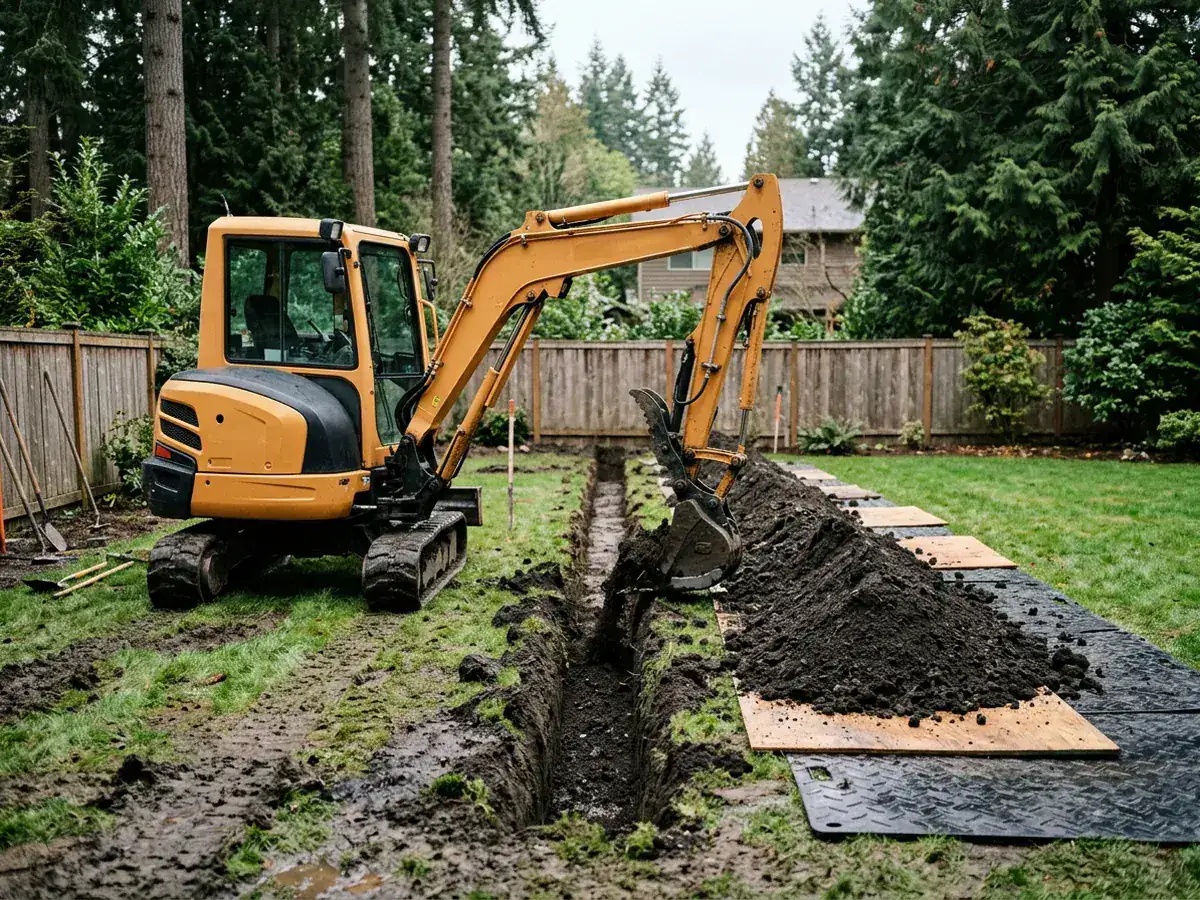
Representative Pacific Northwest equipment, aggregate, and finish examples showing typical site conditions and Clear Grade work standards.
Frequently asked questions
How do you prevent pine needles and roof moss from clogging underground downspout pipes?
Two ways: installing vented leaf-screen cleanout adapters right where each aluminum downspout meets the PVC riser, and using smooth-wall 4-inch PVC pitched continuously so small shingle grit washes straight through.
Where does a pop-up emitter work vs a daylight pipe outlet?
Open daylight outlets (with rodent grates) on a slope or ditch bank are zero-maintenance and handle peak storms best. Pop-up emitters work well in lawns several feet inside property boundaries where terrain still slopes gently away from the home.
Can multiple downspouts tie into one 4-inch underground collector main?
Yes. Up to 3 or 4 residential downspouts routinely manifold via smooth wye fittings (never sharp sanitary tees!) into a single 4-inch collector tightline, or step up to 6-inch pipe on large roofs.